



The real EGCS bottleneck
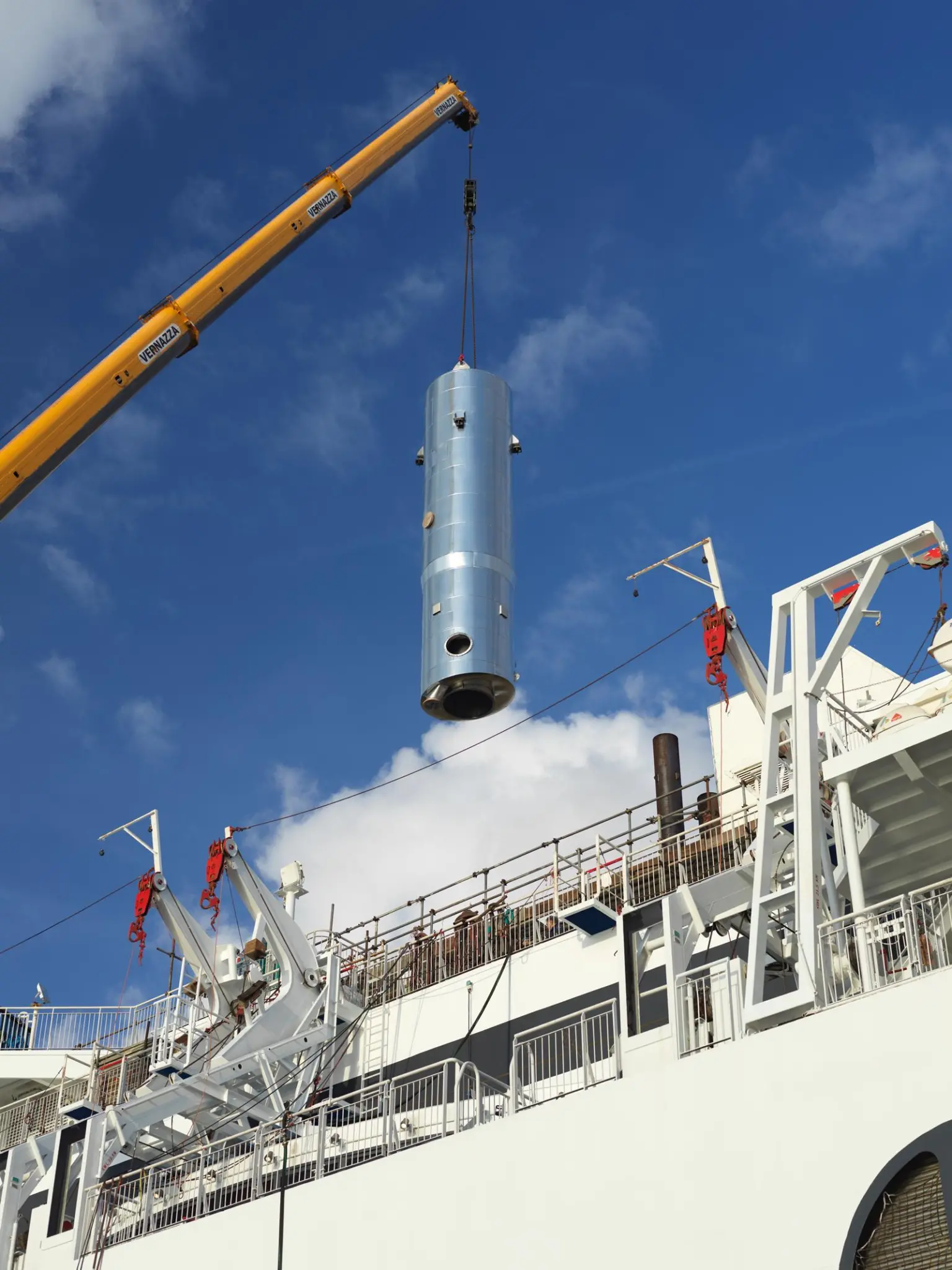
“At this time of unprecedented demand, the EGCS market is being affected by supply tightness but the only real bottleneck is indecision,” said Mr. Emanuele Gariboldi, Managing Director of Ecospray Technologies, the Lombardy-based exhaust gas cleaning system (EGCS) supplier. As the window for ordering EGCS systems for installation before the beginning of 2020 begins to close, Emanuele Gariboldi said shipowners need to take decisions around installation.
Installation bottlenecks
Emanuele Gariboldi noted that a long-anticipated installation squeeze was occurring, and that the number of qualified and experienced installation firms was lower than EGCS availability from EGCS supplier.
Given the range of installation solutions available to shipowners, including drydock, wetdock, in-service and in stages, it is not entirely accurate to describe the shortage of installation firms or shipyards as a bottleneck. EGCS system availability is also tighter than previously but systems are available. “A number of reputable EGCS makers can still deliver systems in late 2019 and early 2020, including Ecospray”, Emanuele Gariboldi added.
“The main bottleneck is the need and the will to make timely choices and move decisively toward execution,” Emanuele Gariboldi said. A traditional approach, where a clear scope of work is prepared, a tender is issued and bids are evaluated, might deliver CAPEX savings in installation costs, but risked leading to higher OPEX costs in the short term if delays to installations led to higher fuel costs.
The performance record of an EGCS system should also be considered as lower utilisation would also push up OPEX over time. “Shipowners should consider the ability of an EGCS supplier to ensure its systems run as close to 100% as possible”.
Supply chain pressures
Emanuele Gariboldi noted that the current surge in orders for EGCS installations in general, and for retrofits in particular, which currently account for around 80% of Ecospray’s sales, was creating pressures in the supply chain across the EGCS industry.
“We expect that the situation will worsen in the second part of 2019, before it improves at the beginning of 2020, where some operators will realize that 1 January 2020 is a date with great value as a target, but early 2020 is also not bad.”
Ecospray, as a long-established supplier, had anticipated the surge in orders and had been “quite proactive” in securing supply of most key inputs. “We do not expect to see major delays in our scheduled deliveries, but we have seen some slower deliveries”.
A market leader
Ecospray was an early entrant into the EGCS market and sold its first systems in 2012. Its current product range includes both open-loop, closed-loop and hybrid systems, as well as SCR systems.
The company has subsequently established a leading commercial position within the EGCS market, and forms one of the four largest established suppliers to the market, according to recent data from DNV GL’s Alternative Fuels Insight platform. Emanuele Gariboldi noted Ecospray has one of the largest portfolios of registered installations but cautioned public data conflated past sales, current deliveries, and future orders booked for delivery in future years.
When asked about the company’s current order book, Emanuele Gariboldi would describe it only as “healthy” with a pipeline of orders into 2020 but added that commercial ships represent the majority of the company’s sales at present. “Until 2017 cruise ships accounted for a large portion of our references, but they now represent a relatively smaller portion of our sales,” Emanuele Gariboldi added.
Simple design, ease of operation
Ecospray’s strength in the cruise market reflected the particularly compact design of EcoSpray’s systems. “This is particularly useful in a retrofit situation and even more so on a cruise ship or on a ferry, where space is often extremely limited.”
A particular advantage for cruise ships was that Ecospray installations often did not require any funnel modifications.
Ecospray’s systems also benefited from simplicity of design and operation, reflected in the operational experience accumulated over “hundreds of thousands of hours of operations since 2012”. “Our current and future customers are benefiting from this experience and report resilience of our systems even under extreme conditions. They often remark how the simplicity of the system makes it easy to operate and, in view of the January 2020 deadline, simplicity and training are expected to maximize usage rate.”
R&D excellence
The company has a strong commitment to research and development, employing over 50 engineers. The company also holds 10 patents related to its research in scrubbers, which includes its proprietary highly efficient water spray nozzles.
A second unique aspect of its installations is its proprietary non-clogging centrifugal demister, which reduces corrosive effects of acidic water carryover in the funnel.
Ecospray also uses corrosion-resistant alloys to minimise corrosion effects in the exhaust pipe, the discharge pipe and the wash water piping system.
However, the company also engages with 3rd parties to expand its product range. One recent example includes the introduction of emissions monitoring systems from long standing collaborator ABB in recent installation projects since mid-2018.
Related Articles
 EXHAUST GAS CLEANING SYSTEMS
 EXHAUST GAS CLEANING SYSTEMS
 EXHAUST GAS CLEANING SYSTEMS