



Taking a long term view on EGCS
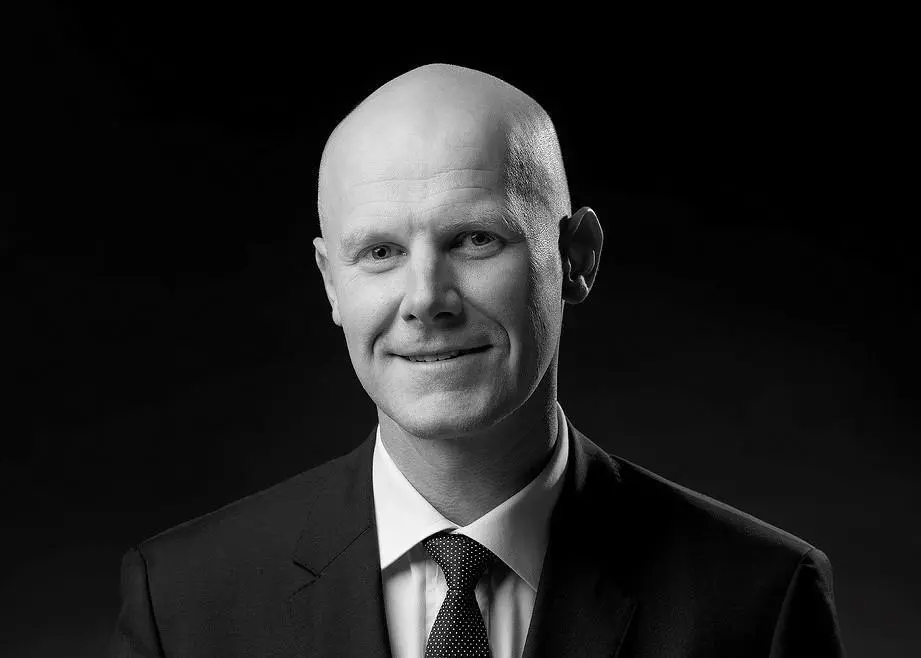
Jenssen noted that Wärtsilä’s orderbook was fully booked for the remainder of 2019, and that the company had secured orders for delivery for dates as late as the second half of 2020.
The company has received orders for over 700 scrubber systems, and has more orders in hand than all of its currently delivered systems. The orderbook is almost evenly split between newbuilds and retrofits. While a relatively large proportion of its orders have been for closed-loop and hybrid systems, the majority of its orders have been made for open-loop scrubbers.
A similar split is seen between Wärtsilä’s compact inline scrubber system (I-SOx), its Q-SOx system, or its conventional venturi scrubber design (V-SOx), with the V-SOx design accounting for the majority of sales. The V-SOx design and I-SOx designs are best suited to smaller engine configurations, ranging between 1 and 35 MW and 1 and 20 MW, while the Q-SOx is suited to larger installations, ranging between 40 and 70 MW.
Demand for Wärtsilä’s scrubbers has been driven mainly by the tanker, containers, bulker, and the cruise and ferry segments. While the cruise vessel segment was an early adopter of exhaust gas cleaning technologies, there are significant opportunities in other segments as well. “With around 3,000 scrubbers likely to be installed by the end of 2019, and a further 1,000 units on order, we see plenty of opportunity to convert some of the 40,000 vessels that are likely to be moving from HSFO to MGO or LSFO,” Jenssen said.
Market overview
Looking at the broader market, Jenssen notes that the pace of new orders has slowed slightly, after “an explosion of interest” in 2018. The main driver for shipowners was ensuring that the installation could be completed by 1 January 2020, in order to be ready for the introduction of the IMO Global Sulphur Cap, Jenssen noted.
What we have seen is a slight slowdown in orders, as shipowners who have not yet secured slots adopt a wait and see attitude towards the new regulations.
“We expect to see a rebound in orders from Q1 2020 and into the second half of next year – a lot of people are waiting to see how the spread develops between HSFO and the low sulphur options in the market,” Jenssen said.
One of the other factors encouraging shipowners to delay booking retrofits is that many of the available slots are “off the beaten track” and might involve yards with less experience of undertaking retrofits. “Some people are taking the view that it is better to wait for a few weeks or months in 2020, in order to avoid the risk of delays if the installation doesn’t work optimally.”
Lead times are another hindrance to rushing to fit in orders before the end of 2019. “We anticipated this tightness and have been preparing to ensure that our supply chains are in order,” Jenssen said, adding that Wärtsilä had moved to diversify its suppliers between Europe and Asia.
Looking ahead
Customers sometimes consider the quality and range of service options, as well as a product’s service history when choosing providers, but with some new installations likely to be still in service close to 2050, another consideration might be continuing service innovation.
Wärtsilä has inaugurated a new laboratory to conduct research into new EGCS solutions, which is investigating the possibility of new catalysts or new washwater treatment options. Wärtsilä already offers a number of additional solutions for customers who want to achieve standards above existing regulatory minimums.
“We offer an optional washwater treatment system for open-loop systems which removes a large portion of the particles captured in the scrubber from the washwater. Similarly we have concluded a pilot project to improve PM capture by up to an additional 20%, which involves a three-stage scrubber process for an open-loop system, a modified filter and some design modifications.”
“We are committed to this market over the long term,” Jenssen concluded, citing Wärtsilä’s investments to strengthen its supply base and expand its in-house engineering capacity as well as engineering hubs expansions during 2018 and 2019 to support the increased growth.
Related Articles
 EXHAUST GAS CLEANING SYSTEMS
 EXHAUST GAS CLEANING SYSTEMS
 EXHAUST GAS CLEANING SYSTEMS