



In for the long haul
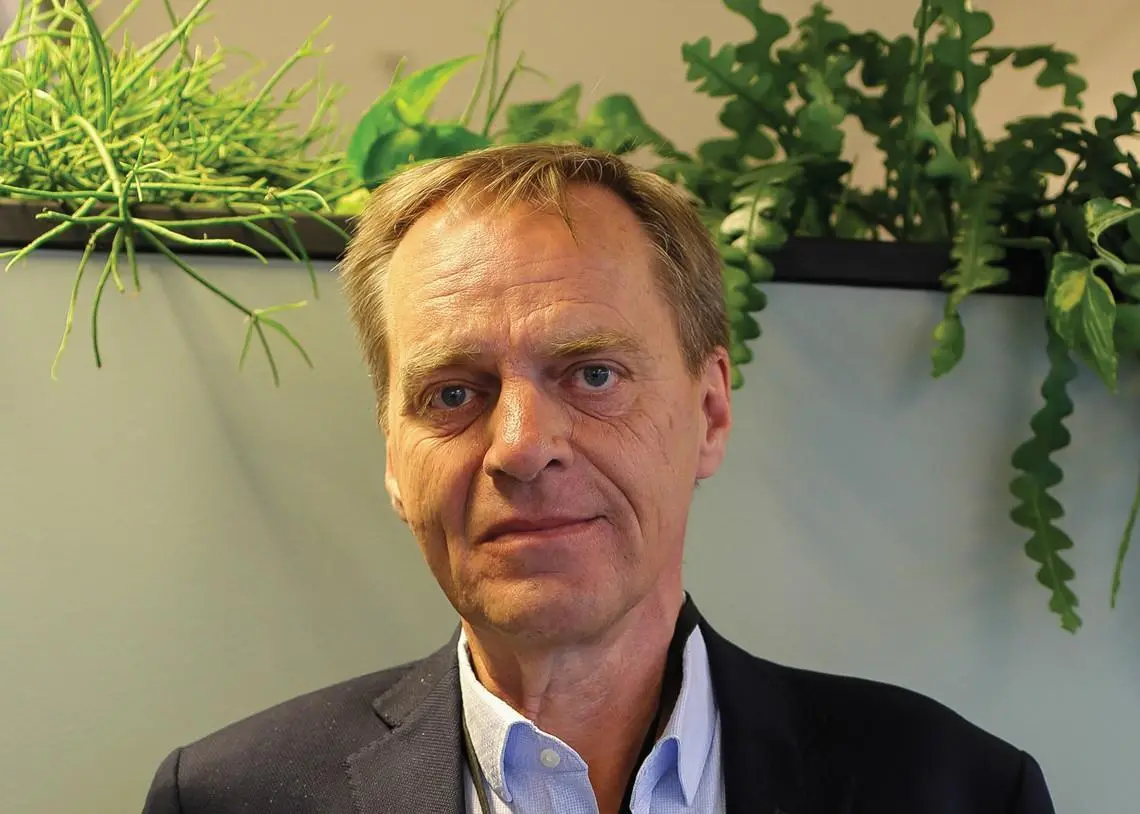
“Scrubber suppliers as an industry haven’t been good enough,” Yara Marine’s ceo Peter Strandberg told The Motorship during an interview at Nor-Shipping 2019 in Lillestrom.
“I don’t mean as an industry meeting our customers’ requirements. Our products meet the strictest environmental standards. But we haven’t been good enough at coming together as an industry and supplying hard scientific data before the IMO or whoever else. We’ve let environmentalists set the agenda about open loop scrubbers without any data at all.”
Strandberg quoted the results of Japan’s Ministry of Land, Infrastructure, Transport and Tourism (MLIT) study, which concluded no “short or long-term effects on marine organisms can be caused by the use of open-loop scrubbers.”
Market outlook
Turning to the market, Strandberg noted that the company had over 120 scrubber systems in operation and had over two million operating hours.
“Our operating record is very important to us, as we sell on our track record,” he said.
In terms of Yara’s own orderbook, the equipment supplier has no availability for orders for the remainder of 2019 and has booked orders as far ahead as 2021.
Orders have slowed somewhat since the “massive growth” at the back end of 2018, but Strandberg expects to see a rebound in orders after January 2020 when the fuel spread becomes apparent.
Strandberg notes Yara is ready to meet increased demand, without compromising on quality. “Our focus on supplier quality has paid off,” he said, noting that by permanently seconding employees to suppliers’ operations for quality assurance, Yara had avoided quality issues. “It takes time to educate suppliers about what you need, but we opened our office in China in 2018.”
Customer segments
Strandberg noted that the market for scrubbers had evolved in recent years, and that the company was seeing demand from different types of vessels. The particular features of the company’s systems, such as the small footprint of its small inline scrubbers, had established its position in the passenger vessel segment, but were increasingly being seen as an attraction in other segments.
A similar focus on quality governed the decision to specify high grade stainless steel to withstand the corrosive atmosphere inside our scrubbers. “That’s why we can offer extended guarantees against corrosion,” Strandberg said.
In-line scrubbers offer a smaller footprint, and the possibility of fitting the system within the funnel. However, other vessel types were also focusing on multi-engine inlet in-line scrubber system as an interesting solution.
“Space is a constant focus for containership operators as well. We have supplied a single large inline hybrid scrubber system for the main engine of several ultra large containerships. The ships need a second inline hybrid scrubber system to cover the exhaust from the ULCCs’ 5 x 5MW auxiliary engines.”
A longer-term perspective
Strandberg also has a clear perspective on how the market is likely to evolve over the next few years. “We expect decisions to be made on a total cost of ownership basis going forward, rather than on a simple headline comparison,” he said. “Shipowners understand it can be very expensive to be cheap, especially if you are comparing performance over 72 months rather than 12 months. Yards can sometimes take a shorter view.”
Yara Marine’s products have successfully passed MARPOL tests, and Yara is happy to discuss the terms of offering extended warranties to its customers.
The second change will be that the high sulphur fuel oil market is likely to increase again in size after shrinking in January. “There are no readily available alternative uses for HFO – and the alternative fuels are all likely to be more expensive.”
“I see a long-term market for HSFO, which I think will be with us for a long time to come.” This will in turn drive increased demand for R&D as environmental standards are likely to continue to evolve. This is an area that Yara Marine takes pride in. “We will have to develop our products further,” Strandberg said.
The company offers both SOx and NOx (Selective Catalytic Reduction) abatement technologies, giving it a rounded perspective on regulatory developments and technology.
Yara was the first supplier to offer Magnesium Oxide (MgO) to clean the wash water in the wash water tank for its closed loop scrubbers, and the first supplier to offer multi-engine inlet in-line scrubber systems.
“We can reduce particulate matter (PM) emissions by 85% using our existing systems,” Strandberg said, adding that higher targets could be achieved but that everything would come with a cost.
Related Articles
 EXHAUST GAS CLEANING SYSTEMS
 EXHAUST GAS CLEANING SYSTEMS
 EXHAUST GAS CLEANING SYSTEMS