Innovative fuel pumps for VLECs
The new solution for handling liquefied ethane was developed by Svanehøj in collaboration with French gas tank specialist, GTT. It involves three distinct deepwell pump types: cargo pumps to unload the gas, spray pumps to keep it refrigerated, and fuel pumps to ensure that the gas is transported from the giant membrane tanks to the ship’s engines.
As this is the first time the solution is to be installed on such a large scale (each ship measures 230 x 36.6 metres), the 28.5 metre-long pumps are being rigorously tested.
Project Manager Lars Foged of Svanehøj explained why Svanehøj’s electrical DW Fuel pump has received particular attention.
“A cargo pump operates for perhaps 1000 hours per year, while a fuel pump is in operation 24/7 when you’re sailing. That’s why it is crucial for the customer to know for sure that a pump is safe and reliable and can withstand the load of pumping gas to the engines on ships as large as these,” Foged said.
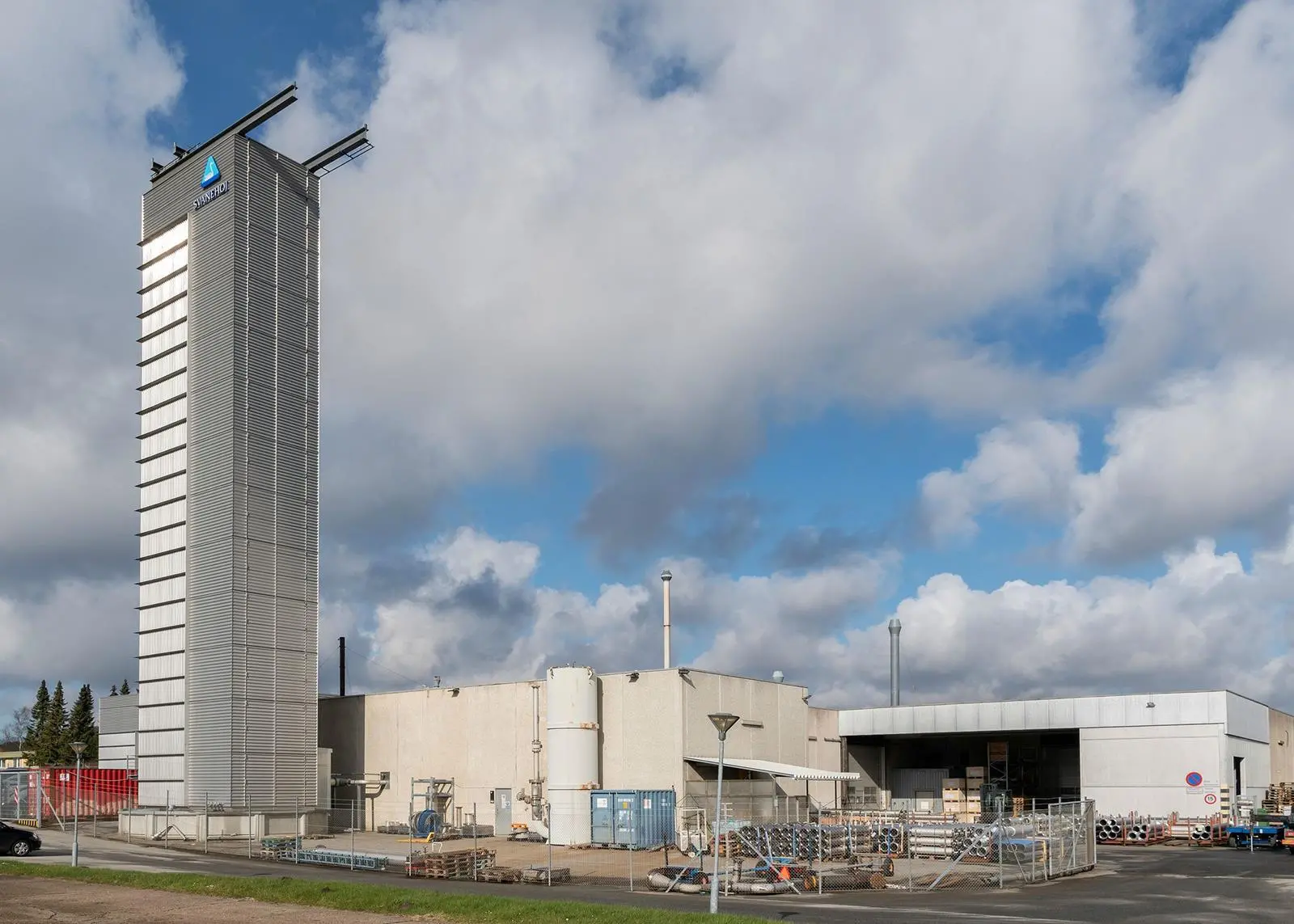
The full-scale tests are conducted at the pump manufacturer’s 35-metre test tower in Aalborg, Denmark. It takes two large mobile cranes to erect and mount the long deepwell pumps in the tower. The customer pays all costs associated with a test. Foged noted that customers from the offshore industry usually invest in pump testing, because of the extremely high safety requirements.
“Our tower simulates the conditions on board the ship. The pump is suspended in the tower, in the same way as in the tank, and during the four hours of testing, we measure the changes in temperature and vibration. For us, it is a facility of incredible importance, because we are able to demonstrate ‘robustness of design’, so that customers can see for themselves that our pumps are as efficient and stable as we say they are,” said Foged.
in total Svanehøj will supply eight cargo pumps, two fuel pumps and four spray pumps for each of the six VLECs ordered by the Chinese acrylic acid and acrylates manufacturer, Zhejiang Satellite Petrochemical. The pump order will be manufactured in Aalborg, Denmark and the shipset for the first gas carrier was dispatched to Korea in March 2020.