NEW Arc7 LNGS WILL HAVE 6MW MORE POWER THAN PREDECESSORS
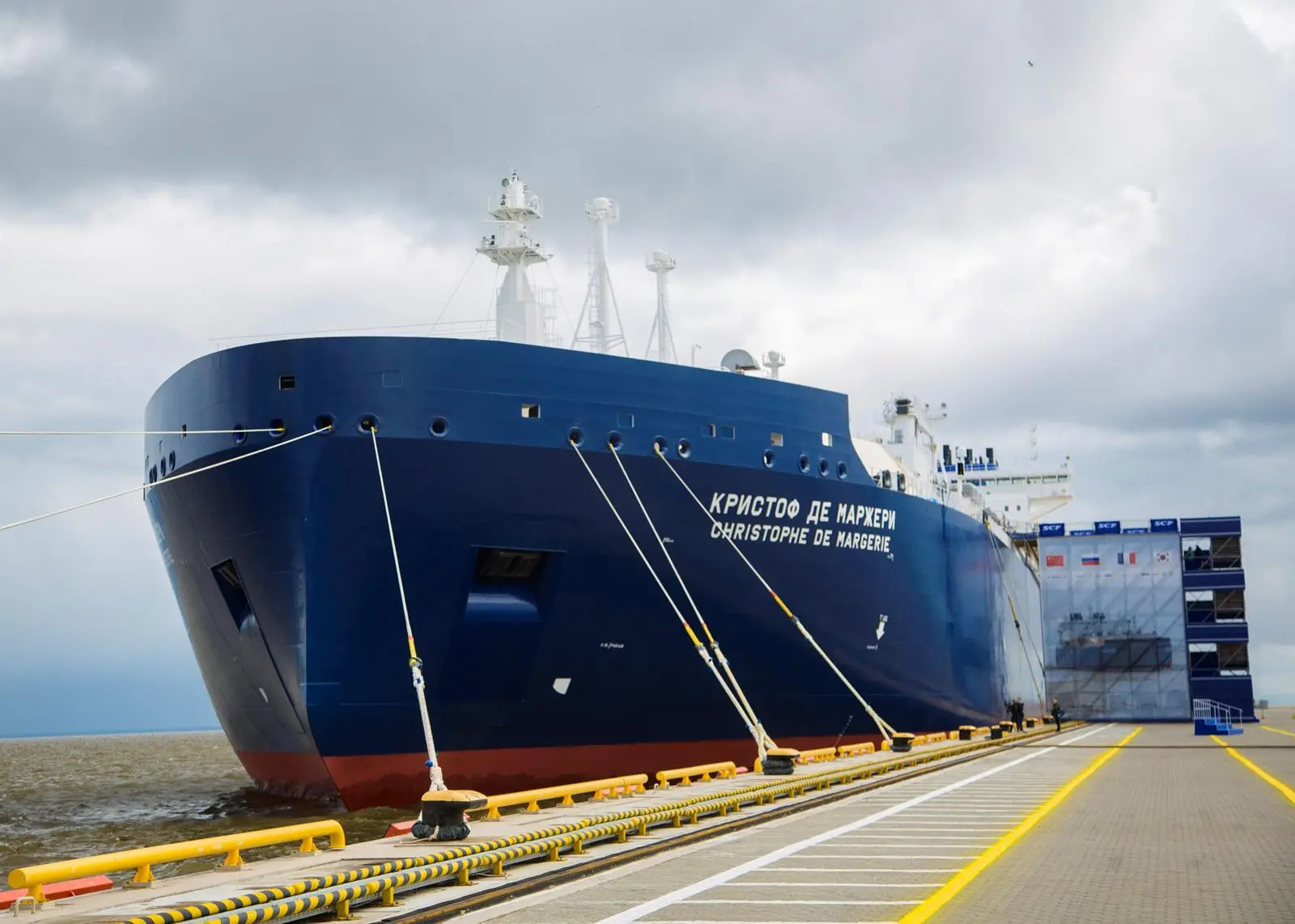
The ships will have three 17MW ABB Azipod electric propulsion units resulting in a maximum of 51MW total propulsion power, whereas the Christophe de Margerie has three 15MW ABB Azipods. The new vessels will be comparable in power to the 50 Let Pobedy, a nuclear-powered icebreaker (55MW) and almost 60 percent more powerful than Lenin, the world’s first nuclear-powered icebreaker (32.4MW).
Aker Arctic, Daewoo Shipbuilding & Marine Engineering (DSME) and Novatek jointly developed the new vessel design to meet the specific needs of the Arctic LNG 2 project located in the Gydan Peninsula in Northern Siberia, including winter sailing eastbound through the Northern Sea Route from Utrenny LNG terminal primarily to Asian markets.
Sailing through the Northern Sea Route during wintertime is a challenge with ice thickness reaching up to two metres thick, says Reko-Antti Suojanen, CEO of Aker Arctic Technology. Use of Aker Arctic’s Double Acting Ship (DAS™) design means the ships will include an an additional bridge facing astern and will sail backwards in thick ice conditions. The Christophe de Margerie is also a DAS design.
“The DAS feature reduces the power need in ice almost 50%, thus bringing major savings in fuel consumption and emissions,” says Suojanen. “Additionally, it provides great maneuvering capability which is important in ice operation. These ships can break through even thick ice ridge formations and do not normally need additional icebreaker support.”
The 199.9-metre, 172,410cbm vessels will feature a more advanced icebreaking hull form than their predecessors. “The design of the hull is more made for difficult ice conditions rather than focusing on open water,” says Suojanen. Before construction begins, this improved operational capability in ice-covered waters will be verified with ice model tests in Aker Arctic’s laboratory in Finland. Like the Christophe de Margerie, the vessels will have an open water speed of 19.5 knots, but they are expected to achieve higher average transit speeds in ice covered waters.
DSME has signed shipbuilding contracts with SCF and Mitsui O.S.K. Lines for the construction of six vessels, and SCF and Arctic LNG 2, the operator of the Arctic LNG 2 project, have already entered into 30-year time charter agreements for three of these new vessels. They will be built to Russian Maritime Register and Bureau Veritas class.
Earlier in 2019-2020, another 15 icebreaking LNG carriers were ordered for the Arctic LNG 2 project from Zvezda Shipbuilding Complex in Russia. SCF will own the lead vessel of this series, with the remaining 14 being owned by SMART LNG, a joint venture between SCF Group and Novatek. These 15 vessels are scheduled for delivery in 2023-2025 and are time chartered to the project’s operator.