Finnish electric drive testing centre opens
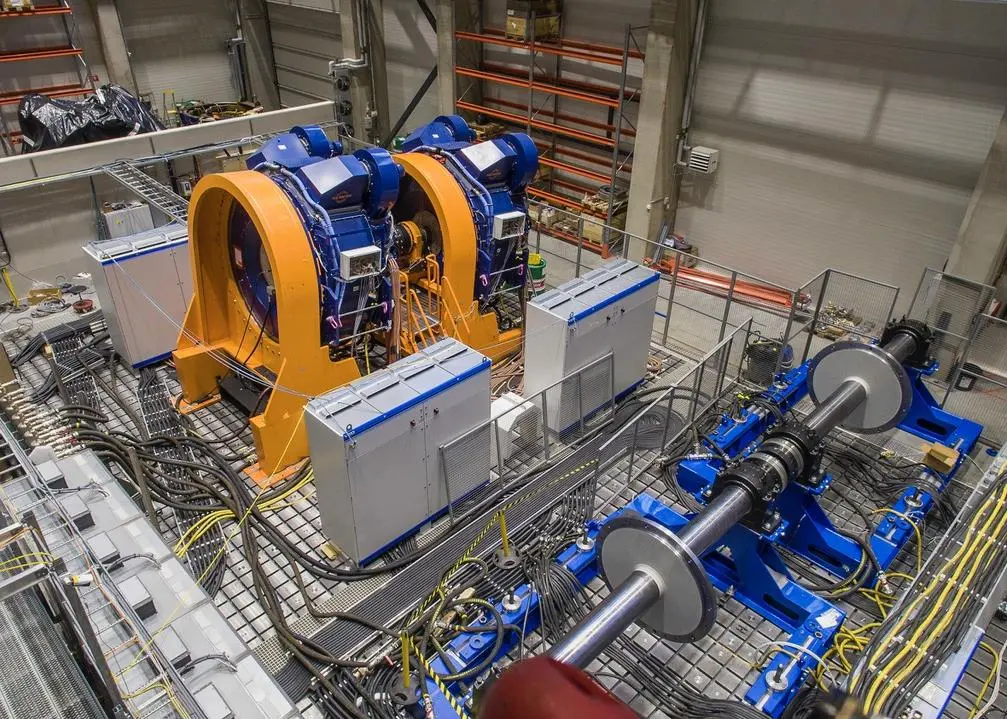
The testing centre can accommodate 12MW drive systems, and the capacity will soon rise to 18MW, outstripping almost anything else being offered across the globe.
The test centre is also equipped with an 80-tonne heavy-lift capacity. It is well positioned to meet mounting interest from across the marine sector in higher capacity propulsion systems.
Matti Nikkinen, vice president of operations at Yaskawa Environmental Energy / The Switch, says: ”Equipment is getting bigger and bigger all the time. We had to have a place where we can verify these units. It is important we can show the customer that our equipment can pass all the tests.
”Drives are continuously getting more powerful. So the main purpose for the testing facility is we can now answer the questions coming from the market.”
The new centre is attached to the main factory at Lappeenranta so finished units can be extensively tested to full capacity and complete certification can be carried out on site. This saves time and money down the line when it comes to the commissioning phase for any vessel using the equipment.
R&D uses
Addressing the LDTC to the production factory also fulfils a key objective for Yaskawa Environmental Energy / The Switch as it means the centre is ideally placed for testing prototypes, enabling greater research, development and innovation.
”The testing area is in the same factory as we have the production, so it is very easy to accommodate in that sense. The logistics are rather easy,” adds Mr Nikkinen.
The facility normally handles two units at the same time in the testing area.
“One of these machines is run as a motor and the other as a generator,” says Mr Nikkinen. ”We will load identical machines, so we can test to full power and also measure all the required parameters to fully verify the systems.”
The centre has the capacity to process 50 tests per year. As the unit has the space to run one full test while another is being prepared, the throughput time of the units is shortened.
Marine generators will occupy up to 70% of the centre’s test capacity during its first year of operation.