



THE WINNER IN THE QUEST TO BOOST BATTERY ENERGY DENSITY REMAINS UNCERTAIN
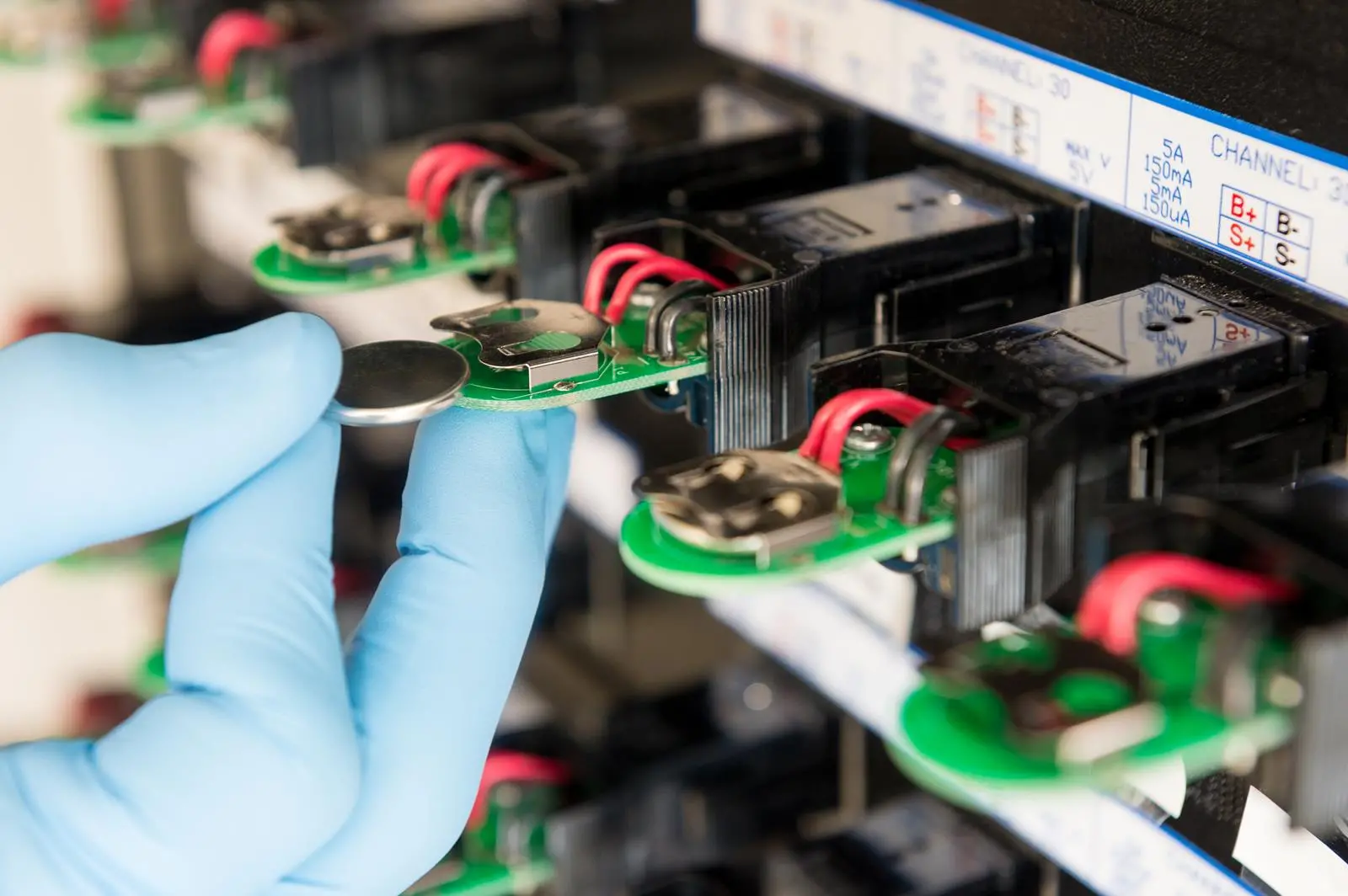
It takes five years in the laboratory to prove that you really have a solution, he says. It takes another three to five years to reach commercial scale. And, in the quest for higher energy density in lithium-ion batteries, there’s one problem that scientists have been trying to solve for over 50 years.
The anode is made up of layered graphite layers, and the lithium is loaded (intercalates) between the layers. The maximum is one lithium for every six carbons, so only one seventh of the atoms are storing and releasing energy, and the graphite takes up a lot of space. One potential solution is to use pure lithium metal as an anode. This would increase energy density by a factor of 10. The trouble is that, over time, the lithium forms dendrites through the electrolyte that eventually reach the cathode and short out the battery. A solution is being hotly pursued, says Crabtree, but not a lot of information has been made public by the start-ups involved.
An alternative is to use silicon in combination with graphite. Silicon intercalates lithium at a higher rate: four lithium atoms for every silicon atom. The catch is that in doing this, the silicon expands to about four times its volume. Eventually it cracks and starts to react with the electrolyte – a showstopper. Using silicon nanoparticles prevents the cracking, but it eventually loses reactivity anyway. “So nowadays, probably every commercial lithium-ion battery has maybe three, four or five percent silicon. Even a small increase in energy density is really valuable.” There are start-ups that say they can reach 50%, but a time scale for commercialisation is very “drafty,” says Crabtree.
Another potential way of increasing energy density is to change the electrolyte to a solid rather than the organic liquid typically used today. This removes the risk of thermal runaway if the liquid electrolyte reaches 150oC. However, many of the solid state electrolytes are polycrystalline with lots of crystal grains jumbled together which are vulnerable to dendrite formation. There are start-ups claiming developments with glassy solids, so it’s a solution that is on the horizon, says Crabtree.
“The big problem with solid state electrolytes is that lithium doesn’t move very fast in solid materials of any kind. It moves much faster in liquids,” he says. “It turns out there are a couple of families of solid state electrolytes where lithium does move about as fast, even maybe a little bit faster, in the solid as it does in the liquid electrolytes, and those are the ones that are being looked at. Most of these have five or six elements in them. So, there’s a lot of opportunity to tweak the composition and try to get the best conductivity.”
An alternative is to use an aqueous electrolyte. The problem with water is that it electrolyses at very low voltage. “You can pull some tricks and maybe get the operating voltage up to two volts, but not any higher. And the lithium-ion batteries that we have now operate at 4.3 volts because the organic electrolyte is more stable.” If the lithium ions are dissolved at very high concentrations in water, it is possible to get up to three volts and avoid the potential for thermal runaway, but this still doesn’t match current technology. It does lead, though, to the proposition that very high concentrations in organic electrolytes might also increase voltage, and this is being researched at present. Crabtree notes that using water as the electrolyte or using a solid state electrolyte means that existing anode and cathode technology could remain much the same as it is now.
Another approach to improving energy density is to change cathode technology. The original cathode developed by Sony in 1991 was cobalt dioxide. Cobalt is expensive, and the majority of global supply comes from mining operations in the DRC (formerly Zaire), which has a 60% market share. As an alternative, equal amounts of manganese, nickel and cobalt have been used (NMC technology). Today, a ratio of 8:1:1 is becoming standard. The more nickel that is used, the higher the energy density. However, nickel is more unstable which can affect battery lifetime.
Crabtree says that for heavy transport covering long distances, an energy density of around 800Wh/h per kilogram is needed. Lithium-ion is about 275. “And no matter what you’re doing with lithium-ion, it’s not going to get to 800. That’s where you need something like lithium-oxygen or perhaps lithium-sulphur technology.”
Multivalent ion technology is another alternative. Metals such as magnesium and calcium give up two electrons rather than one, giving twice the energy density of lithium. Magnesium doesn’t form dendrites as rapidly as lithium, and being less reactive means it poses less of a fire risk. The problem is that none of the cathodes that work for lithium work for magnesium. “You’re still faced with finding an electrolyte and a cathode that ideally you could intercalate the magnesium in. There are several electrolytes that work with the magnesium anode, but they are not the ones that work with the cathode.” This is just one of the many areas of research that JCESR is currently engaged in.
ADVANCING LFP TECHNOLOGY
Lithium, nickel and cobalt demand could rise 20-fold by 2050, driving a chemistry change that Lithium Australia subsidiary, VSPC, believes has the potential to make Australia a battery manufacturing hub.
Australia is already the world’s leading producer of lithium, and VSPC manufactures high-quality lithium-ion cathode powders, including lithium ferro phosphate (LFP). The market for LFP technology is expected to grow five-fold by 2030 as a result of its advantages over lithium nickel cobalt manganese (NCM) and lithium nickel cobalt aluminium (NCA) technologies. Already widely available, LFP batteries offer superior thermal stability, longer life, wide operating temperature range and lower cost. Additionally, they contain less lithium, no nickel and no cobalt.
Currently, around 98% of all LFP cathode powders are produced and used in China, but Adrian Griffin, Managing Director of Lithium Australia, says LFP is likely to be the dominant chemistry globally within a few years. He says his company is ideally situated to meet the expected increase in demand from Europe, India and North America which is being driven by electric vehicle, renewable power and 5G communication applications, with marine applications also anticipated to increase.
“Over the last 12 months, global demand for LFP has increased over 25%, bringing Chinese LFP cathode powder manufacturing up to over 100,000 tonnes per annum,” he says. VSPC is positioning itself as a major alternative supplier through the development of patented optimised acid digestion production methods that reduce chemical costs by up to 10%. “The ability to utilise low-cost feed materials for the production of LFP batteries puts Australia one step closer to becoming a competitive location for battery production,” says Griffin.
The main drawback of LFP is that its energy density is lower than other lithium-ion technologies, but the situation has been improved through more efficient cell geometry and through the addition of manganese (LMFP). As well as reducing the cost of manufacturing powders, VSPC has now also successfully produced LMFP battery cells which have up to 25% higher density than LFP cells due to their higher voltage. The technologies are currently being scaled up.
VSPC is also working on a new generation of rapid charge batteries based on the “olivine” crystal structure that gives LFP many of its superior properties including unparalleled safety. With so much capital invested in lithium technology, Griffin says it will remain dominant in the market for at least the next 10 years despite the emergence of other chemistries and technologies such as vanadium flow batteries.
FLOW BATTERY ADVANTAGES
Flow batteries have electrolyte liquids stored in separate storage tanks, not in the power cell of the battery system. During operation, the electrolytes are pumped through the stack of power cells to produce electricity.
The theoretical redesign of a small diesel-powered ferry undertaken delivered unexpected results to the project partners involved in FLO-MAR, a UK-government and industry funded project to develop flow batteries for marine applications. Naval architects Houlder, energy storage specialists Swanbarton and classification society Lloyd’s Register, brought together by innovation cluster Marine South East (MSE), found that not only did replacing the diesel electric propulsion system with a flow battery save space, it also improved operational performance.
“Flow batteries don’t have particularly good energy density, so we’d expected the massive battery would reduce the payload of the vessel. This was not the case,” said Dr Jonathan Williams, CEO of MSE. The original ferry design had a large bunker tank so the vessel only needed to be taken off-duty to bunker once a week. For the flow battery variant, it is charged at berth overnight by pumping out the electrolyte and replacing it, so the electrolyte tanks could be smaller. The battery stack fitted into a void space, and smaller ballast tanks could be used because there was no diesel consumed and subsequent ballasting required.
The FLO-MAR project partners anticipate the technology will be well suited to a variety of vessels including domestic passenger vessels, work boats and wind farm vessels, and coupled with renewable energy and a containerised battery, such as that being trialled by MSE at the Port of Portsmouth, port bunkering infrastructure can be kept to a minimum.
Williams notes that the risk of thermal runaway with lithium-ion technology can mean that these batteries need to be located above deck, “not an ideal position for putting 100 tons of batteries. It obviously affects stability and can get in the way of operations.” Flow batteries are not susceptible to thermal runaway, so they don’t require the same level of ambient temperature control, and unlike lithium-ion batteries they don’t need to be replaced in 10 years’ time – something that can involve a major drydock refit.
Energy capacity can be scaled in a flow battery by adding more electrolyte. “With a lithium-ion battery, you basically get the package, and it has a certain discharge rate (C-rate), which varies a little bit, but it’s not very adjustable. So, you often end up putting in more batteries than you really need, because you either need to have very high power or you need very high endurance. With a flow battery you can adjust those two parameters independently, so you’ve got more design flexibility.”
The project partners have plans for installing a demonstration flow battery in a small harbour maintenance vessel, and a barge project is anticipated. At this stage, Williams says the choice of electrolyte is still uncertain. Vanadium flow batteries are the current technology, but organic, non-toxic electrolytes are being evaluated with the University of Southampton.
QUEST FOR ORGANIC ELECTROLYTES
The quest for higher energy density using organic electrolytes for flow batteries is also being taken up by the SONAR Project led by Professor Jens Noack of the Fraunhofer Institute for Chemical Technology ICT, in Germany. In this case, the search is focused on flow batteries for stationary, renewable energy power storage which would take advantage of the technology’s ability to store energy for longer than the four to eight hours achieved with lithium-ion batteries. SONAR will integrate models from the atomistic scale up to the battery stack, and use techniques such as machine learning to evaluate different prospective materials.
Noack notes that the search for alternatives to vanadium or iron flow batteries is particularly relevant in Europe, as the continent doesn’t have any vanadium resources or indeed many inorganic minerals. “In organic chemistry, there are millions or even billions of possible candidates for active materials,” he says.
ALL FUELS ARE DANGEROUS
Asked if the potential for thermal runaway was enough of a safety risk to move away from lithium-ion batteries, Narve Mjøs, Director Battery Services & Projects at DNV GL, says all fuels can be dangerous if not managed carefully. “Even fossil fuels are very dangerous with an enormous energy density. It’s important then to handle with care. We see better battery products today compared to yesterday. There are better safety rules based on new research and also more experience.” However, batteries that offer a high degree of safety, in some cases compromise on energy density and lifetime of the battery, he says. “We think that lithium-ion will still be the dominant technology in the near future, since it offers a reasonable compromise between safety, energy density, lifetime and costs.”
Mjøs says costs are coming down all the time, and all ships may have a large or small battery in the future. He notes an operational advantage: “You really have power when you need it. The acceleration is much higher than with, for instance, a traditional engine.”
THE FUTURE BATTERY MIX
Henrik Helgesen, Senior Environmental Consultant at DNV GL, anticipates that solid state lithium technology and lithium sulphur batteries will be introduced in around 3-5 years. It is very uncertain whether technologies like lithium air batteries will be commercialized at all, even when it has the largest theoretical energy density. The end result will be a mix of different types of batteries with different energy densities “depending on how much you want to pay.”
Related Articles
 BATTERIES, SUPERCAPACITORS, FUEL CELLS AND OTHER ENERGY STORAGE TECHNOLOGY
 BATTERIES, SUPERCAPACITORS, FUEL CELLS AND OTHER ENERGY STORAGE TECHNOLOGY
 BATTERIES, SUPERCAPACITORS, FUEL CELLS AND OTHER ENERGY STORAGE TECHNOLOGY