Stakeholders, materials and design: SOGAVs meet the multifaceted challenges of change
Woodward’s solenoid-operated gas admission valves (SOGAV) are the well-established ‘go-to’ for the industry, but they’ve recently had to adapt to new realities.
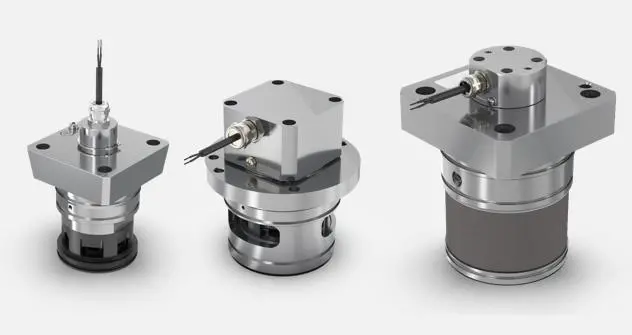
To return to basics for a moment, these SOGAVs are a family of electrically actuated, fast-response gas valves for port fuel admission on four-cycle, turbocharged natural gas or dual-fuel engines. They work by pressure loading the metering plate to the ‘closed’ position; it’s opened on demand by the valve’s e‐core solenoid, which has a short travel and high output-force designed to deliver consistent and precise cylinder-to-cylinder control.
It’s a rather elegant design suited to a broad swath of applications: that’s the reason they’ve been so successful in the past, and why they’re in the frame for the gaseous fuels of the future, Rick Boom of Woodward tells MS.
But getting everything lined up for the new fuels is by no means straightforward.
While the IGF-Code came into force in 2017, frankly “the industry as a whole was just not ready at that moment”, admits Boom. It was especially challenging for the SOGAV design, sitting in the critical ‘Zone 0’ as described by the IGF Code – right inside the gas flow.
Part of the issue was technical: while the code sets the goals for the safety levels required for compliance, it leans heavily on the international IECEx 60079 (explosive atmospheres) standard: this details “the ‘how’ and ‘what’,” he explains.
However, this standard is primarily designed from a pure explosion risk perspective: according to Boom, creating a marine gas admission valve product that fulfilled the sometimes conflicting criteria pushed the team into “largely unexplored” territory.
Take apparently simple items such as cable glands or solenoid encapsulation materials: these have to be both compatible with CH4 and also cope with the heat and vibration that comes with the SOGAV’s position right on top the cylinders. “There were products that looked good on paper but couldn’t survive this environment,” he says, “some of them failing within minutes of initiating a test”.
Further, just occasionally a suitable alternative couldn’t be found, which meant going right back to the drawing board and devising a solution that could sit within the boundaries of both the IECEx requirement and IGF code.
Moreover, not many ‘notified bodies’, (that is, those able to award the necessary listing) had any familiarity with marine engine room conditions. “So, finding one that was able to help us work out a solution was quite a challenge,” he admits.
Material compatibility wasn’t the end of the issue: there were also design conflicts.
For example, Woodward’s SOGAVs have integrated leak detection: this has been developed to address safety concerns around low-flashpoint fuels – but it relies on being accessible from the surface of the double-walled piping. That didn’t sit well with the IECEx requirement which wants the whole thing completely isolated; the notified body wanted the leak detection functionality entirely removed. “Class – well, they weren’t happy,” says Boom. It was eventually sorted out, but it took work.
And at this point, others stakeholders come into the mix. Resolving such conflicts might be relatively easy if there’s an unlimited palette of optional extras, but that just not going to wash with the OEMs: their requirement is for valves that sit in the same space, with the same characteristics as before. In short, “neither OEM customers nor class societies wanted to make alterations to proven designs or features”, says Boom: “They want a tested, fit and functional product”.
So, compliance been a lengthy business, “taking many sessions with OEMs, Notified Bodies, CIMAC and IACS before we even settled on the specification and started the design work”, but the concerted effort has paid off.
It’s not the end of the evolution for either the IGF-Code or Woodward. In fact, a recently emerging fuel has caught the SOGAV team’s attention.
Ammonia appears to be breaking ahead of the pack because it has better energy density than many of its competitors, and it promises a route forward into power-to-X fuels: “You hear about ammonia almost daily,” says Boom, pointing out that big players, including Maersk, have been paving the way for take-up. It’s not the only candidate by a long chalk, but “low-pressure ammonia gas admission is a realistic option,” he says, “and we have to make it work”.
Like others, ammonia will need to be embraced by the IGF Code to become a useful alternative. As such, it has many of the same considerations at other low-flashpoint fuels, explains Boom, who happens to be one of the code’s original architects.
Interestingly, ammonia – NH3 – and natural gas (largely CH4) belong in the same group as far as their flashpoint is concerned, and while combustion characteristics diverge there are useful potential mixes and possibilities for dual-fuel technology crossovers.
But once again, there are further demands which don’t sit easily with each other, planting manufacturers like Woodward squarely between conflicting requirements.
Things start to get tricky because SOGAVs need to retain their safety within the aggressively corrosive (and toxic) ammonic atmosphere.
“We’ve had to identify potential weaknesses for ammonia operation, and replace them – especially the elastomers,” says Boom. However, the first problem has been sourcing the alternatives and sadly, there’s been “a fair amount of disappointment” along the way, he adds – though the team have won through before, so he’s confident they will do so again.
INSIDE INFORMATION
Alternative fuels aren’t the only spur to innovation.
“Our SOGAVs do have a good track record. But there’s a growing focus on things like carbon emissions and methane slip, and this translates into heightened accuracy, a tightening of the mechanical tolerances,” says Boom: that, in turn, can drive up costs. However, he explains another, effective method to help mitigate these growing requirements’ impact is to apply a diagnostic system and electronic support.
That means getting inside information on the operation. The ECU triggers the mechanism on demand, but there’s been no feedback to precisely ascertain how it responds. So, recent developments have added current profile monitoring, which plots exactly when the valve opens and closes.
“A drift in performance – usually from wear and tear – can usually be compensated by control algorithms,” says Boom. The new diagnostic element also allows an accurate prediction of the remaining time before it has to be replaced entirely. While these SOGAVs are built for a typical 16,000-24,000 hour life, he comments that “it’s very useful for the operator to know if the valves are good for the next 5,000 hours”.
Finally, Woodward’s SOGAVs are almost ubiquitous but this can be a double-edged sword. As a result of the valve’s market penetration, “we are dealing with every OEM and every engine, each of which has its specific validation requirements”, he explains, adding: “We are steadily working our way through them all.”
It’s obviously a protracted, detailed business. However, these adaptations already cover around 99% of all applicable engines between a 17cm and 54cm bore size – so it’s pretty sure they will be ready to meet the new demands.
Will there now be a pause for breath in the round of modifications? Possibly not – partly because the industry shows no sign of settling the fuel contest anytime soon: in fact, it might be just beginning, predicts Boom: “The whole journey toward zero emissions is leading a lot of R&D… there’s a high number of combustion recipes and potential systems, which will have to boil down over time.” This, of course, impacts both material and electronic development of a range of components.
However, “the SOGAVs’ longevity stems from the company’s efforts to meet the needs of the market”, he concludes. “We’re always innovating.”