



HSFO and scrubber sales continued to rise in March
Peter Sand, its chief shipping analyst and the report’s author, later told The Motorship that uncertainty over which low-emission fuel to choose lies behind the trend so HFSO’s market share will continue to rise “until future fuels start to arrive”.
By then, about 30-35% of the dry, wet and box fleet over 10,000dwt will be fitted with scrubbers, he predicted, but how long that will take is not clear; “probably longer than most people imagine”, he said.
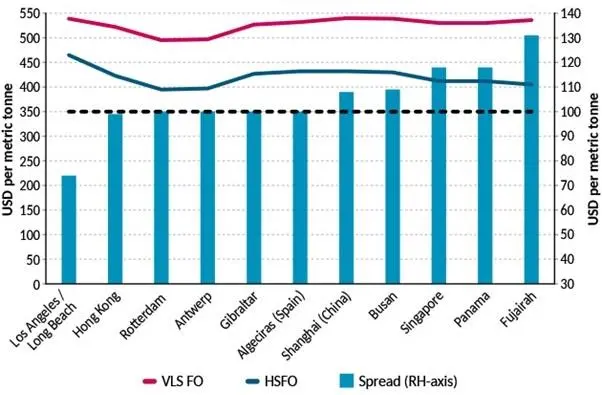
His report said that the price spread between HSFO and LSFO was about US$118/tonne – down from the pre-2020 level of US$200/tonne – with HSFO sales now accounting for about 25% of all bunker stems, compared with 17% in January 2020.
Fuel prices and spreads vary considerably and he believes that IMO 2020 has been a catalyst in consolidating bunker sales towards major hubs. According to the International Energy Agency, global bunker demand fell by 4.3% in 2020 yet sales went up by 5% in Singapore and by 5.6% in Rotterdam.
Based on that US$118 price spread, Sand estimated scrubber payback times of 1.2-1.7 years for newbuildings, but he agreed that scrubbers have a limited lifetime, because of global emission reduction targets. They will be financially attractive for four-five more years, he said.
He pointed to Torm as a company that had seen commercial success through scrubber investments. In a presentation of its Q4 and full-year results on 1 March, Torm said its “scrubber investments are based on attractive business cases with a short payback” and high internal rates of return.
Related Articles
 EXHAUST GAS CLEANING SYSTEMS
 EXHAUST GAS CLEANING SYSTEMS
 EXHAUST GAS CLEANING SYSTEMS