Huisman produces 350t capacity 3D printed crane hooks, targets larger sizes
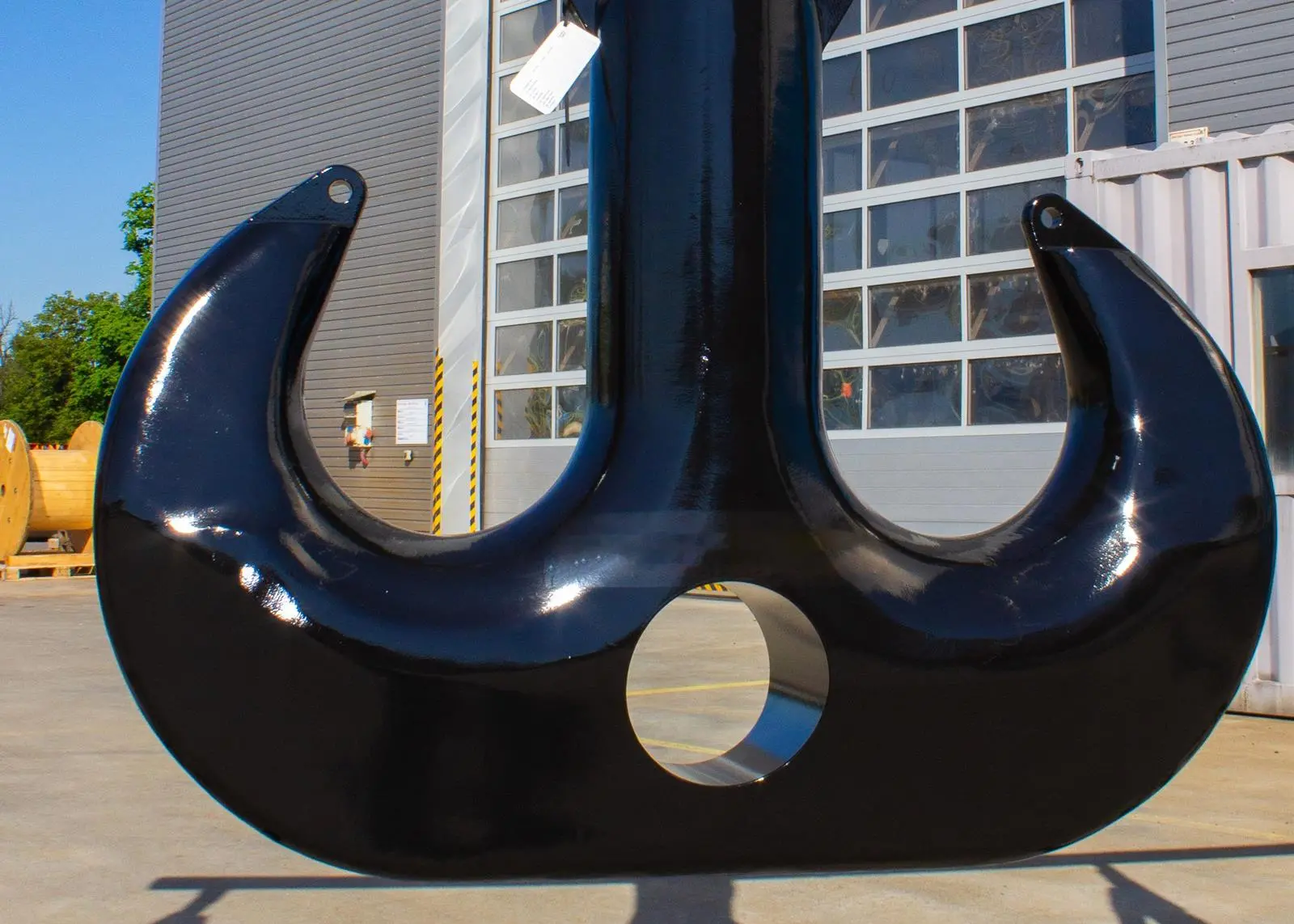
The successful test represents an important advance in the size of hooks that Huisman can manufacture using the WAAM process. Huisman has been employing the WAAM 3D printing technique to produce mid-size to large components with high-grade tensile steel. The application of the WAAM printing technique for crane hooks holds out the prospect of shorter production lead times, improved consistency and lower production costs for the sector.
The hooks’ 170 by 130cm dimensions are almost nine times greater than the first Huisman 3D printed crane hook. However, Huisman has plans to upgrade the production capacity at its production facility in Sviadnov, Czech Republic, which currently holds three welding robots. By upgrading its capacity, Huisman will be able to produce crane hooks with a weight up to 5,000 kg.
The company says that 3D printing technology could easily become the “new future manufacturing technology.” 3D printed components can provide a significant reduction in delivery time at a cost that competes with forgings and castings, but with a more consistent level of quality.
Daniel Bílek, Project Coordinator said: “Crane hooks are commonly part of the delivery of heavy lifting cranes for the offshore industry, one of our key products. The price of a forged hook increases exponentially with size, especially if it is a non-standard size. If a hook is produced by casting, the problem of inconsistent internal quality could result in longer delivery times. All this led to the idea of making the hooks ourselves, using the so-called WAAM method. After 5 years of research, development and testing of 3D printed products, we have gained the necessary expertise to use this innovative method for the production of high quality crane hooks.”
Huisman is a global supplier of technical solutions to the world’s leading companies in the oil and gas, renewable energy, entertainment and civil markets.