



ITALIAN WESP EXHAUST GAS SOLUTION PREPARES FOR CRUISE VESSEL TRIAL
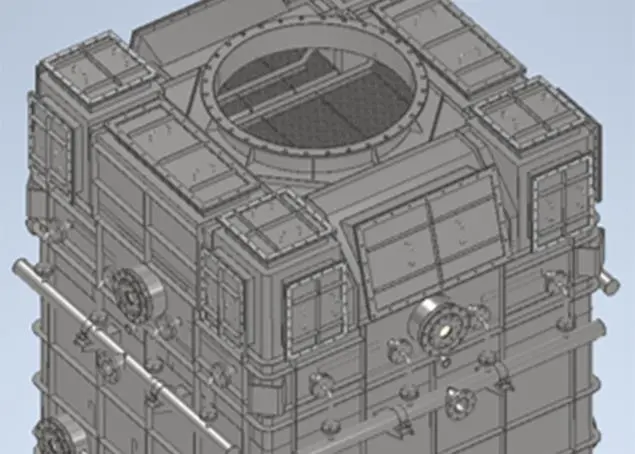
The company’s WESP – Wet Electrostatic Precipitator – has successfully passed laboratory tests at Ecospray’s research facilities, and will now proceed to full scale tests in collaboration with classification society RINA. SGS will provide support with the analysis of the test results.
Ecospray announced on 6 July that the solution is expected to be ready for its installation aboard a cruise ship. Ecospray is a wholly-owned subsidiary of Carnival Cruises.
All required laboratory testing has been successfully completed in recent months at the Ecospray Labs. The project will be developed in collaboration with RINA, who will support Ecospray in the assessment of the technology and run various tests.
Initial results indicate that PM emissions can be reduced by up to 95% even for very fine particles (<PM2.5 and PM1), for engines operating at between 55-65% load.
The standalone solution can be installed after a hybrid or open loop scrubber, or operated independently, the company noted.
The technology is based on wet electrostatic precipitator technology, a mature emissions abatement technology that is widely used in the forestry products and energy generation sectors. Wet ESP systems combine a water spray system to cool and saturate gases before passing the exhaust gases through an electrical field.
The WESP reactor features high voltage electrodes within collecting tubes, upon the walls of which the particles accumulate. The accumulated soot and particles deposits are cleaned from the collecting plates by a proprietary purging system.
The specific requirements of marine installations have been addressed in the development, with additional backpressure requirements limited to 4mbar, while the operational cost of the system is estimated at 0.5% of the engine’s rated power.
Filippo Lossani of Ecospray commented that “The WESP, like EGCS systems, is a “bridge” technology. We are very pleased with the WESP: it is a new product for the maritime industry, and is ready to be installed. Looking forward, given the increasing focus on environmental sustainability, as well as the growing demand for emissions reductions, we expect that smoke and particulate emissions will be the next areas of regulation and we are ready”.
Related Articles
 EXHAUST GAS CLEANING SYSTEMS
 EXHAUST GAS CLEANING SYSTEMS
 EXHAUST GAS CLEANING SYSTEMS