



Why permanent magnets trump the norm for in-line shaft generators
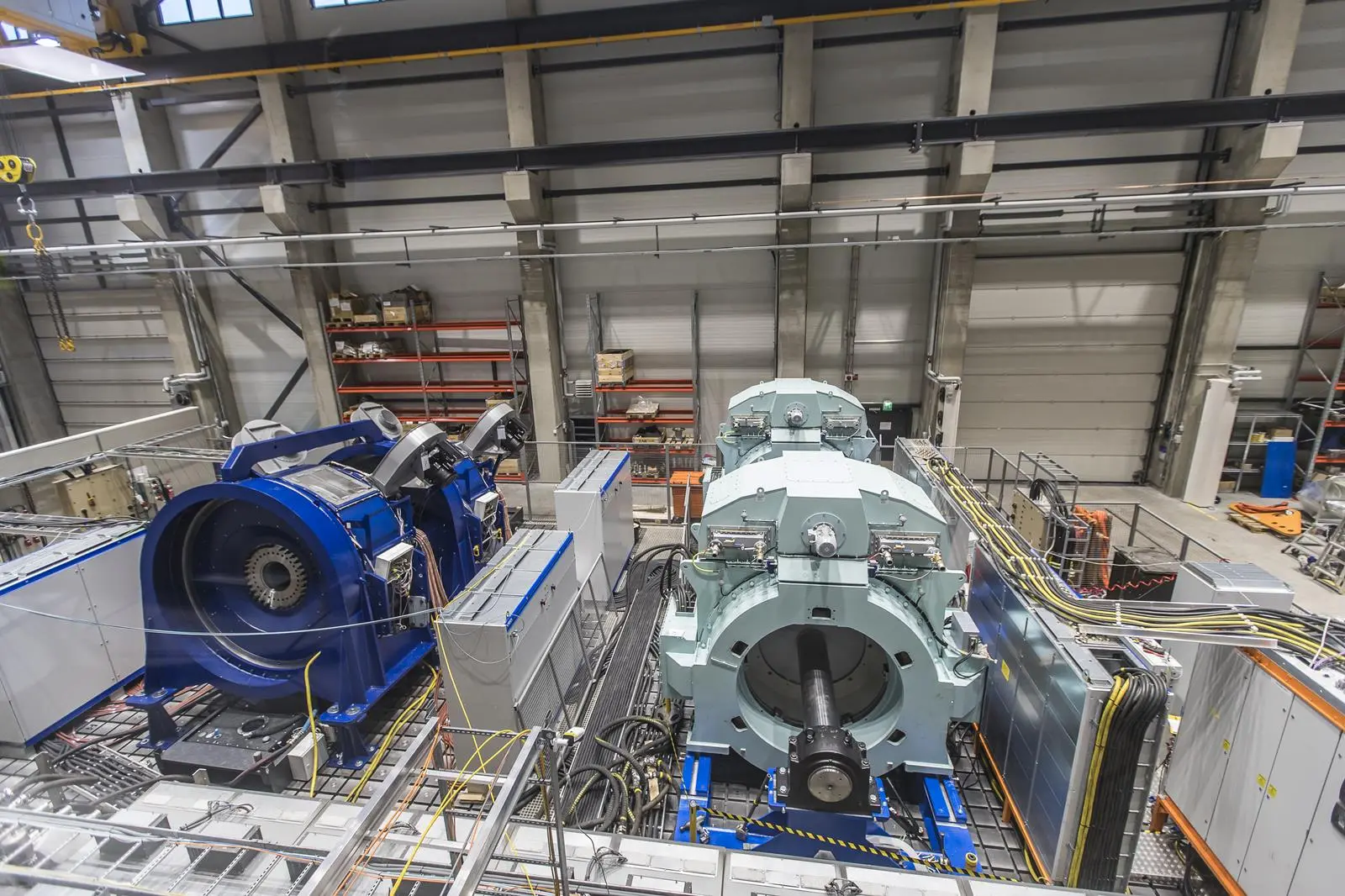
As part of intensified efforts to curb emissions, one of the best ways to boost energy efficiency is using a variable-speed in-line shaft generator for producing electrical power from 2-stroke main engines. So far, the standard has been to use electrically excited synchronous generators (EESGs) or induction machines (IMs) with squirrel-cage rotors, although these are less common.

Growing traction
Switching to PM machines takes efficiency to a whole new level, which the shipping industry is increasingly recognizing – and demonstrated by the fact that Yaskawa Environmental Energy/The Switch has so far sold around 120 PM machines of various frame sizes, with a heavy order backlog for large LNG and LPG carriers.
EESG weaknesses
A core drawback of EESGs is that they need external energy for magnetization, as the magnetic field is produced with electromagnets. This reduces efficiency and increases main-engine fuel consumption. PM machines, however, use strong Neodymium magnets that need no external energy for magnetization, resulting in higher efficiency.
Also counting against EESGs are their large size and mechanical complexity – they require an additional exciter/slip ring unit and automatic voltage regulator (AVR) to supply rotor current that require continuous maintenance. In contrast, PM machines are much more compact and mechanically simpler, delivering better long-term reliability and requiring far less maintenance.
IM drawbacks
IMs are slightly less efficient than EESGs but as no exciter or slip ring system is needed, they are mechanically much simpler, robust and virtually maintenance free. However, their electrical characteristics are not optimal for slow-speed applications such as in-line shaft generators and direct-drive propulsion. They require constant external magnetization power from the grid, regardless of the load, which severely affects efficiency at partial loads.
Slow-speed machines must be made with a high pole count, but IMs’ increased need for magnetization current in turn increases losses. The large magnetization current also lowers the power factor, requiring a larger frequency converter for the higher full-load current. It also causes significant ohmic losses in machine winding, so IMs must have lower power density to avoid severe overheating.
In addition, to handle higher losses and bigger current, the stator and rotor of an IM needs to be significantly bigger, significantly increasing the machine’s total weight and the cost.
Such losses do not exist in PM machines, as the magnetic field is produced with the permanent magnets, and their power density can be pushed much higher, making them smaller and also safer.
Perfect for slow speed applications
Although the efficiency premium of PM machines in geared, high-speed applications is typically only around 1% higher compared to conventional EESGs and IMs, they are significantly more efficient in slow-speed applications. Indeed, they often have peak efficiency at partial load operation hence are especially suitable when slow steaming is a desired function. This also explains why they have become a standard choice in large LNG and LPG carriers, which typically use an in-line shaft generator.
In summary, changing to PM technology instead of both EESG and IM machines can significantly improve energy efficiency, lowering the carbon footprint of ships and enhancing operators’ bottom line through major fuel savings and lower lifetime Opex.
Related Articles
 ELECTRIFICATION AND BATTERY HYBRIDS
 ELECTRIFICATION AND BATTERY HYBRIDS
 ELECTRIFICATION AND BATTERY HYBRIDS