New study highlights the potential of renewable methane in Germany
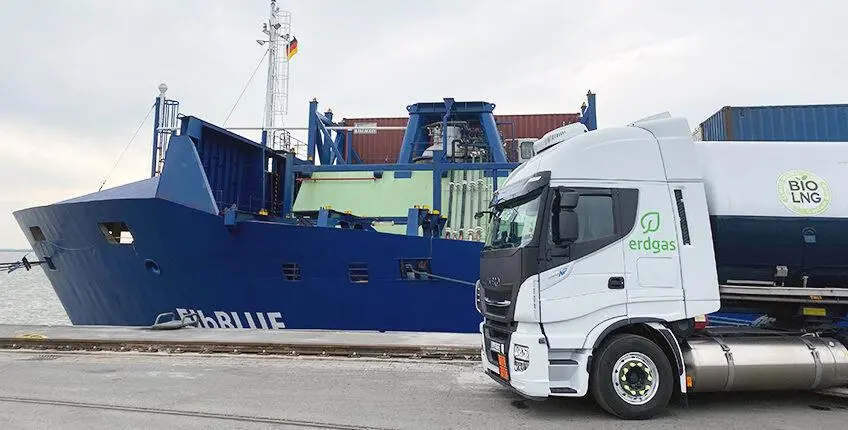
The study investigated the substitution potential and the resulting greenhouse gas reduction potential of renewable methane as a truck and maritime fuel up to 2030.
Through the use of renewable instead of fossil compressed natural gas (CNG) or LNG, greenhouse gas emissions in road freight transport could be reduced well-to-wheel by approximately 50 to 80%. In shipping, greenhouse gas emissions well-to-wake could be reduced by 35 to 80% by using sustainably produced renewable methane, depending on the methane slip of the engines used. For a greenhouse gas reduction of more than 80%, upstream emissions would also have to be reduced.
According to the report, there is around 118–240 PJ/a of untapped biomethane which could be produced from residual materials such as straw or liquid manure. There is also a largely unutilised potential for electricity-based methane.
They note that biomethane is the cheapest advanced biofuel, and also the only currently available type on the market in the required quantities as demanded by the minimum quota for advanced biofuels in the Federal Emission Protection Act. On this basis, the researchers assume that fossil CNG/LNG could be largely substituted by biomethane in road freight transport as early as 2025. This is expected to lead to an annual greenhouse gas reduction of 1.6 to 1.9 million tonnes of CO2 equivalent in road freight transport.
The report also points out, however, that renewable methane is generally more expensive than fossil natural gas, so that substitution will not occur on a purely cost-driven basis without a regulatory framework. The researchers do not expect that fossil LNG will be replaced by renewable methane in large quantities in shipping in the foreseeable future due to a lack of regulatory requirements and incentives. However, adoption is expected in the medium term with the EU Commission’s “Fit for 55” package of measures including the draft FuelEU Maritime Regulation which encourages the use of low greenhouse gas fuels in shipping.
The scientists conclude that the exploitable potential of renewable methane produced in Germany alone by 2030 would significantly exceed the demand for natural gas in the fuel segments analysed.
Industry group SEA-LNG says the transition pathway to carbon-neutral shipping services, through the use of bioLNG and synthetic LNG, is clear and well defined. Bio and synthetic LNG can be used interchangeably with existing LNG bulk infrastructure, supply chains, bunkering vessels and dual fuel engines. Produced from the decomposition of organic waste, bioLNG provides a practical and replicable source of energy that mitigates and repurposes carbon emissions.