



Thames Operator Books Hybrid Ferry With UK Yard
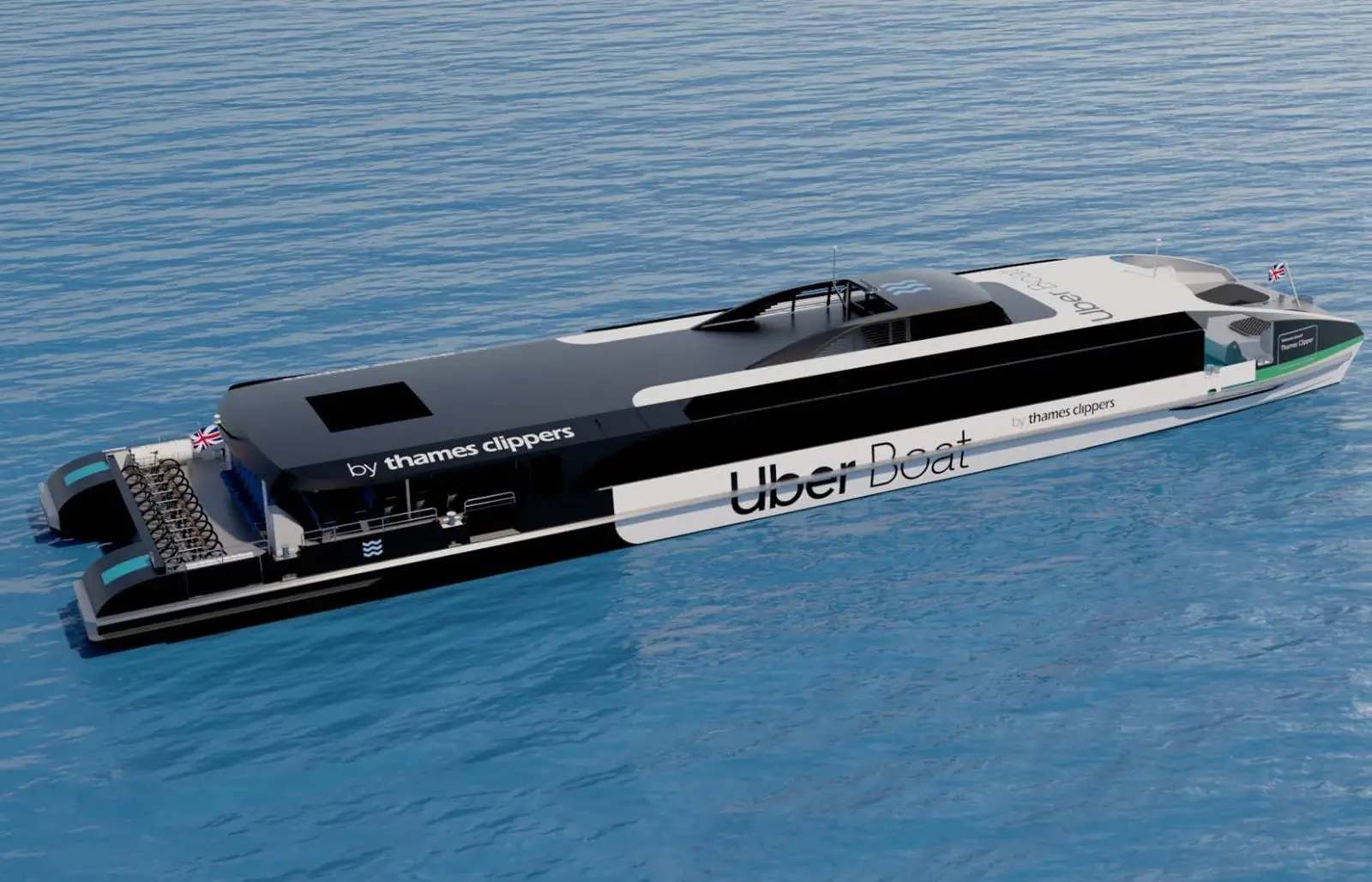
Although few technical details are available at this stage, the 40m newbuilds look set to push the bounds in catamaran design, raising the environmental standard in metropolitan river transport. Offering capacity for 231 passengers , the vessels will ply the continually expanding commuter and sightseeing river bus route network along the Thames. On scheduled introduction during the autumn of 2022 and spring 2023, respectively, the sleek craft will be the quietest in the fleet.
The hybrid engineering arrangements will allow the ferries to run solely on battery power when maintaining service through the Central London section of the river, between Tower and Battersea Power Station piers. During passages outside the central zone, a switch will be made to engine operation on biofuel, and with simultaneous battery recharging using biofuelled power.
The technology applied thereby ensures that the vessels will not be dependent on shore-based charging. Moreover, initiatives taken by other interests on the Thames have already ensured biofuel availability to river traffic.
Uber Boat by Thames Clippers, which changed name from MBNA Thames Clippers after entering into partnership with Uber in August 2020, controls about 20 vessels calling at 23 piers, soon to be 24, along the tideway. The company has set a net zero carbon goal by 2025 for all newbuilds, and by 2040 for its wider fleet and infrastructure.
Co-founder and CEO Sean Collins said “We are looking ahead with this hybrid design, ensuring easy conversion to green hydrogen or another renewable energy source—something we are also focusing heavily on with the new projects we are undertaking thanks to recent Department for Transport(DfT) funding. It is the next step in our strategy to net zero and, ultimately, tailpipe zero.”
Last September, Uber Boat by Thames Clippers secured DfT funding to support three projects being undertaken in collaboration with other partners to research and develop the concept and feasibility of ‘green’ river transport. The first outcomes of these studies are expected during the spring and should help to inform the business in its drive towards net zero.
The company is also a participant in the EU-sponsored TrAM R&D project focusing on the development of fully electric, zero emission, high-speed passenger ferries. Findings from TrAM have also influenced the specification of the two newbuilds.
Having previously looked to Australia’s lightweight shipbuilding industry for new tonnage, the company took its 2016 contract for two Scania-engined, low-wash, 35m catamarans to Wight Shipyard, albeit retaining Australian design consultancy One2three Naval Architects of Sydney. The order ranked as the largest placed for fast passenger ferries with a UK shipbuilder for more than 25 years. A slightly bigger third vessel, of 38m, was subsequently booked with the UK yard and handed over in 2019.
One2three Naval Architects has continued its association with Uber Boat by Thames Clippers, including as a partner in one of the three current R&D projects, in which the feasibility of integrating and also retrofitting fuel cell electric drive systems into the catamaran platform is being investigated.
Located at East Cowes on the Isle of Wight, off the southern English mainland, Wight Shipyard has emerged in recent years as a dynamic force in small-ship construction for both UK and export markets. Its prowess in landing a succession of orders from Austria, Mexico and Malta brought the yard the Queen’s Award in November 2021.
Related Articles
 ELECTRIFICATION AND BATTERY HYBRIDS
 ELECTRIFICATION AND BATTERY HYBRIDS
 ELECTRIFICATION AND BATTERY HYBRIDS