



Maersk Supply Service launches new offshore vessel charging venture
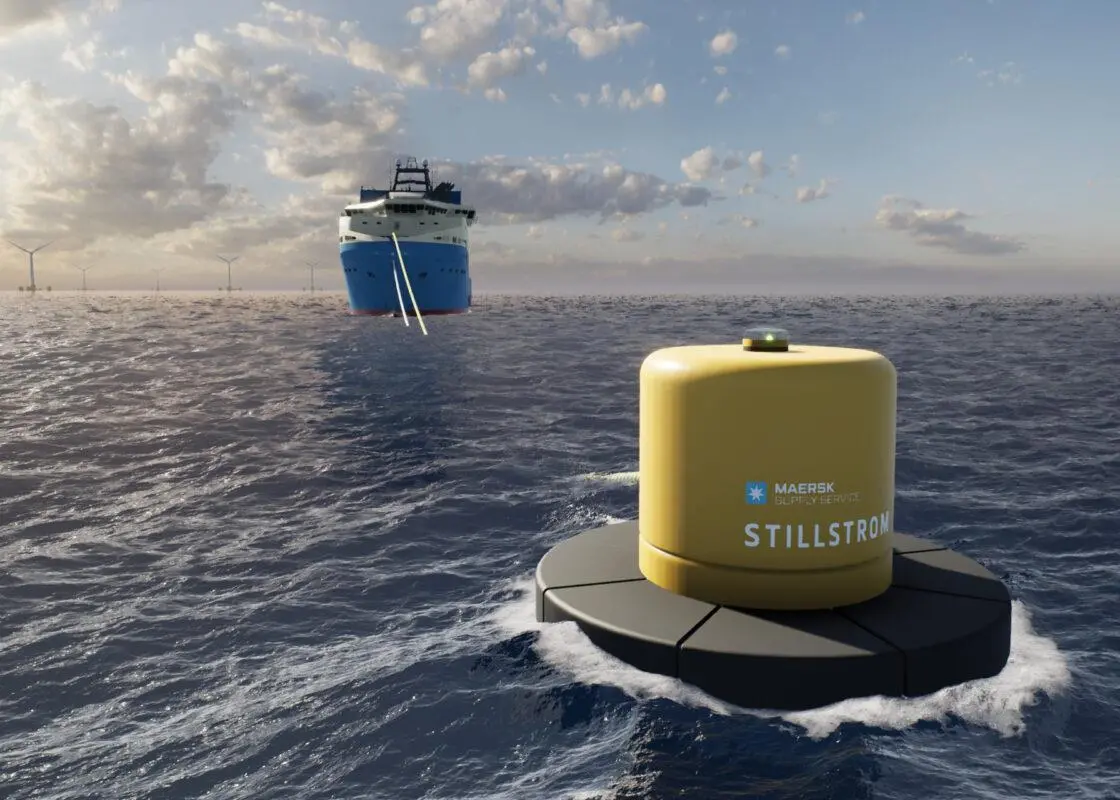
The first full-scale charging buoy will be demonstrated in cooperation with Ørsted in Q3 2022 when the buoy will supply overnight power to one of Ørsted’s Service Operations Vessels (SOVs).
The charging buoy has capacity to charge an SOV-sized battery- or hybrid-electric vessel. The same solution will be scaled and adapted to supply power to larger vessels, enabling vessels of all sizes to turn off their engines when lying idle. By substituting fossil-based fuels with green electricity, virtually all emissions and noise pollution are eliminated while the buoy is in use.
The project supports Ørsted’s target of climate-neutral operations in 2025, and Ørsted will be responsible for the grid integration of the charging buoy. Ørsted intends to make any intellectual property generated during the design of the buoy’s integration into the offshore wind asset publicly available, to maximise the potential uptake of the system across the offshore wind sector.
“Our vision at Stillstrom is to enable maritime decarbonisation, by providing the infrastructure that will allow vessels to charge from clean energy when idle offshore. The mission is to remove 5.5 million tons of CO2 within five years of commercial rollout, additionally eliminating particulate matter, NOx, and SOx,” says Sebastian Klasterer Toft, Venture Programme Manager at Maersk Supply Service. The company aims to reduce the carbon intensity of its fleet by 50% by 2030.
“Stillstrom” means “quiet power” in Danish. The company is fully owned by Maersk Supply Service and has received funding support from the Danish Maritime Fund and EUDP.
Related Articles
 ELECTRIFICATION AND BATTERY HYBRIDS
 ELECTRIFICATION AND BATTERY HYBRIDS
 ELECTRIFICATION AND BATTERY HYBRIDS