GTT receives AiP for Mark III upgrade
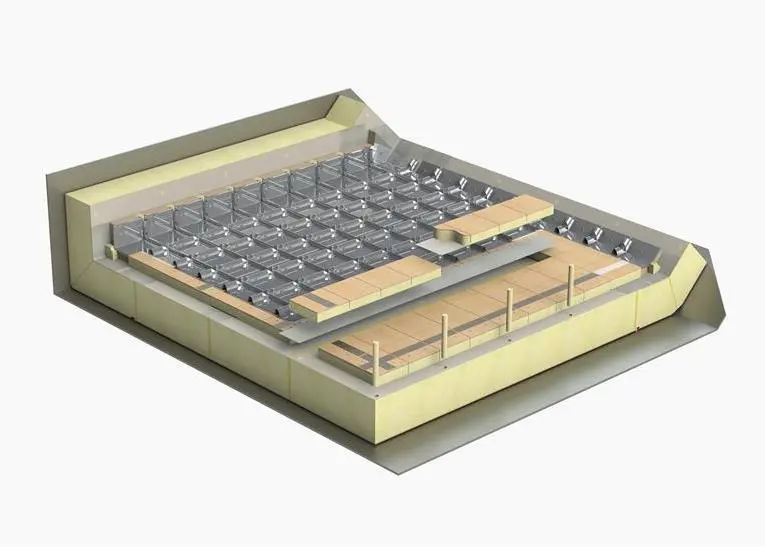
The upgrade is particularly useful for PCTCs and cruise ships and offers improved pressure holding capabilities and operational flexibility in particular during bunkering operations.
Philippe Berterottière, Chairman and CEO of GTT, said: “This AiP demonstrates that our solutions are constantly evolving in order to meet the industry requirements. Today, GTT membrane solutions are applicable to more and more LNG-fuelled vessel types, such as LNG-fuelled PCTCs and cruise ships.”
ClassNK carried out the verification according to its Rule Part GF incorporating IGF Code, especially on maximum tank dimensions, tank structural reinforcements, tank operating pressure during in service operations as well as aspects related to potential emergency situations.
ClassNK has just released new documents: “Guidelines for Approval in Principle and General Design Approval” and “Guidelines for Technology Qualification”.
“Guidelines for Approval in Principle and General Design Approval” outline a certification process to review designs based on existing standards such as international conventions and class rules in its early design stage or before a specific ship that will implement the product is determined. In addition to prevent backwards progress for the regulatory aspects in the later stages and shorten the time required for the final ship classification design review, these schemes can be used as a technical basis for appealing the progress of the design status. According to the guidelines, ClassNK issues AiP for basic design stage or earlier and General Design Approval (GDA) for products which are universally applicable to various ships in the detailed design stage.
“Guidelines for Technology Qualification” outline a certification process for technologies based on new concepts and designs that cannot be addressed by existing rules and standards. They provide a risk-based approach to safety assessment to implement the new technology. Through the identification of risks and issues associated with the novelty of the technology and the review of the safety measures responding to them, ClassNK confirms that the concerned technology functions reliably within a defined scope, and issue a technology qualification. The qualification indicates that the new technology has been verified to be as acceptably safe as the technologies designed under existing rules and standards.