



Compact shore power system developed
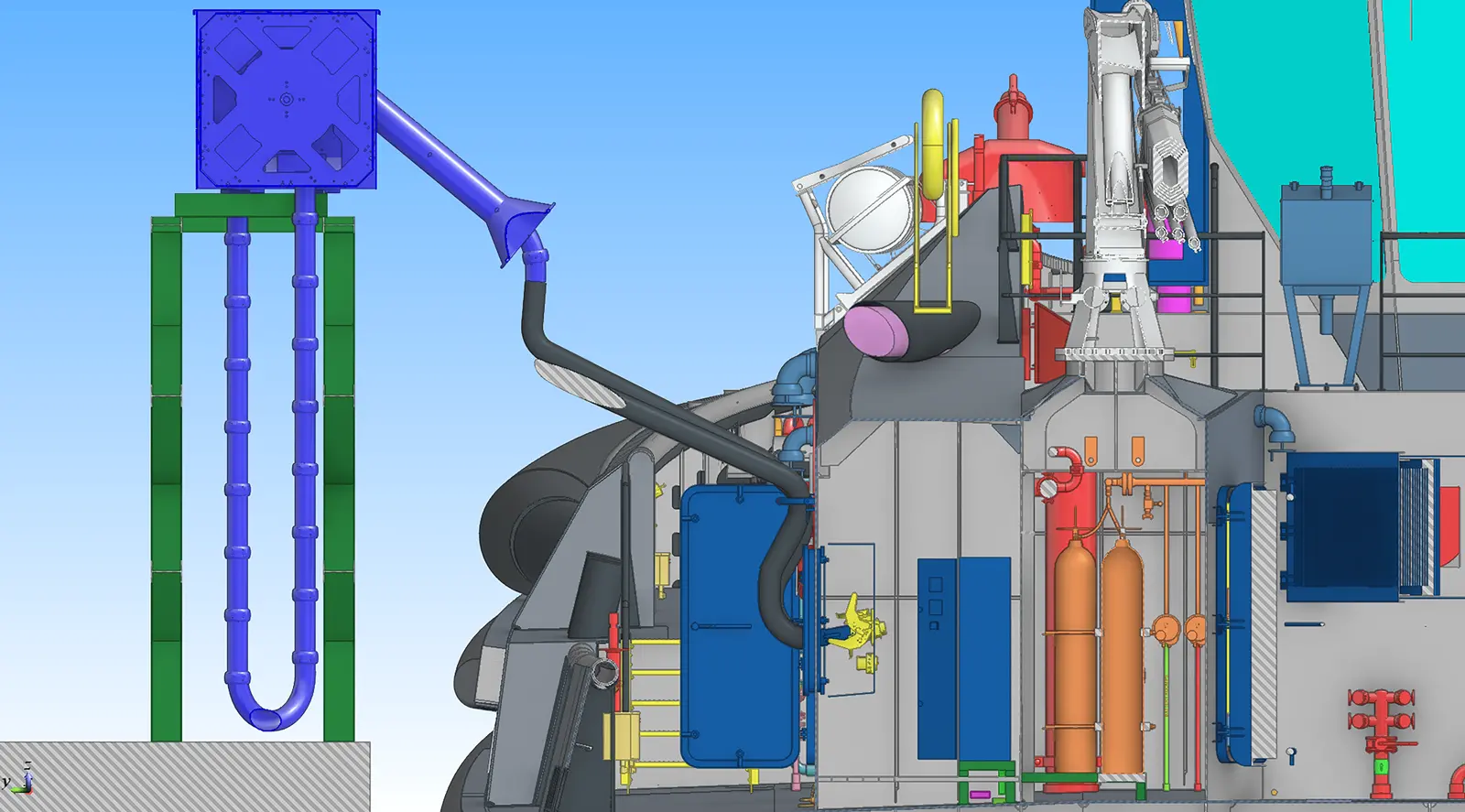
The modular design allows an extension of the dispenser system to easily provide higher charging power capacities. Each cable dispenser module can handle 500A current capacity (up to 1000V AC).
The cable management system, combines standard components and is operated with a radio remote control, so there is no need for additional personnel shore side to operate it. Connection and disconnection require only a few minutes.
The system comes ready to install, and the cable dispenser module can be is installed on support structure at a height suited to port requirements. The arm length can be adjusted and extra cable protection is provided by Triflex TR energy chain.
The two project partners are also developing an automated connection system which will be required if there is only a short period of time available for charging.
For Sanmar, as a Turkish shipyard and tugboat operator, the development is part of its mission to lead the tug and workboat industry’s efforts towards a sustainable, low- and zero-emission future.
Sanmar is already working in collaboration with Canadian naval architects Robert Allan Ltd and battery energy storage provider Corvus Energy to build and develop the ElectRA range of electric tugboats – five vessels ranging from 19m to 28m in length and up to 70 tonnes of bollard pull.
Martin Tilling, Shore Power Systems Industry Manager of Igus GmbH, said “Stricter guidelines are forcing ports to implement more environmentally friendly technologies. Our customised energy supply systems for providing vessels and tugboats at berth with shore power are the solution to reduce air pollution, noise and vibration.”
Igus also develops and tests tribologically optimised high-performance plastics for moving applications: plain bearings, linear bearings, ball bearings, spherical bearings, energy chains, cables, 3D printing materials and plastic-based low-cost robotics. The advantages of tribo-polymers are that they are lightweight and low-maintenance, and require no additional lubrication throughout their service life.
Related Articles
 ELECTRIFICATION AND BATTERY HYBRIDS
 ELECTRIFICATION AND BATTERY HYBRIDS
 ELECTRIFICATION AND BATTERY HYBRIDS