GTT unveils three-tank LNG carrier
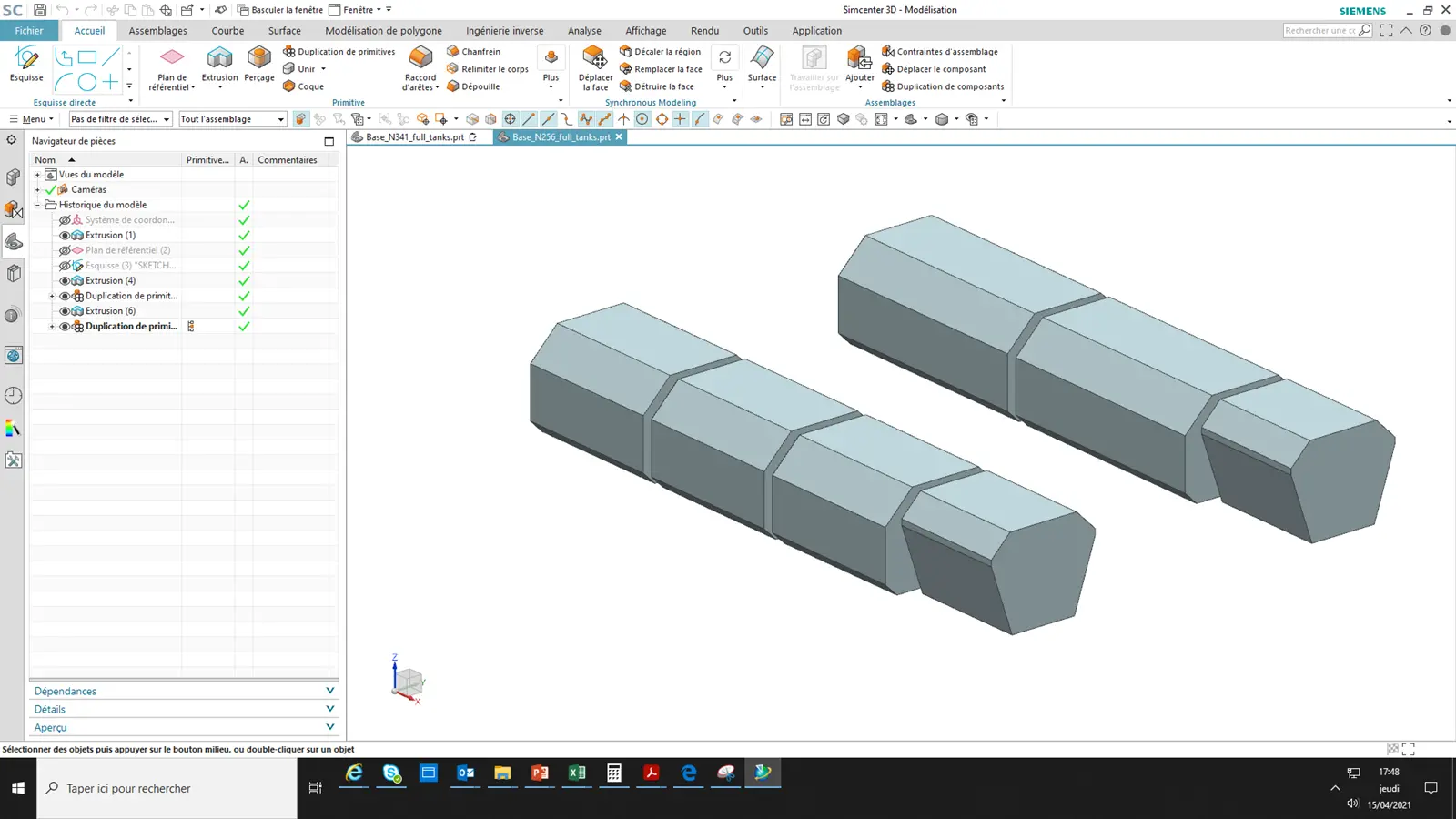
The design reduces construction costs by negating the need for one cofferdam, one pump tower and all associated cryogenic equipment (liquid and gas domes, valves, piping, radars, etc.). The overall surface area of the containment system will be reduced by about 2,000 m², generating lower costs for the materials and vessel construction. This could also offer time-savings for shipyards.
The three-tank LNG carrier has been designed with a similar operational flexibility as the conventional four-tank LNG carrier. For instance, several solutions to discharge the cargo with the same flow rate as for the four-tank design are envisaged.
The improved ratio between the volume of LNG transported and the surface area of the cryogenic liner will make it possible to reduce the daily boil-off rate. As an example, GTT estimates that it will achieve a boil-off rate as low as 0.080% of tank volume per day with the Mark III Flex technology, compared to 0.085% of the volume per day with the LNG carriers currently in operation.
The removal of a cofferdam will lighten the hull weight, and if specific reinforcement is deemed necessary during the final design, it will not significantly increase that weight. Ship length and overall cargo capacity might be further adjusted, and the design also allows for greater choice in ballast tank location.
As GTT’s membrane systems are fully modular, they can be used unchanged for any tank dimension with local reinforcement, if required, to withstand sloshing loads. Sloshing studies undertaken by GTT at its model test facility have shown the pre-feasibility of the lengthened tank design. GTT has researched any potential challenges that could be encountered for tank length increases of up to 55%.
As the tanks are modular, there is no limitation intrinsic to GTT containment systems: the three-tank LNG carrier has been initiated for a capacity of 174,000m³ which remains the current standard. Other capacities could be developed so long as the proposed ship design meets rule requirements and the operational flexibility required by terminals. GTT is already working on other innovative concepts to address a wider range of cargo capacities.
DNV and BV have issued an approval in principle for this innovative three-tank LNG carrier design for the Mark III and NO96 technologies developed by GTT.
Tom Klungseth Østvold, Principal Engineer for DNV Maritime, said: “Three different vessel arrangements were considered in the AiP process, for which we examined the intact and damage stability requirements, as well as the ability of the membrane type containment system to sustain the increased sloshing loads associated with the increased cargo tank dimensions for each. In addition, we undertook a high-level evaluation of hull strength based on the general arrangement and midship section drawings.”
The GTT three-tank LNGC concept implies a significant increase in cargo tank length and a change in the watertight compartmentation of the hull, he said. The general vessel safety arrangement, cargo handling systems, safety systems etc. are essentially unchanged by the design modification but would need to be adapted depending on the individual ship design.

“One of the key questions was the way the increased length of the tank shifts the sloshing resonance periods for the tanks upwards. This can increase exposure to resonant period ship motions and the sloshing impact load level in the tanks, but was addressed by GTT through detailed sloshing studies and strength evaluations of the containment systems. These studies identified an increase in sloshing impact loads compared to existing four cargo tank LNGC designs. However, GTT was able to demonstrate that this can be mitigated by the installation of the appropriate containment system reinforcement level available in the GTT product portfolio.”
Philippe Berterottière, Chairman and CEO of GTT, said: “For almost 60 years, the GTT Group has been constantly improving its technologies to offer its customers solutions that meet their requirements as well as those of the regulatory authorities. Thirty years ago, we upgraded LNG carriers from five to four tanks, and we now hope to bring the market forward with a three-tank LNG carrier. We hope to see this concept become standard in future years.”
The new LNG carrier design has generated a lot of interest from shipyards, shipowners and charterers, and is particularly noteworthy, says GTT, because it reduces CAPEX while also improving performance.