TGE to supply LNG systems for Vinga Series
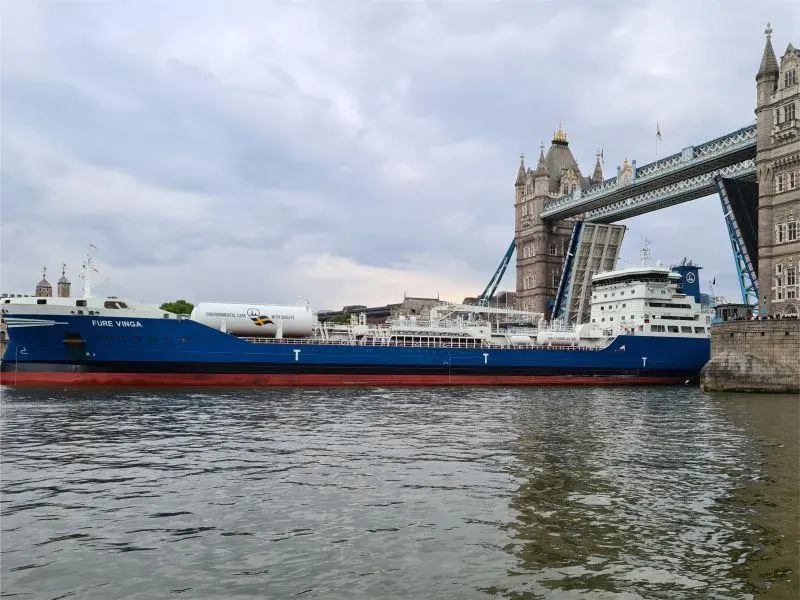
The ice class 1A Vinga ships are designed in cooperation with FKAB Marine Design. They all have dual-fuel capability and run on LNG/LBG or gasoil and are also fully equipped for shore power. They are designed with a battery hybrid solution and several innovative features, such as a propeller nozzle, high efficiency twisted lead flap rudder and electric cargo pumps, that reduce fuel and energy consumption, resulting in extensively lower emissions of CO2, SOx, NOx and hazardous particles.
The ducted propeller increases thrust and minimises the required engine output, and fitted with a nozzle, the propeller delivers approximately 25% more pull than a conventional open propeller solution while maintaining the highest ice class. The main engine and shaft generator use variable frequency, making it possible to run the propeller at variable speed with the shaft generator connected. This achieves the optimal balance between propeller rotation and engine power at any given vessel speed. Propeller efficiency is optimised and fuel consumption reduced by 20%.
The vessels also feature variable RPM compressors and steam boilers with exhaust heat recovery for the main Wärtsilä 9L34DF engine and auxiliary engines. The ships have scored the best Energy Efficiency Design Index or EEDI value in their segment globally.
TGE Marine has also been awarded the contract to design and supply the cargo handling and fuel gas system for a 12,000 m³ LNG bunker vessel by Nantong CIMC Sinopacific Offshore & Engineering. The vessel will operate in Chinese waters and will be equipped with two IMO type C cylindrical tanks with a design pressure of 4.5 bar g. An LNG sub-cooling system will also be fitted in order to condition the cargo to -163 °C. Furthermore, the vessel will be equipped with a cold recovery system to use the low temperature of the cargo for the ship’s air conditioning system, thereby reducing the overall power consumption.