



European funding for LOHC fuel cell retrofit project
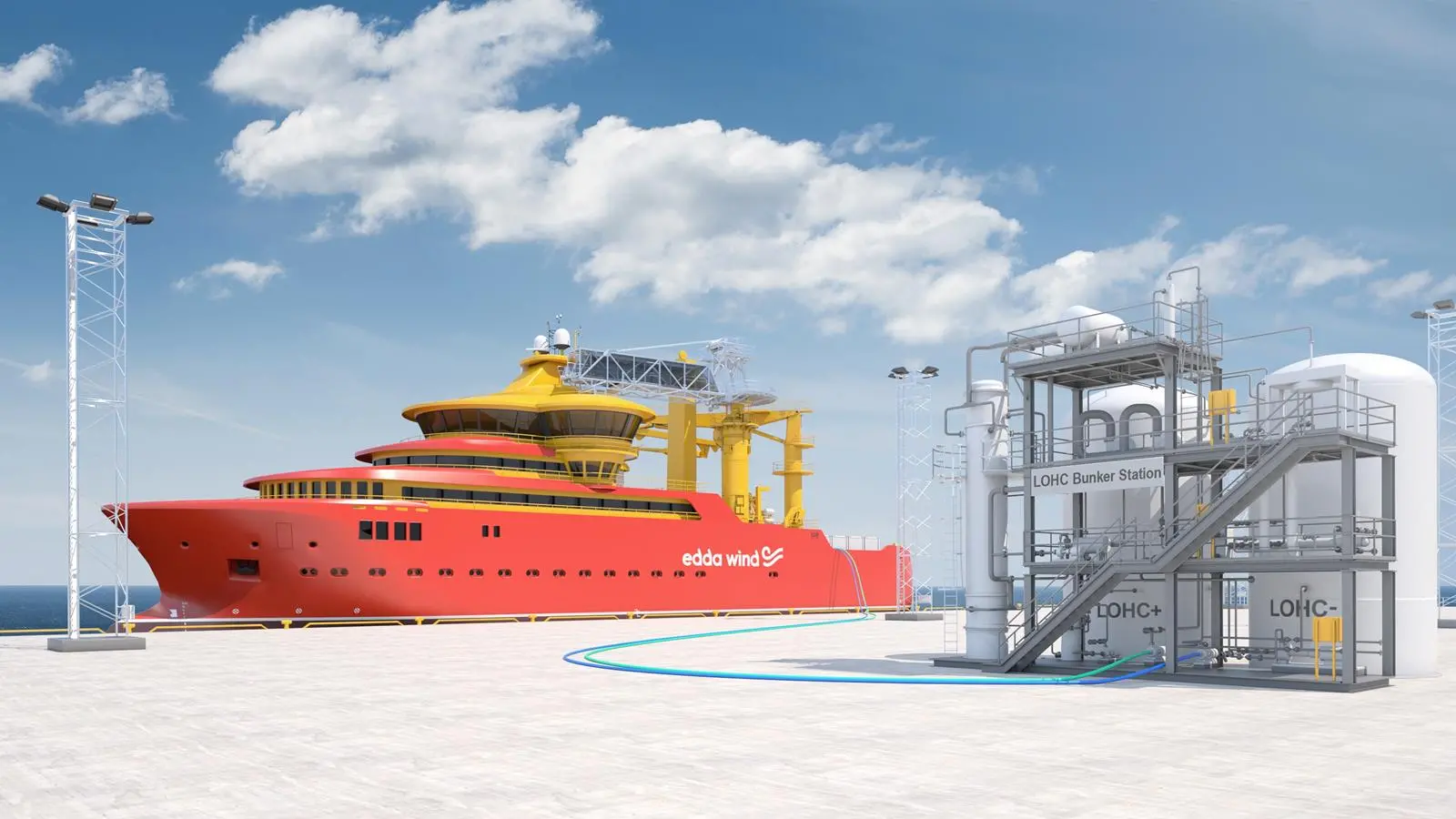
The Ship-aH2oy project intends to install a 1 MW hydrogen power system, consisting of a solid oxide fuel cell module and a hydrogen release unit onboard a new commissioning service operation vessel (CSOV) owned by Edda Wind, the Norwegian wind farm operator.
Edda Wind is a market leading C/SOV operator. Their new fleet of CSOVs for offshore wind operations have been designed with spare room for the future installation of hydrogen power systems up to 3 MW.
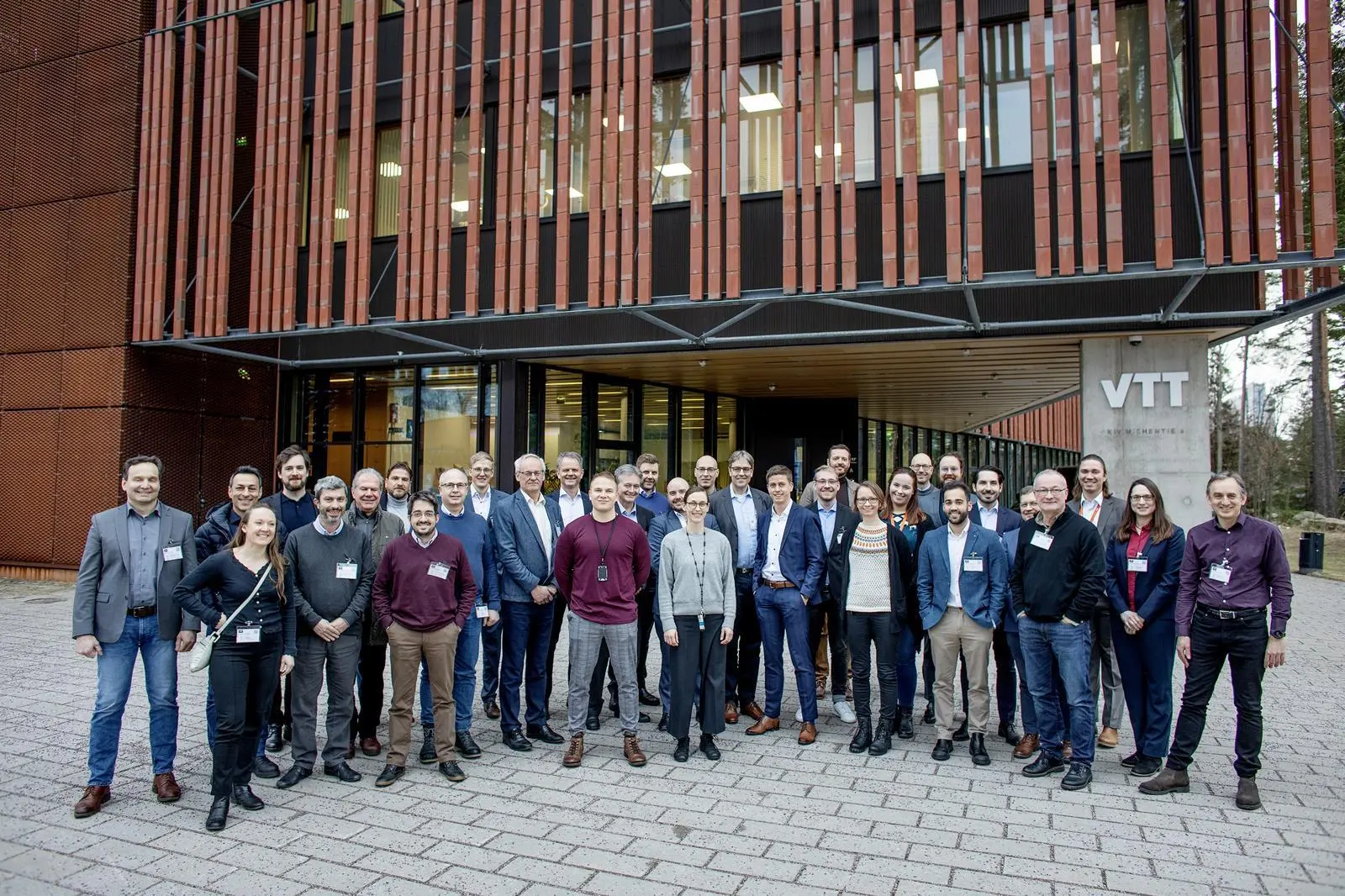
The project brings together 18 partners, spanning the maritime sector from research, technology, and design to ship builders, owners, and operators. The partners include: Norway’s Maritime CleanTech, as well as VTT Technical Research Centre of Finland, Edda Wind, Østensjø Rederi, Johannes Østensjø DY, Hydrogenious LOHC Maritime, Hydrogenious LOHC Technologies, Friedrich-Alexander-Universität Erlangen-Nürnberg (DE), Siemens Energy, DNV Hellas, Engitec Services, Demokritos, Gondan Shipbuilders, Deltamarin, Teknotherm, ANEK Lines, Ethnicon Metsovion Polytechnion.
At a later stage, the project will also include a replication study for integrating the power system on board a passenger ship operating on coastal waters. The implementation and demonstration will prove that the concept developed during the project is scalable beyond the 3 MW level.
LOHC technology
Liquid organic hydrogen carrier (LOHC) adds a new way of handling hydrogen onboard ships in contrast to the established technologies. Instead of using gaseous or liquid hydrogen, hydrogen is chemically bound to a carrier.
The carrier chosen in this project is an industrially available thermal oil, benzyl toluene, which can be used to store and transport large amounts of hydrogen within the existing fossil fuel infrastructure. This LOHC solution also significantly increases the safety onboard as the carrier oil is non-explosive.
A hydrogen release unit onboard the ship releases the hydrogen from the LOHC into the fuel cell. The waste heat from the SOFC will be recovered for the hydrogen release unit as well as the ship’s heating needs. In this way, a high system efficiency can be achieved. In combination with the safety and handling advantages of LOHC, this makes it a very promising emission-free fuel.
“The use of liquid organic hydrogen carrier technology in this project is a potential game-changer for the maritime industry’s accelerated transition to clean energy. The LOHC solution applied enables a superior safe and efficient way to store and transport hydrogen, proven in stationary systems. We are thrilled to bring this innovative tech on the water and start testing it as main power for the vessel, demonstrating its capabilities in this groundbreaking project,” comments Øystein Skår, General Manager at Hydrogenious LOHC Maritime.
“This project is a great example of the kind of innovation and collaboration that is needed to bring clean energy solutions to the maritime sector. We are excited to work with our partners to demonstrate the potential of combining high-temperature fuel cells and LOHC technology as a safe and scalable solution for zero-emission shipping,” says project coordinator Jaana Viitakangas, senior scientist at VTT.
Related Articles
 BATTERIES, SUPERCAPACITORS, FUEL CELLS AND OTHER ENERGY STORAGE TECHNOLOGY
 BATTERIES, SUPERCAPACITORS, FUEL CELLS AND OTHER ENERGY STORAGE TECHNOLOGY
 BATTERIES, SUPERCAPACITORS, FUEL CELLS AND OTHER ENERGY STORAGE TECHNOLOGY