



German research project to develop new high-performance marine LFP cells
The project has a budget of EUR2.1 million, to which the Federal Ministry of Education and Research is contributing EUR1.3m from the “Climate and Transformation Fund”. The project partners include the Karlsruhe Institute of Technology, EdgeWave and EAS Batteries. The project runs for three years and ends on 31 January 2026. EAS Batteries is coordinating the research project.
The project intends to significantly improve the performance of cylindrical lithium ion cells. The three research partners are transferring concepts of laser structuring of electrodes to large-format winding cells for the first time and applying them to the sustainable and safe active material lithium iron phosphate (LFP).
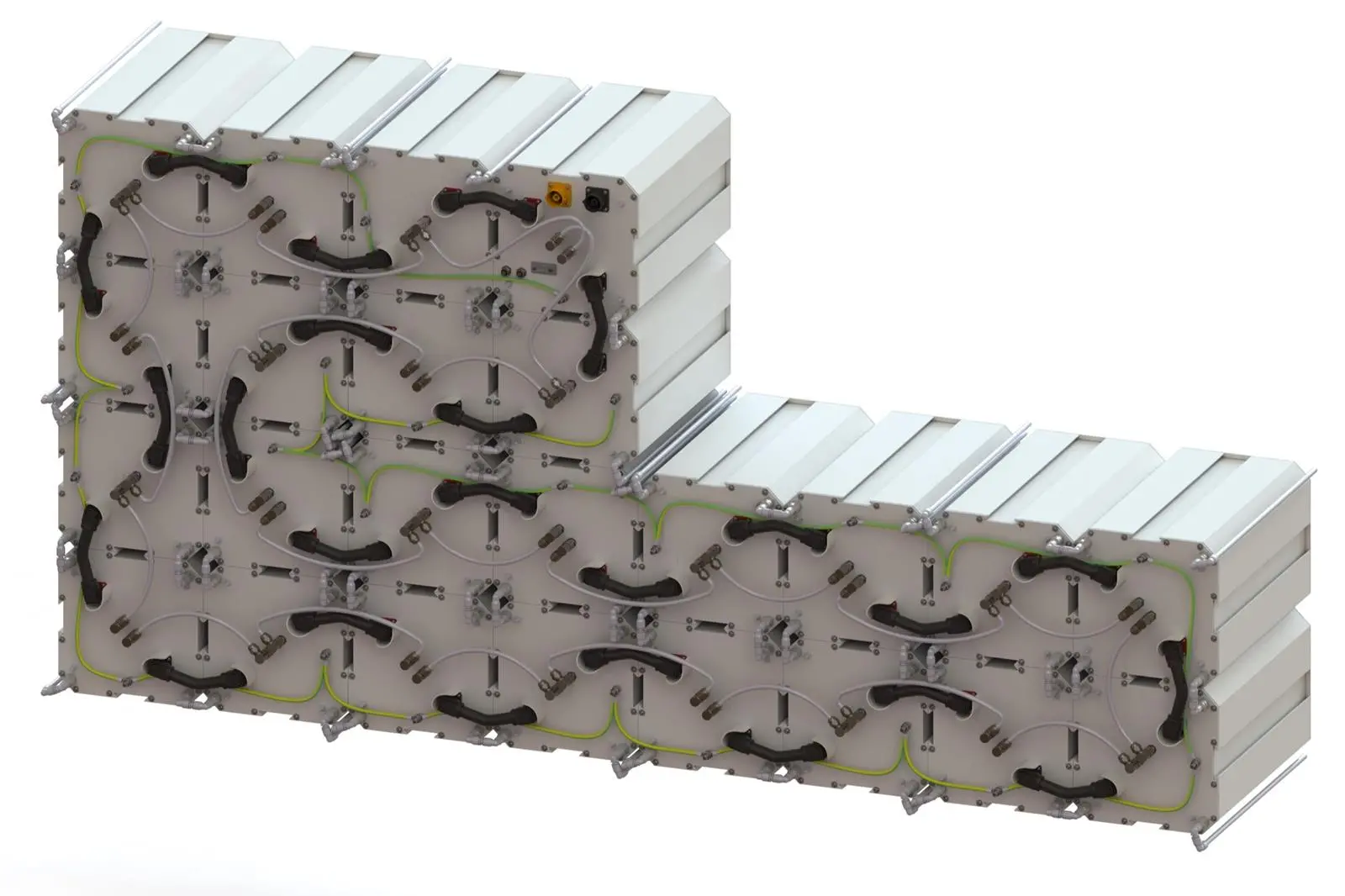
LFP high-energy cell in modular marine battery system
The project consortium combines the latest laser technology with state-of-the-art battery cell technology. The Karlsruhe Institute of Technology is researching laser-based processes in cell production, which are to be validated and applied in the production of the cell developer EAS Batteries with the help of high-end laser beam sources from EdgeWave. The concrete application goal of the research project is to develop a cell that surpasses the properties of the current EAS portfolio cell “MP602030 LFP 50 Ah” and to use it in the modular battery system for the maritime industry EASy Marine.
Higher C rates and higher densities
The project developers believe that perforations in the active material of the electrodes shorten the paths of ion migration and thus accelerate the charging and discharging process in a lithium ion cell. The so-called ion highways can prospectively reduce the charging times of large-format LFP round cells by 50% or even 66%. At the same time, thicker electrodes can be wound due to the higher mechanical flexibility. This increases the energy density and thus the capacity of the cell.
Related Articles
 BATTERIES, SUPERCAPACITORS, FUEL CELLS AND OTHER ENERGY STORAGE TECHNOLOGY
 BATTERIES, SUPERCAPACITORS, FUEL CELLS AND OTHER ENERGY STORAGE TECHNOLOGY
 BATTERIES, SUPERCAPACITORS, FUEL CELLS AND OTHER ENERGY STORAGE TECHNOLOGY