



First LH2-fuelled hydrogen fuel cell ferry enters service
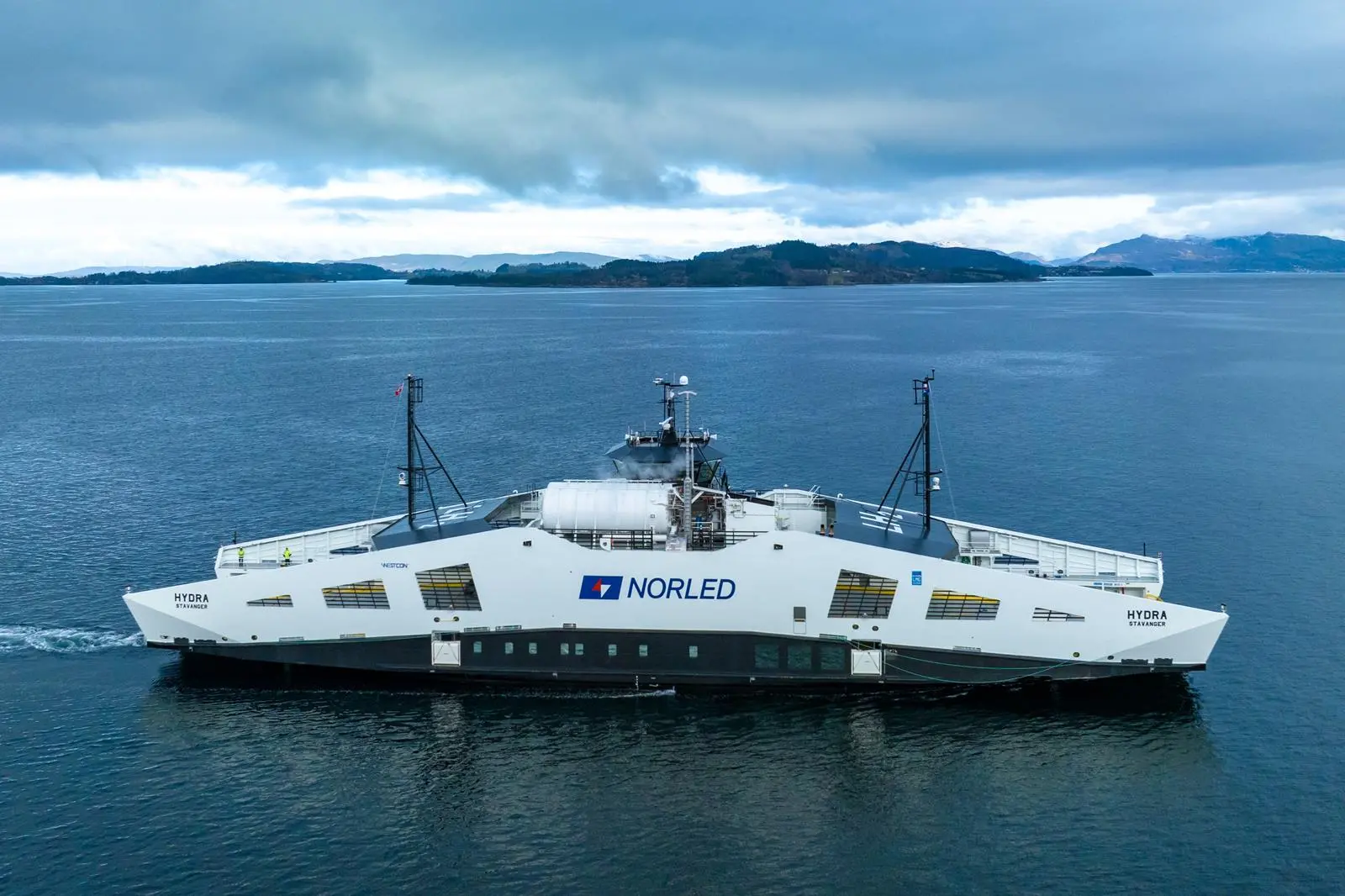
The process of obtaining final approvals from the NMA has been extensive. The Hydra was delivered from shipbuilder Westcon’s Olen yard in June 2022, after which the hydrogen storage, fuel gas supply system and fuel cell system were installed by early Q4 2022.
Norled began carrying out system tests at the quay in Hjelmeland at the beginning of 2023. In Q1 2023, they began to run sea trials, culminating in the receipt of final approvals from the NMA in March.
The groundbreaking project is understood to have contributed significantly to the development of techology and regulations relating to liquid hydrogen within the NMA and DNV, the classification society associated with the project.
As previously reported by The Motorship, the Hydra is equipped with two 200kW fuel cells, a 1.36MWh battery plant, plus a pair of 440kW diesel generators as back-up. The PEM fuel cells were supplied by Ballard Power Systems, along with an 80m3 liquefied hydrogen fuel tank, manufactured by industrial gases company Linde. The LH2 fuel storage and processing equipment thereby occupies an open area, away from the passenger spaces, and a longitudinal blast shield is interposed between the bridge structure and the tank and fuel cells.
Despite Norway’s ambitions to develop a domestic renewable hydrogen production and export supply chain, the Hydra will be supplied with liquid hydrogen from Linde’s new 24MW PEM electrolyser plant at the Leuna Chemical Complex near Leipzig.
The bunkering is expected to be conducted via a movable LH2 bunker station tower at Hjelmeland, using vacuum-insulated steel pipes and flexible hose.
Today will be a historic day, both for Norled and for Norway as a leading shipping nation. Today we are witnessing the world’s first ship sailing on liquid hydrogen, says Heidi Wolden, CEO of Norled.
Erlend Hovland, Chief Technology Officer of Norled paid tribute to the role played by the Norwegian Public Roads Administration (NPRA) as well as other partners in the execution of the project. ”It has been an incredibly exciting, educational, and challenging project. We must commend our competent cooperation partners on this journey, and not least the NPRA. They made liquid hydrogen a requirement in their tender specification, forcing the development of new technology. Together we have made history.”
“MF Hydra confirms Norway’s world-leading position in the development of new green maritime solutions. By putting the world’s first hydrogen ferry into operation on a Norwegian ferry connection, we are once again showing how purchasing power and good public-private partnerships can be used to develop new and groundbreaking technology. This is important if we are to achieve Norwegian and international targets for substantial emission cuts towards 2030 and 2050. When Norled once again dares to go first, it will be much easier for others to follow in the wake of the MF Hydra,” commented Ada Jakobsen, CEO of Norway’s Maritime CleanTech.
Related Articles
 BATTERIES, SUPERCAPACITORS, FUEL CELLS AND OTHER ENERGY STORAGE TECHNOLOGY
 BATTERIES, SUPERCAPACITORS, FUEL CELLS AND OTHER ENERGY STORAGE TECHNOLOGY
 BATTERIES, SUPERCAPACITORS, FUEL CELLS AND OTHER ENERGY STORAGE TECHNOLOGY