Dual-fuel VLCC Design Maintains Cargo Capacity
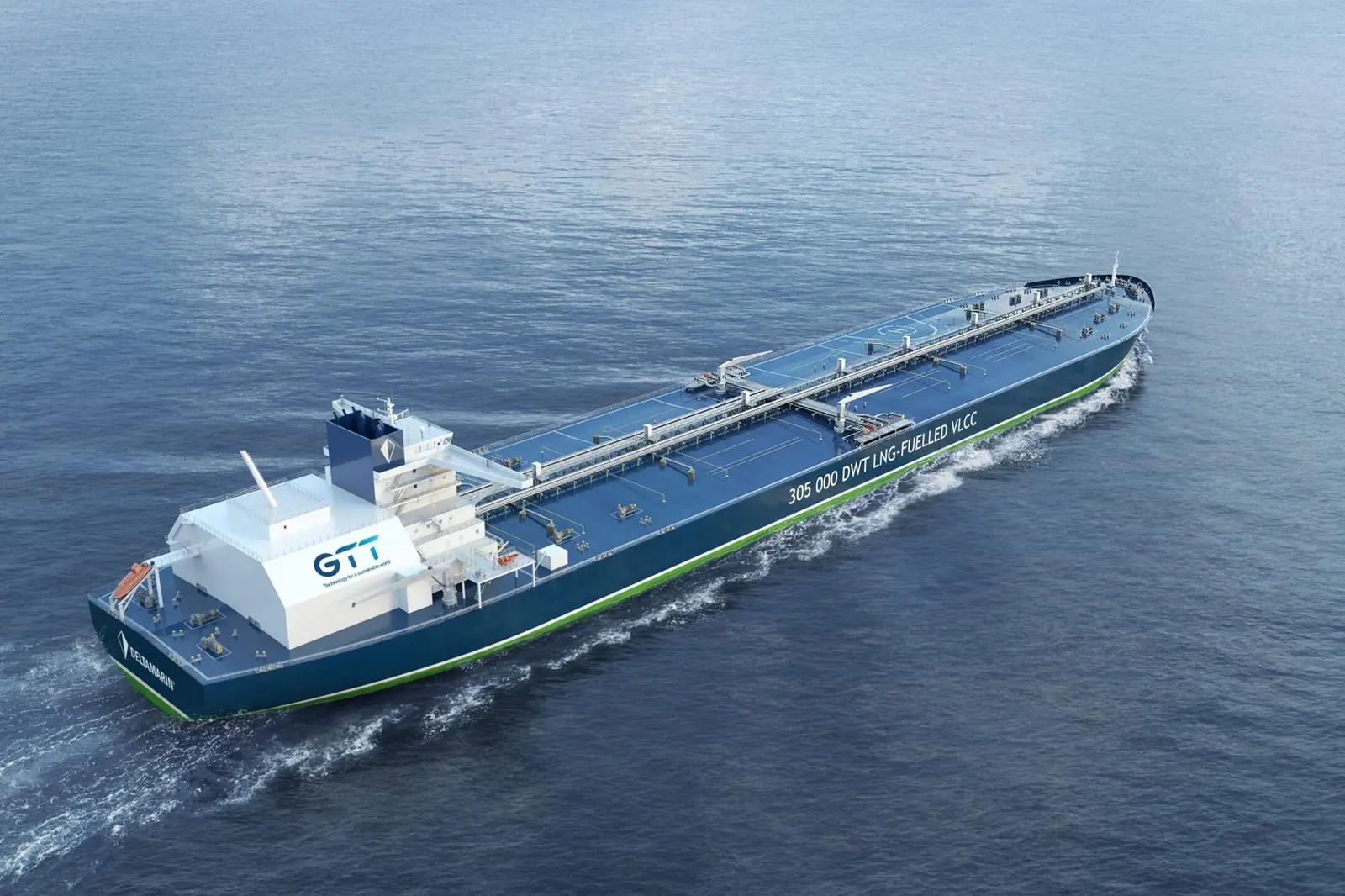
The AiP was awarded by ClassNK on 1 March 2023 for the design.
Deltamarin, GTT and ClassNK have been collaborating on the development of an LNG-fueled energy-efficient Very Large Crude Carrier. The vessel will meet current and future environmental targets by deploying GTT Membrane-type LNG tanks with LNG fuel stored at atmospheric pressure. The containment technology itself represents a well-studied and pre-approved solution, Deltamarin stressed.
In close cooperation with GTT, Deltamarin studied different arrangements and solutions for placing the tank on the vessel. The ship’s energy efficiency was studied with the latest simulation tools and a holistic approach, providing not only a vessel using LNG as fuel but also the best possible efficiency with low emissions for a VLCC class design.
The approval from ClassNK proves that the onboard integration of a membrane fuel tank solution is technically feasible on an LNG-fuelled oil tanker and that it meets all safety regulations. The new design offers a solution that complies with the environmental regulations adopted by the IMO until 2030. Compared with a conventional tanker, the new LNG-fuelled tanker design reduces CO2 emissions by at least 20%.
The joint development between GTT and Deltamarin also innovated a holistic approach to overall efficiency on board the vessel. The design has been optimised for specific sea routes while taking into account hull form, propulsion, LNG containment system and power plant configuration.
The Motorship notes that previous dual-fuel projects between Deltamarin and GTT have been designed to be compatible with both high and low pressure two-stroke main engines from MAN Energy Systems and WinGD.
As part of the vessel design process, the hull shape was optimised using the latest digital tools developed by Deltamarin. One, Deltaseas, was used to evaluate sea states on the selected routes, and the main engine can be optimised for the actual operation of individual vessels, reducing fuel consumption and emissions.
The inclusion of 12,500cbm LNG tanks will provide the VLCC with greater operational autonomy without reducing cargo volume. The Motorship has previously reported that GTT membrane tanks are more compact and have a useful volume 10-15% greater than Type C tanks.