



Viking LH2 fuel cell project advances
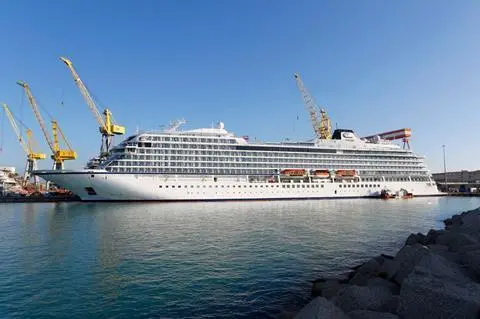
A pioneering project that is seeking to develop and commercialise a retrofittable liquid hydrogen (LH2) based solution within the next three years is continuing to progress.
The project is intended to result in a test installation of a hydrogen-fuelled PEM fuel cell system on board a Viking cruise vessel as a replacement for a genset before the end of the four-year project, Pierluigi Busetto, the CEO of Navalprogetti, tells The Motorship.
The consortium includes Navalprogetti S.r.l., Viking Hydrogen AS, Chart, Cenergy, Università Degli Studi di Trieste, Plug Power, Jeumont Electric, The Port of Bergen, PNO Consultants, Ricardo plc and Lloyd’s Register EMEA IPS among its members.
Dr. Pierluigi Busetto of Navalprogetti S.r.l is currently acting as the Coordinator of an EU-funded project to develop a liquid hydrogen containment system.
While the project involves the development of a number of different objectives, it is expected to advance the development of LH2 based solutions for the merchant and passenger sectors.
“We are obliged to find new solutions to meet the challenge of decarbonising the fleet, and this project offers interesting possibilities for reducing environmental emissions from existing tonnage. We know that there will be strong demand for retrofittable solutions that can lower emissions from existing vessels towards the end of the decade,” Busetto said.
The development of simplified hydrogen bunkering solutions would also be highly relevant for ports outside North America and Europe during the early stages of the green transition.
Navalprogetti is already studying and working on bunkering of LH2 as it is believed that, once the technical and regulatory challenges are solved, the bunkering of LH2 will become as straightforward as LNG bunkering is today.
sHYpS project
The EU funded Sustainable Hydrogen Powered Shipping Project (sHYpS) project was initiated in June 2022, and includes a consortium of partners from six different countries.
The Motorship reported on an initial development of a 100 kW PEM fuel cell trial installation on board the Viking Neptune, a vessel delivered for Viking in November 2022.
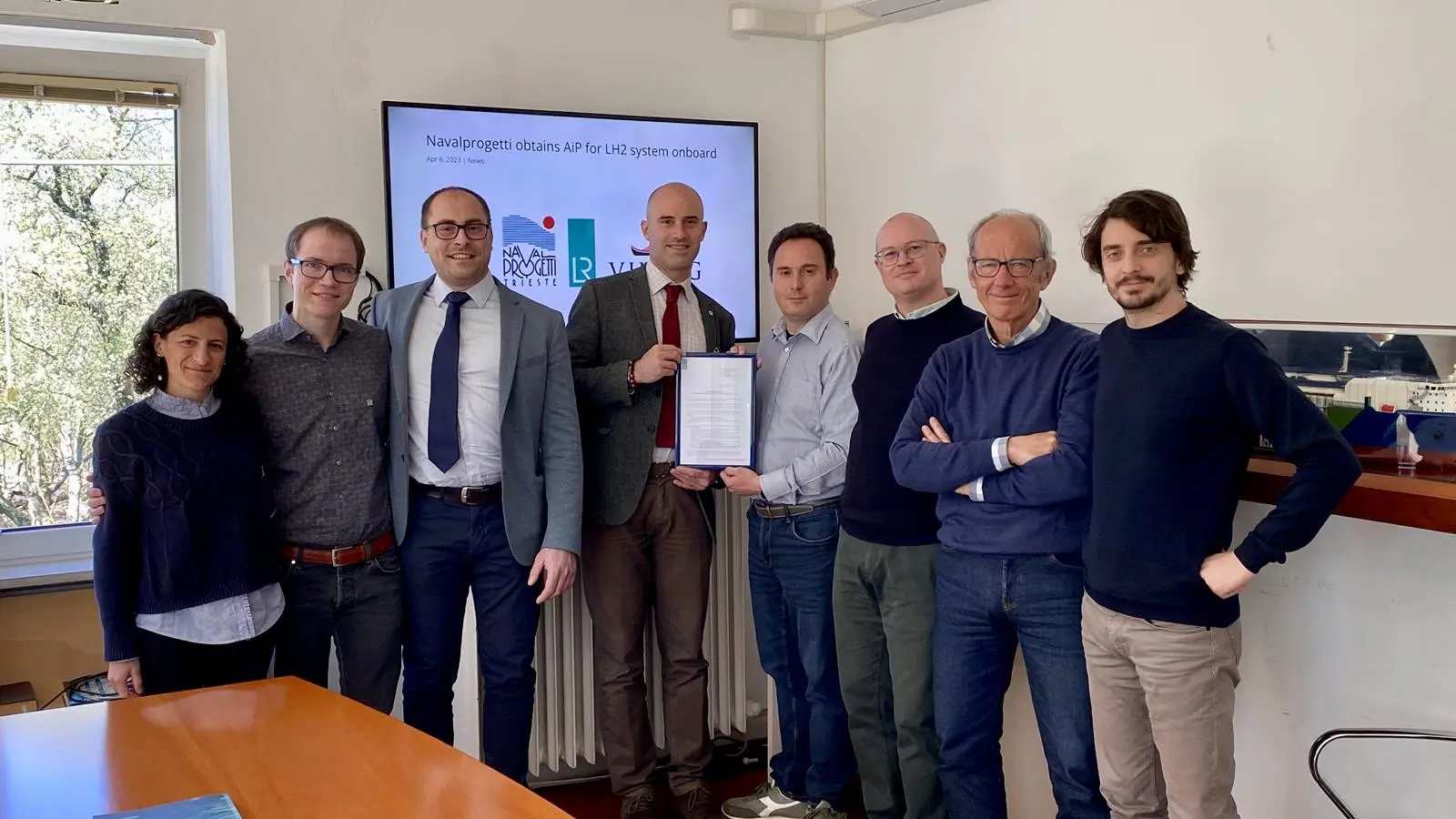
The consortium recently received a boost when Navalprogetti’s S.r.l basic design for a LH2 powered fuel cell system received an Approval in Principle from Lloyd’s Register.
Project objectives
The project intends to deliver an engine room configuration, defining spaces and arrangements for the PEM fuel cell systems as well as the relevant fuel supply and safety systems, in addition to the containerised LH2 storage system.
This system would then be subject to complete physical tests by CENERGY, a spinoff from the University of Trieste, before the system is installed and tested on board a Viking vessel before the conclusion of the project in June 2026.
Viking exercised an option with Fincantieri for four further cruise vessels in September 2022, and has an option for a further two cruise vessels. The latest orders are due to be delivered between 2026 and 2028 and include provisions for the installation of 6 MW hydrogen-fuelled PEM fuel cell systems.
The 6 MW installation would allow Viking cruise vessels to eliminate during normal conditions the conventional genset use during port operations and sailing in Norway’s World Heritage Fjords. The Motorship understands that both the shipowner and the yard are closely following the project.
The largescale 6MW PEM fuel cell solution could be potentially applied to a number of commercial vessels operating in Europe.
Approval in Principle awarded in April 2023 to Navalprogetti
Busetto noted that a project developed by Navalprogetti for Viking had received an Approval in Principle from Lloyd’s Register for the development and basic design of the LH2/FC power generation system for propulsion and hotel loads.
The project had led to a consortium of ship owners, SMEs and original equipment manufacturers collaborating in a project into the use of liquid hydrogen (LH2) as a marine fuel. Lloyd’s Register led a hazard identification workshop (HAZID) to understand the risks involved with using liquid hydrogen as a marine fuel in Southampton in October 2022.
Lloyd’s Register adopted a risk-based approach to review the novel design and facilitated a high-level hazard identification (HAZID) workshop for the liquid hydrogen fuel supply system (and associated ancillaries) in accordance with the LR ShipRight Procedure for Risk Based Designs.
The workshop participants included Lloyd’s Register and Norway’s NMA (as observers), both of whom have extensive experience of issues around hydrogen safety gained from their involvement in other passenger vessel projects featuring PEM fuel cells in Norway.
The Motorship notes that there are specific safety considerations relating to the use of liquid hydrogen, as opposed to gaseous hydrogen, that require careful handling. Busetto noted that as a by-product of work conducted during the Basic Design phase, Navalprogetti and Viking are developing some specialized technology necessary for the running of the system and are working to patent these inventions.
The Motorship notes that the use of hydrogen as a fuel is not fully covered by the existing regulatory framework, such as the IMO’s IGF Code (International Code of Safety for Ship Using Gases or Other Low-flashpoint Fuels).
Retrofittable solution for merchant fleet
Busetto noted that the fourth year of the project was likely to be focused on developing a study into the applicability of the installation of 6MW PEM fuel cell system on board merchant vessels.
While the system might not be applicable for the largest vessels operating in the EU, he had calculated that the installation would be sufficient for 75% of the fleet.
Busetto became animated when he began to discuss the wider commercial opportunities represented by the concept.
“If we can solve the technical challenges of retrofitting a 6MW PEM fuel cell system inside a cruise vessel, there is no question that the solution will not be applicable to other types of commercial shipping.”
For some of the commercial vessel classes, it may be possible to install the ISO containers on the deck of the vessel.
Swappable container system as interim LH2 bunkering solution
One of the objectives of the project is to demonstrate the feasibility of introducing liquid hydrogen as a potential fuel for PEM fuel cells.
The project is seeking to develop a liquid hydrogen swappable storage solution, in which special 45’ foot ISO containers will be equipped with double wall stainless steel storage tanks capable of storing liquid hydrogen. The tanks are being designed to be interchangeable once the vessel is at berth and will also integrate technology to manage boil off gas from the LH2 containment units generated during transit.
Chart, the US gaseous fuels specialist, is contributing to the production of the LH2 containment tanks.
The Motorship notes that this will allow the LH2 containers to be replaced in the port of Bergen, which is envisaged to be the main refuelling spot for the Norwegian heritage fjords. The concept is expected to avoid many of the techno-economic challenges about installing expensive cryogenic LH2 bunkering equipment at the port before demand is assured. This interim approach will contribute to the development of local LH2 supply chain before shoreside bunkering infrastructure matures, Busetto claims.
Plug Power is involved in the logistical and regulatory aspects of establishing a liquid hydrogen supply chain taking into account storage capacity and safety regulations at the port of Bergen.
“The containerised LH2 fuel supply aspect is one of the reasons that the concept is also attracting interest from other vessel segments,” Busetto commented, adding that the refilling and recycling of the cryogenic container tanks is expected to be the first application of its kind in the maritime sector.
Related Articles
 BATTERIES, SUPERCAPACITORS, FUEL CELLS AND OTHER ENERGY STORAGE TECHNOLOGY
 BATTERIES, SUPERCAPACITORS, FUEL CELLS AND OTHER ENERGY STORAGE TECHNOLOGY
 BATTERIES, SUPERCAPACITORS, FUEL CELLS AND OTHER ENERGY STORAGE TECHNOLOGY