



UK Backs Zero-Emission Trimaran Project
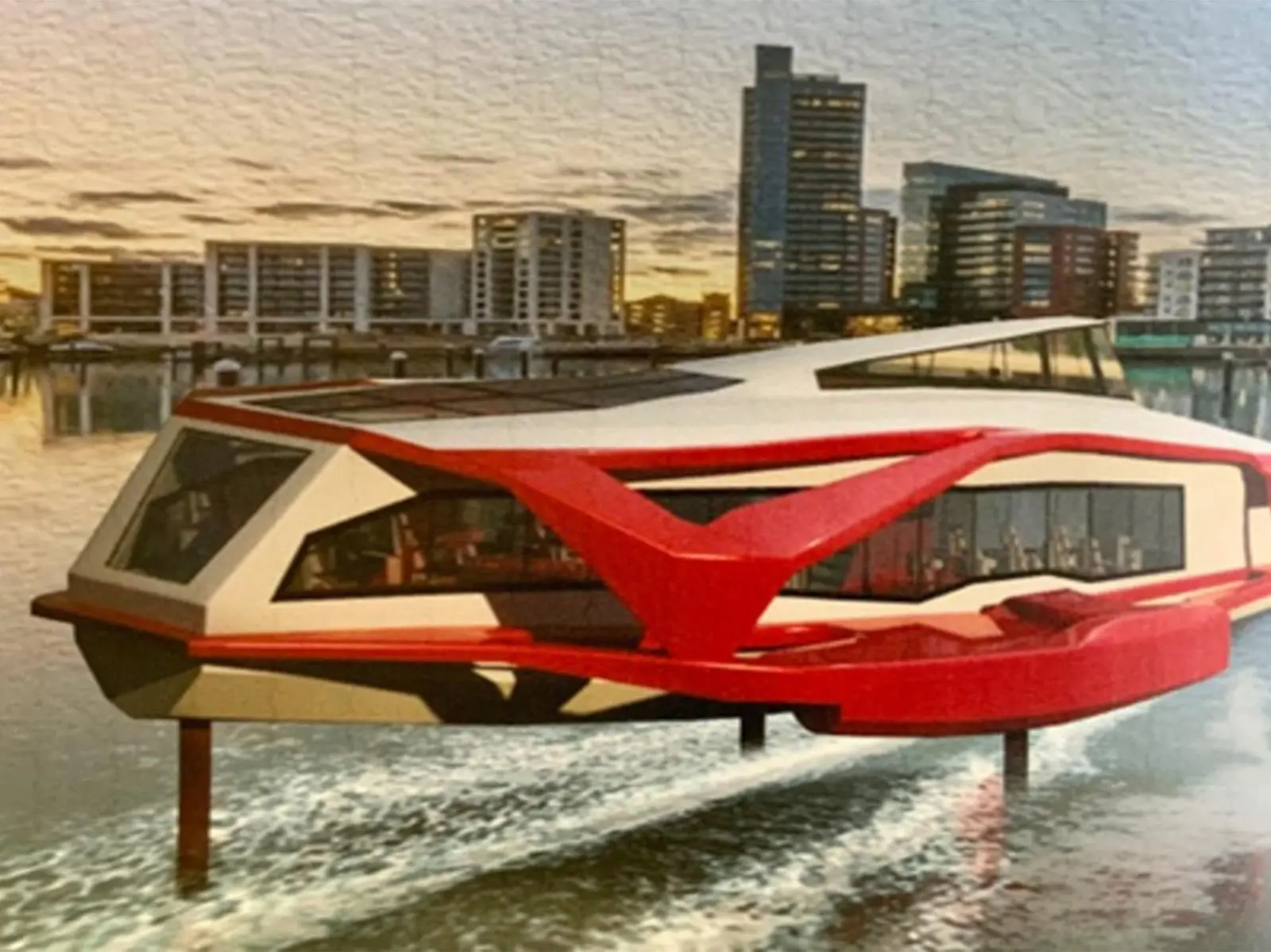
The qualifying consortium aims to develop an electrically-powered, hydro-foiling trimaran carrying up to 40 passengers on short- to medium-range coastal and estuarial routes.
Initial evaluations have highlighted the scope offered by the concept, whereby the foiling trimaran incurs minimal drag and calls for very low installed power. Studies will now be taken forward by a collaborative team comprising Solent University, design consultancy Chartwell Marine, and engineering consultancy Newcastle Marine Services.
The research partners will design and build a scaled demonstrator to prove the viability of the foiling trimaran and show the vessel’s ability to operate in challenging weather and sea conditions.
The project’s budget has been underwritten by £1.86m ($2.3m) in funding from the Round 3 grants made under the Clean Maritime Demonstration Competition, overseen by the UK Shipping Office for Reducing Emissions(SHORE).
Solent University’s Giles Barkley said “A traditional, diesel-powered, 40-passenger catamaran ferry operating at 25 knots typically requires well over 1,000kW of power. The trimaran foiling ferry concept has the potential to reach 28 knots using just 250kW…..This means it is possible to power the craft using zero-emission electric motors, with a significant reduction in associated fuel and operational costs….”
Recent advances in electric propulsion technology have increased the opportunities to develop viable designs in the targeted segment of the high-speed market. The project and its ambitions also chime with the bid to effect a modal shift from road to water.
It is acknowledged, nonetheless, that cost-effectiveness and cost-affordability must be the companions to environmental benefits. Successful results from the deployment of the demonstrator would open the way to a proposal for a full size vessel for operation in the UK or abroad.
Earlier this year, Chartwell Marine secured £320,000 ($398,000) in grant funding from agency Innovate UK for work with two technical partners on the development and testing of a methanol-fuelled vessel design with applications in the offshore wind and commercial workboat sectors.
Related Articles
 ELECTRIFICATION AND BATTERY HYBRIDS
 ELECTRIFICATION AND BATTERY HYBRIDS
 ELECTRIFICATION AND BATTERY HYBRIDS