Trials for new Lake Constance ferry
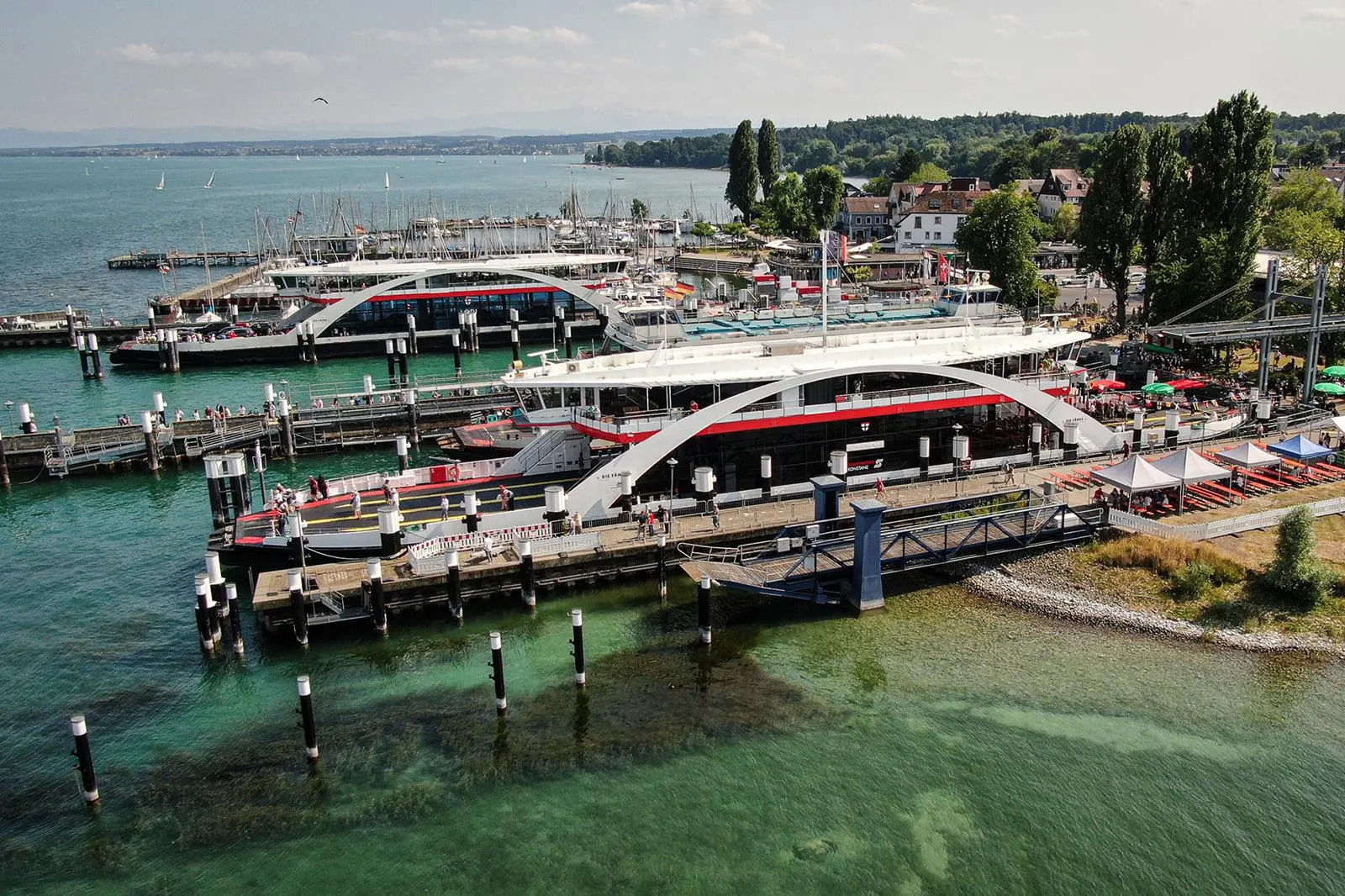
The ferry, which has a capacity for 700 passengers and 64 cars, is operated by Stadtwerke Konstanz. The other five ferries which operate between Meersburg and Konstanz are powered by conventional mtu diesel engines.
The Richmond is powered by two 8-cylinder mtu gas engines of the Series 4000 from Rolls-Royce, each with an output of 746 kilowatts, driving Voith-Schneider propellers. One difference between the Richmond and the other ferries is an eight-meter-high ventilation mast that forms part of the LNG-fuelled ferry’s safety equipment. Christoph Witte, technical manager of the Stadtwerke Konstanz ferries, said: “In addition, the ship’s hull has been optimized to reduce the ship’s drag so that less energy has to be used for propulsion.”
The first test runs with the mtu gas engines have met the expectations of the shipping company. The new propulsion system for tugs, ferries, push boats and special ships undercuts the nitrogen oxide limits of the current IMO III emissions directive even without exhaust gas aftertreatment, and the particulate mass is below the detection limit.
The business unit Power Systems of Rolls-Royce has now received orders for mtu gas engines as propulsion systems and on-board power generators for a total of eleven ships in Europe and Singapore. These include ferries, tugs and government vessels. Flensburg University of Applied Sciences is also using the benefits of this engine for an energy transition research project.
The new ferry received EUR1.8 million in funding from the German Federal Ministry of Digital Affairs and Transport. Michael Theurer, Parliamentary State Secretary, said on the occasion of the christening: “This model project is a real milestone in the development of clean and low-emission transport solutions thanks to innovative shipbuilding technology.”