Bio-LNG bunkering options grow
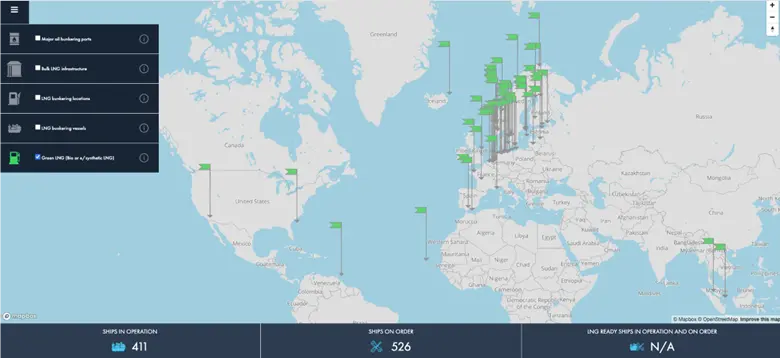
SEA-LNG’s online Bunker Navigation tool shows that Northern Europe has the highest concentration of ports offering the alternative fuel, with bunkering also available in Singapore and the US east coast.
“The fact that bio-LNG is commercially available now and being used as a drop-in marine fuel by operators in Europe, North America and Asia, demonstrates the sustained contribution that the LNG pathway can make to decarbonising our industry,” said Adi Aggarwal, general manager of SEA-LNG.
“Climate change is a stock and flow problem, the longer our industry waits to start using low-carbon fuels, the tougher the decarbonisation challenge will be.”
Bio-LNG is produced from sustainable biomass feedstocks such as human or agricultural waste. Annual production of biomethane, from which bio-LNG is produced, is currently around 30m tonnes or around 10% of shipping’s total annual energy demand.
The current global fleet of 355 LNG-fuelled vessels, excluding LNG carriers, are all capable of using bio-LNG as drop-in fuel without any modification. Bio-LNG can also be transported, stored and bunkered in ports using the existing LNG infrastructure.
The Nanyang Technological University’s Maritime Energy and Sustainable Development Centre of Excellence has predicted that bio-LNG could be available in sufficient quantity to fully decarbonise around 13% of the global shipping fleet in 2050.