Redesigned steam engine to run exclusively on bioethanol
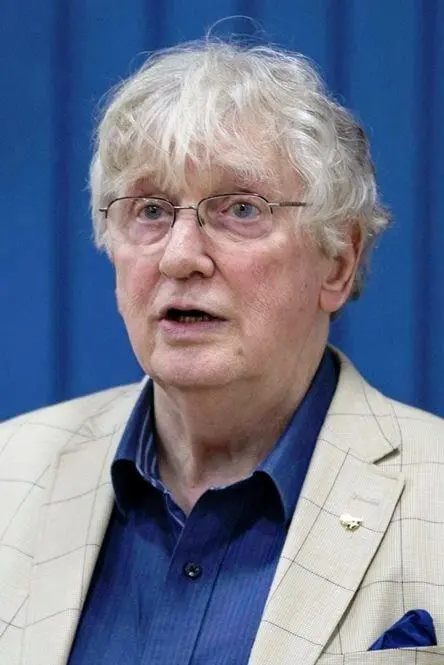
Director of Bio Engine Technology Philip Hosken says Richard Trevithick, the Cornish inventor of the cylindrical, high-pressure steam generator, would not recognise the latest version of his engine, the Herbl™ engine that Hosken has developed with Dr Ian Weslake-Hill.
Trevithick built the world’s first steam railway locomotive in 1804. He then adapted his high-pressure engine to propel a barge fitted with paddle wheels.
With funding from the European Regional Development Fund and computational support from Riventa Limited, Bio Engine Technology has modernised the concept. They have digitally investigated many forms of the steam engine and designed an efficient layout with modern materials, solenoid valves and a computerised engine control system.
“The Herbl™ engine is based on an effective design from 200 years ago that was side-lined by the oil companies. Now, the latest technology allows us to produce high-pressure gas when we burn Herbl™ fuel internationally available to drive the engine’s two pistons,” says Hosken. “The fully insulated white box will look nothing like the old, hot, snorting traction engines.”
The simple two-cylinder Rankine cycle engine has only five moving parts and is virtually silent. High-pressure gas is created from a liquid tube gas generator whenever there is a demand for power. The double action of the two pistons in the engine produces as many power strokes as a V8 internal combustion four-stroke engine.
The gas expands as it moves the piston in the first, high-pressure cylinder, so it requires a larger cylinder to accommodate it for a similar operation in the low-pressure cylinder. On being exhausted from the low-pressure cylinder the residual gas is drawn by vacuum into a condenser in which it returns to a liquid state to be pumped into the gas generator and recommence the power cycle again. No water vapour escapes, and the Herbl™ bioethanol fuel does not enter the rotating parts of engine.
The engine’s performance is very different from that of the internal combustion engine. Its greatest torque is produced as the crankshaft starts to turn from stationary, so its rotational speed does not have to exceed 1,000 rpm, nor does it require a gearbox, reverse is achieved by changing the gas flow direction. To simulate its performance, an engine has been designed with 6,911 foot-pounds of torque on an output shaft at zero revolutions, equal to 9,400Nm. It started a fully loaded 29-seater bus on a 1:10 gradient and accelerated it to 70 mph without changing gear.
Hosken notes the reciprocating version of the engine is being adopted for road use, but for more economical power over long distances, such as ocean-going vessels, a turbine could be considered in place of cylinders.
The engine can be built to any size and power making it suitable for buses, most types of marine craft, cars, vans, heavy commercial, agricultural and construction vehicles. “It is a safe, convenient alternative to the familiar internal combustion engine,” says Hosken. “It does not use any fossil-based fuel, it is not electric, it does not require expensive batteries made from the Earth’s finite resources, nor is it a hybrid or propelled by hydrogen.”
The combustion is carbon-neutral with bioethanol, and no smoke or particulates are produced:
CH3CH2OH + 302 → 2CO2 (neutral) + 3H2O.
He points to the large volumes of bioethanol produced around the world, particularly in the US and Brazil. “Natural fuels have played crucial roles in the development of the automotive industry. In the 1860s, Nikolaus Otto used ethanol as the fuel to drive his internal combustion engine, and almost 50 years later, Henry Ford designed his legendary Model T to operate on ethanol.”
Hosken also notes that organic material grown in North America for bioethanol production is not edible. “Where edible crops are used to produce bioethanol, only 5-10% of a plant is edible, the remaining stems and leaves go to waste.” Bioethanol production is not linked to deforestation either, he says.
“Whatever fuels ships will require in quantity in the future, new industries must be created to supply them. I believe all the alternatives being considered at present have subtle links to fossil fuels, that is why they are being offered, and the rewards for the oil companies are tremendous. Biofuel technology is completely different. It is understood throughout the world, and many of the production facilities are already in place, they could be easily and cheaply extended.”
The company is looking for partners to develop the engine.