



CARBON CUT ON UK SHORT-SEA LINKS
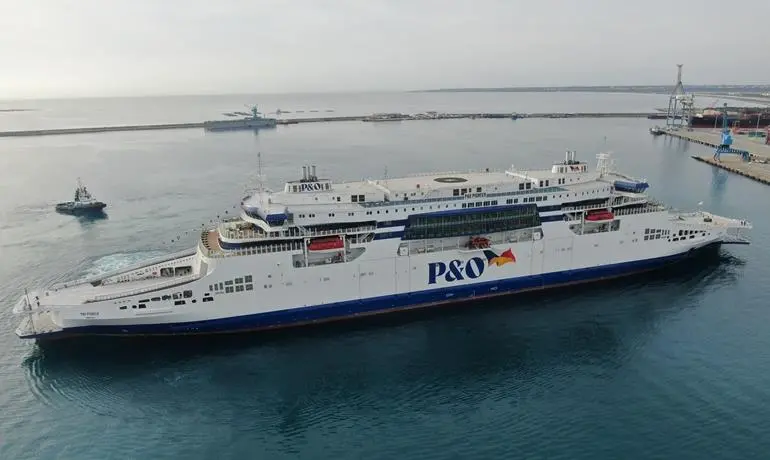
Signal factors influencing the major cut in carbon emissions were the opening of a dedicated Fleet Support Centre for Fuel and Energy Efficiency and the introduction of the first of two newbuild, hybrid ro-pax vessels.
Located at the company’s Dover headquarters, P&O’s Fleet Support Centre uses SmartShip technology and references fuel meters fitted onboard each ferry, and has proven effective in reducing fuel usage and related emissions on key routes in 2023. The ability to obtain and review granular data from the ships allows P&O Ferries to investigate changes in consumption and quickly determine the results of efficiency measures.
The data also provides deep insight into the impact of different variables, such as the weather, vessel operating profile, operating methods and schedule. Close collaboration with crew and other stakeholders is critical to the entire approach in optimising vessel performance. It is anticipated that the gains achieved last year through the Fleet Support centre initiative will be followed by a further 5% fuel reduction for 2024.
The 230m P&O Pioneer, constructed by Guangzhou Shipyard International, was commissioned in June 2023 on the Dover/Calais route, the shortest UK/Continental sailing, and has had an immediate impact on efficiency.
The vessel’s hybrid power and propulsion system and double-ended configuration has resulted in up to 40% lower fuel consumption per crossing than other P&O ships on the heavily-utilised freight and passenger service. The carbon emission reduction is quantified as 6.49t per transit. The anticipated arrival on the route of second-of-class P&O Liberte during March will complete the replacement of the oldest generation of vessels in the company’s cross-Channel fleet and yield further gains in performance.
Such decarbonisation endeavours have broader, potential benefits for trade, as ferry freight customers can see the carbon impact of their logistic operations being lessened.
The revolutionary P&O Pioneer ro-pax design uses electrical energy from an 8.8MWh aggregation of batteries and four 9,600kW diesel generators, with twin 7.5MW Azipod propulsors at each end of the hull. The battery installation has been sized to provide full power for harbour manoeuvring and turnarounds in port. Overall manoeuvring time on each sailing, and attendant energy consumption, has been reduced through the adoption of a double-ended configuration with two bridges, obviating the need for the ship to go about(turn) in port.
The modular concept applied to the newbuilds facilitates future modifications that open the way to zero-emission operation, once the requisite electric charging infrastructure becomes available at the ports. This foresees the removal of individual generators and replacement with additional banks of batteries. P&O’s investment has additional significance in the decision to focus on energy storage at increasing scale rather than look to energy transition by way of LNG dual-fuel prime movers.
Related Articles
 ELECTRIFICATION AND BATTERY HYBRIDS
 ELECTRIFICATION AND BATTERY HYBRIDS
 ELECTRIFICATION AND BATTERY HYBRIDS