



Corvus’s energy storage system gets greenlight from DNV
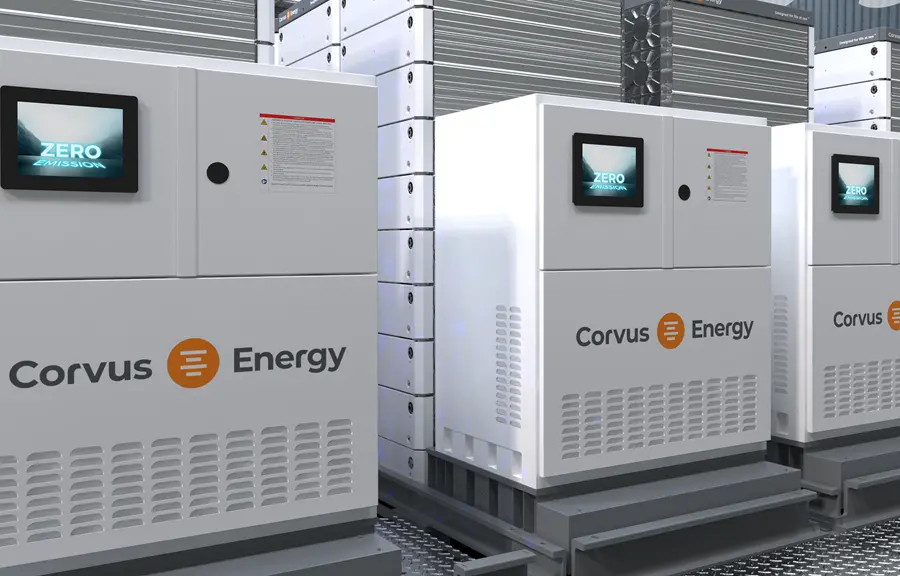
The Blue Whale ESS is designed specifically for vessels with high power demands such as cruise ships, RoPax and service operation vessels.
The system is an evolution from the Corvus Orca, reportedly the world’s most commonly installed marine ESS. It incorporates additional features such as optimised energy density and a modular design that make it better equipped to meet the needs of large vessels, says Corvus.
“We are very pleased that the Blue Whale ESS design has received type approval from DNV, meeting the highest safety standards in the industry,” said Fredrik Witte, chief executive of Corvus Energy.
“Developing a full family of battery energy storage systems with highly flexible architecture is a clear path towards powering a clean future for shipping.
“Scalable technology combined with safety and easy integration will help accelerate the transition and make clean energy available to more vessel types.”
Optimising for energy density enables Blue Whale to deliver more power, explains the company. This in turn can extend the vessel’s ability to achieve and maintain zero-emission operations, including during transit through emissions-restricted zones and port stays.
The cell chemistry is lithium iron phosphate, meaning a higher power density which is also cobalt-free.
More than fifteen Blue Whale orders totalling over 95 MWh are already confirmed for delivery in 2024, 2025 and 2026, and the production facility is ready for an increase in future demand.
Corvus Energy is also seeking type approval from ABS, RINA, BV and Lloyd’s Register for the Blue Whale ESS.
Related Articles
 BATTERIES, SUPERCAPACITORS, FUEL CELLS AND OTHER ENERGY STORAGE TECHNOLOGY
 BATTERIES, SUPERCAPACITORS, FUEL CELLS AND OTHER ENERGY STORAGE TECHNOLOGY
 BATTERIES, SUPERCAPACITORS, FUEL CELLS AND OTHER ENERGY STORAGE TECHNOLOGY