



Provaris Energy hydrogen supply chain meets EU RED II standards
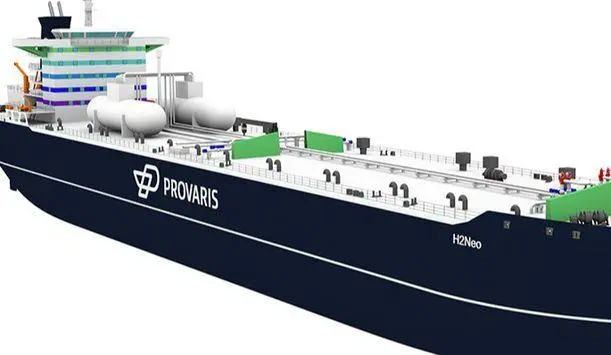
The company’s proprietary H2Neo hydrogen carrier has recently undergone a comprehensive analysis, demonstrating its ability to meet the stringent emissions thresholds mandated by RED II.
As part of the evaluation, a round-trip route between Norway and Germany was analysed, focusing on fuel consumption and carbon emissions. The analysis confirmed that Provaris’ H2Neo carrier complies with RED II, which sets an emissions cap of 28.2 grams of CO2 equivalent per megajoule (g CO2e/MJ) of hydrogen. This directive, introduced in 2018, requires the EU to derive at least 32% of its energy consumption from renewable sources by 2030, setting a benchmark for hydrogen supply chains to maintain low emissions.
In collaboration with Wärtsilä, Provaris conducted an in-depth analysis of the H2Neo carrier’s emissions profile. The study focused on the carrier’s fuel consumption using a range of propulsion configurations. Results from the assessment were promising—Provaris’ hydrogen carrier emitted just 7.6 g CO2e/MJ H2, far below the RED II cap of 28.2 g CO2e/MJ. This significant reduction in emissions was achieved through the deployment of a hybrid electric propulsion system powered by liquefied natural gas (LNG) and marine gas oil (MGO).
The study also explored future upgrades, including the integration of a 3,000-kW hydrogen fuel cell into the propulsion system, which could cut emissions by an additional 20-30%, depending on the vessel’s operational profile.
Provaris Energy’s chief technical officer, Per Roed, praised the positive results, stating: “These findings reflect our dedication to optimising hydrogen transport solutions that not only meet but exceed the EU’s RED II requirements. The hybrid electric propulsion system, developed with Wärtsilä, offers an efficient and flexible solution today, while enabling the integration of alternative fuels and new technologies such as hydrogen fuel cells in the future.”
Roed emphasised Provaris’ commitment to sustainable energy innovation, noting that these advancements showcase the company’s leadership in low-emission hydrogen transport.
Wärtsilä Marine’s vice president of Power Supply, Stefan Nysjö, highlighted the critical role of the shipping industry in combating climate change. “In just 25 years—the lifespan of a single vessel—shipping must eliminate its climate impact,” Nysjö said. He reiterated Wärtsilä’s commitment to developing low- and zero-carbon marine fuels and technologies, pointing to the increasing electrification and hybridization of propulsion systems as key enablers of future decarbonisation efforts.
Nysjö added: “We are fully aligned with Provaris’ vision for accelerating the maritime industry’s transition towards net-zero emissions. The successful performance of the H2Neo carrier underscores our shared commitment to driving sustainable shipping solutions.”
Related Articles
 ELECTRIFICATION AND BATTERY HYBRIDS
 ELECTRIFICATION AND BATTERY HYBRIDS
 ELECTRIFICATION AND BATTERY HYBRIDS