



A milestone in VCR engine technology
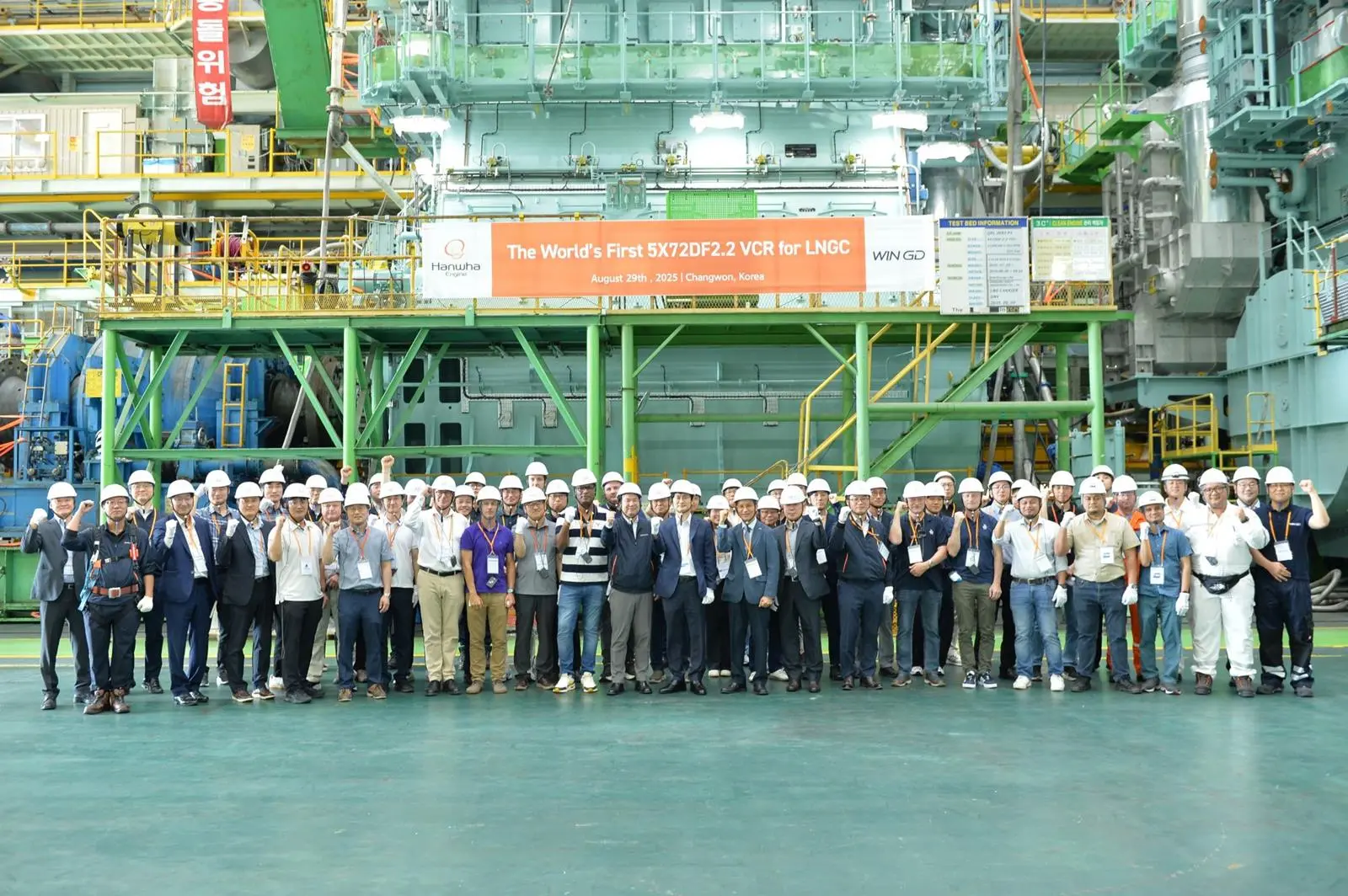
The new X72DF-2.2 VCR engine, jointly developed by Swiss marine power company WinGD and South Korea’s Hanwha Engine, is designed to maximise fuel efficiency while cutting methane slip.
“Our VCR technology optimises fuel efficiency, reduces emissions and leads to a significant cut in methane slip, making a material impact on a ship’s carbon intensity and operating costs,” said Peter Krähenbühl, Vice President Product Centre at WinGD.
He added that customer demand is already strong, with more than 160 VCR-equipped engines already on order.
Rising demand
Capable of running on both LNG and diesel, the innovation addresses tightening emissions regulations and enhances cost-effective vessel operations. The first unit will be installed on an LNG carrier under construction at Samsung Heavy Industries.
Hanwha Engine confirmed rising momentum for the technology, announcing orders for 70 engines worth USD 500 million.
CEO Moonghee Yu called the achievement a “milestone accelerating the shipbuilding industry’s transition towards environmental sustainability,” and pledged continued investment in clean energy solutions to shape the future of marine propulsion.
The breakthrough underlines the growing importance of VCR technology in driving fuel efficiency and emissions reduction across global shipping.
With mounting regulatory pressure and industry demand, WinGD and Hanwha’s collaboration positions them at the forefront of sustainable marine propulsion innovation.
In a further dedication towards addressing the problem of methane slip, WinGD has become the first engine maker to join the Methane Abatement in Maritime Innovation Initiative (MAMII).
Related Articles
 EMISSIONS REDUCTION TECHNOLOGY
 EMISSIONS REDUCTION TECHNOLOGY
 EMISSIONS REDUCTION TECHNOLOGY