LNG groups highlight the devil’s in the detail when it comes to regulating the fuel
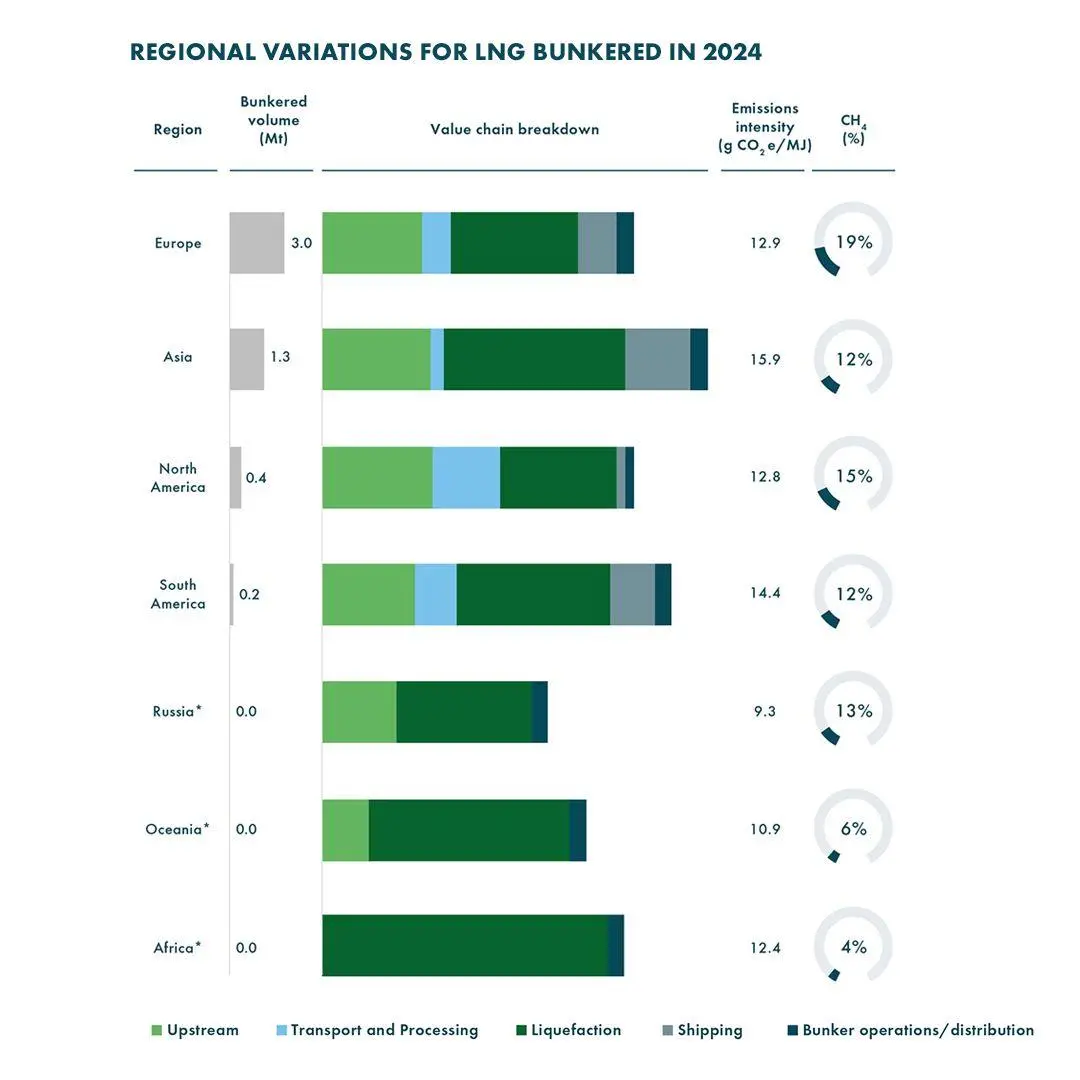
Rystad Energy has published new research on greenhouse gas emissions from the LNG bunker supply chain, commissioned by SEA-LNG. The study provides updated certified data on LNG as a marine fuel, intended to support the International Maritime Organization’s work on lifecycle analysis and the development of its Net-Zero Framework.
The study assessed emissions across five lifecycle stages: upstream, transportation and processing, liquefaction, shipping, and distribution and bunkering operations. Using asset-specific 2024 data and aligned with IMO guidelines and IPCC definitions, the analysis found that the global well-to-tank emissions intensity for LNG in 2024 was 13.9 gCO2e/MJ (LHV). Carbon dioxide accounted for 84% of emissions, with the liquefaction stage contributing most significantly. Methane represented 16% of total well-to-tank emissions, largely concentrated in the upstream production stage.
Upstream gas production and liquefaction together accounted for nearly three quarters of supply chain emissions, indicating that improvements in methane mitigation and liquefaction efficiency offer the greatest opportunities for reductions. Rystad noted that efficiency gains are already being achieved in liquefaction through new technologies and the introduction of renewable power sources.
The study also revealed marked regional variation, with emissions intensities differing by as much as 6.6 gCO2e/MJ depending on gas source, liquefaction technology and shipping distance. The authors concluded that a single global average figure cannot fully reflect real-world conditions and may risk misinforming regulatory development.
With LNG already representing almost one fifth of the vessel orderbook, accurate lifecycle data is expected to be central to shaping regulation and guiding investment as shipping seeks to decarbonise.
Patrick King, vice president emissions research at Rystad Energy, said the analysis was based on asset-level data that linked specific gas fields to liquefaction facilities and was supported by satellite-detected methane data. He described this as providing a more precise picture of LNG used for bunkering than earlier studies based on broad averages.
Steve Esau, COO of SEA-LNG, said: “Policymakers must create regulations that reflect the true carbon intensity of marine fuels, rewarding reductions across the supply chain. Marine regulators should incentivise participants in the LNG bunker supply chain to continue to reduce GHG emissions.”
SEA-LNG stated that regulators should recognise actual reductions across the supply chain and adjust emissions factors accordingly, in particular for methane. The organisation also pointed to the EU’s FuelEU Maritime regulation, where current default figures were described as overly conservative.
SEA-LNG had previously hit out at the proposed GHG Global Fuel Standard measures put forward at this year’s MEPC 83 and with the fuel being the most popular lower carbon option currently, with the world’s leading engine makers developing ways to combat methane slip, this report may well gain traction.
The Motorship will publish an in-depth LNG special report in an upcoming issue.