More contracts and training aid for cargo access equipment
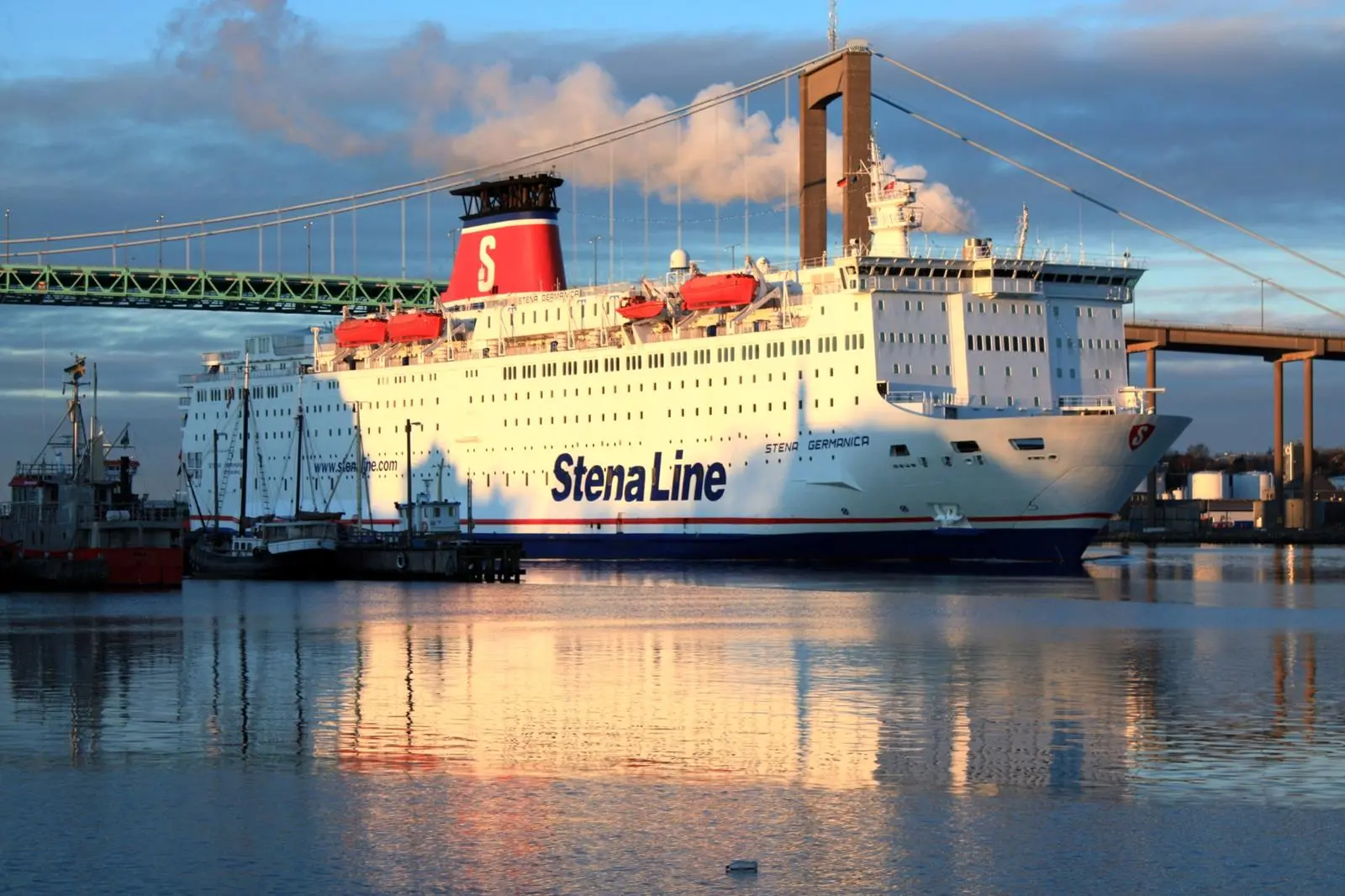
A further ship has been added to the growing number of Stena ro-pax conversion projects. The 43,487gt ship Stena Britannica will receive two new watertight side-hinged bulkhead doors for the lower hold, and a new top-hinged inward-opening passenger door on deck 8. This new order has been added to earlier Stena conversion contracts awarded to Cargotec for six other ro-pax vessels, which were announced in earlier issues of The Motorship in 2010.
“Each newbuilding is tailored to suit its intended trade and is designed to be safe, efficient and profitable,” says Jonas Nordström, director of ro-ro conversions at Cargotec. “If a ship moves to a new route and needs to be converted, it is important to involve experienced people with expert technical knowledge. We are happy to see Stena relying on our skills and expertise for its conversion projects”.
The MacGregor ro-ro electric drive is proving popular with operators of pure car carrier (PCC) ships; Cargotec reports a current orderbook of equipment for five fully electrically-driven PCCs. The latest orders, won In May and June 2010, saw Cargotec fully electrically-driven ro-ro equipment being selected for two new 6,400-unit PCCs being built at Shin Kurushima Toyohashi Shipbuilding in Japan for two different domestic Japanese owners. Each vessel will feature an electrically-driven MacGregor stern quarter ramp, side ramp and six movable ramps.
“These new orders show that our customers appreciate the advantages that electrically-driven ro-ro equipment offers,” says Magnus Sjöberg, sales director for ro-ro ships at Cargotec. “These advantages include reduced risk of cargo damage, as well as reduced environmental impact due to energy savings as continuous running is not required. They are also easy to monitor, and installation is easier and more cost efficient.”
These new orders build upon Cargotec’s growing electric-drive reference portfolio and follow its 2009-installation of electrically-driven internal equipment onboard four vessels for PD Gram at Kyokuyo Shipyard, also in Japan.
“Over the last few years, Cargotec has delivered, and been contracted to deliver, over 100,000m2 of electrically-operated MacGregor car decks, internal hoistable ramps and covers,” adds Mr Sjöberg “The PD Gram vessels were the first car carriers with complete electric-drive operation of the MacGregor ro-ro cargo access internal equipment –are were a breakthrough, and the result of Cargotec’s intensive R&D work, meeting the needs of customers wanting to move away from the use of hydraulic oil completely.
MacGregor says that the increase in uptake of electric drives on board ro-ro ships has been due to numerous factors, including environmental concerns, with a further technical reason for this development being the availability of improved electric drives, in the form of screwjack drives, to replace the hydraulic cylinders used for operating smaller items or in cleating and locking devices. Also, car manufacturers are putting pressure on owners to reduce the level of damage to cargo; Japanese companies, like Toyota, are leading this improvement; MacGregor believes that electric operation will improve reliability.
MacGregor continues to win orders for its hatch covers, the latest being for six 48,700 dwt open-hatch cargo ships ordered by Norwegian shipowner Grieg Shipping. The ships are to be built at Hyundai Mipo Dockyard in South Korea. The order is booked into the third quarter 2010 order intake. The hatch covers will be fabricated at Cargotec’s partner plant in China and they are planned for delivery in 2012 and 2013. Macgregor had already received an order for other equipment for the same newbuilding, the previous contract being for a total of 24 environmentally-friendly variable frequency drive (VFD) MacGregor cargo cranes.
“The cargo handling design was created in close co-operation with the owner and Cargotec’s cranes and dry cargo business lines. The result is a completely new integrated cargo handling equipment arrangement which is more versatile enabling the transportation of a wider range of project cargoes,” says Ari Viitanen, Cargotec’s sales director for dry cargo ships.
As part of Cargotec’s plans to further broaden its presence in Brazil, the company has recently won contracts that will see it supply a set of MacGregor offshore load handling and rescue handling equipment for two offshore support vessels under construction for Brazilian shipping company, Navegação São Miguel. The vessels have been ordered for an eight-year charter agreement with Petrobrás.
For each vessel Cargotec will supply two types of rescue handling systems for handling small through to heavy fast rescue craft and a telescoping marine deck crane. All equipment is planned for delivery by the beginning of 2012 and is fully-certified in accordance with international regulations.
Crane simulator
In line with the group’s ethos of developing and implementing new technologies that contribute added value to its customers’ businesses, Cargotec reports that it has developed a simulator to provide training for operators of its offshore load handling equipment. The company sees a need to provide realistic training for its equipment that employs advanced active heave-compensated (AHC) technology, such as AHC offshore and subsea cranes.
The new simulator is said to be a logical enhancement to Cargotec’s integrated approach to the offshore support sector, which is to provide distinct value added service products, such as maintenance and advanced theoretical and practical operator training, in addition to designing and supplying the equipment. The simulator was designed, constructed and tested at Cargotec’s offshore load handling site in Kristiansand, Norway.
According to Cargotec, recent hardware and software developments have resulted in significant advances in simulator technology, opening the doors for specialised applications such as AHC training. The company believes that comprehensive training in the proper use of equipment has great benefits in terms of safety and efficiency and also reduces the likelihood of damage, downtime and repair costs due to incorrect operation. The simulator allows operators to gain more realistic, varied experience in a few days than they normally would in weeks of live training. This includes training in failure and emergency scenarios in different environmental conditions.
The simulator features a full-scale cabin interior with multiple high resolution displays providing an all-round unrestricted view of the entire operating area, as seen from the high vantage point of a typical crane cabin. The complete simulator is housed in a single 20ft container. This means it is both completely autonomous and easily transportable, so that it can be used on customer sites as well as at Cargotec’s training centre in Kristiansand.
The visual experience is supplemented by sound, while a head-tracking feature means that the view changes according to the movement of the operator’s head. Cargotec adds that the simulator will play an additional role in demonstrating cranes and in design and testing of new concepts.