New company debuts with EPIRB, SART and VHF
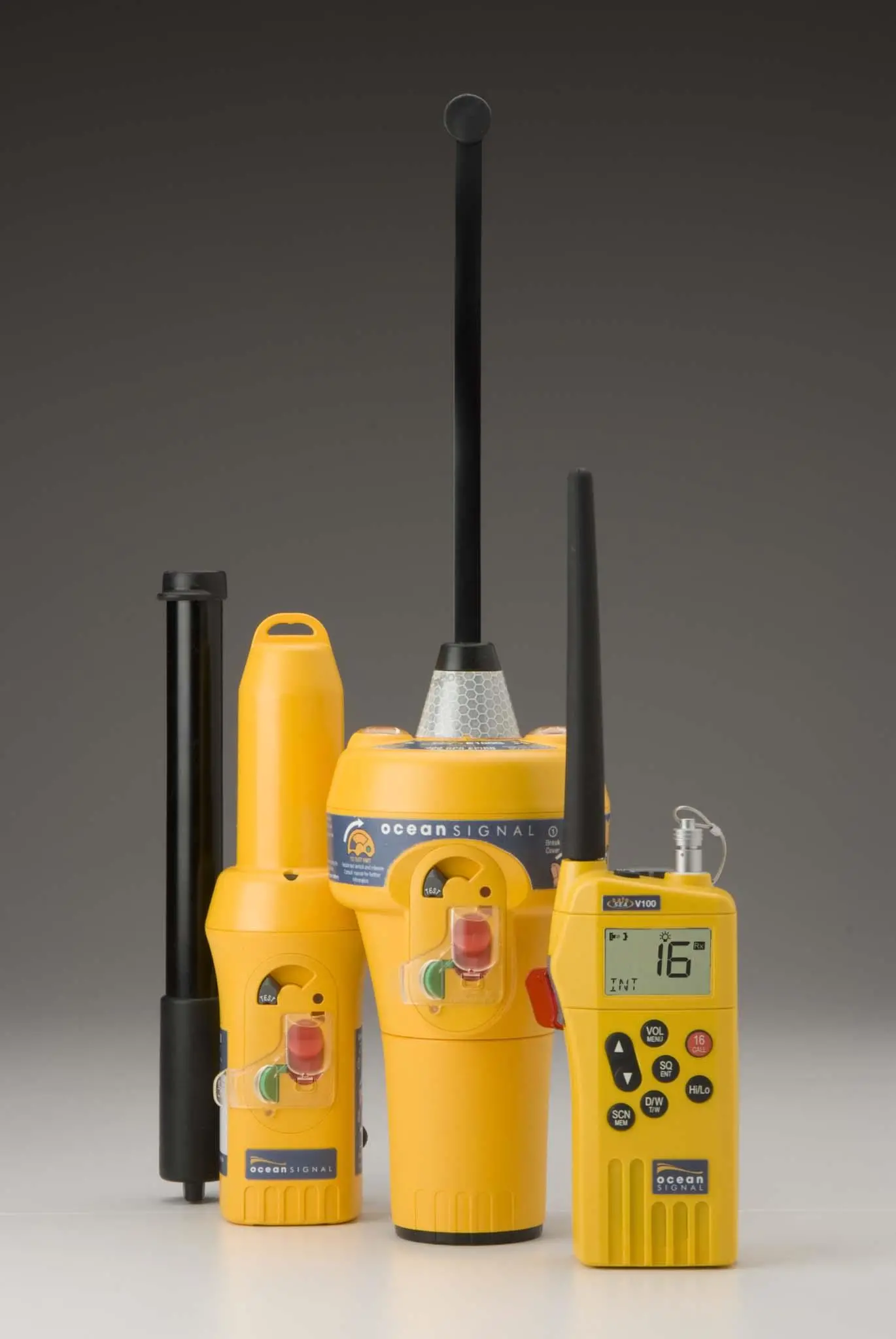
The SafeSea E100/E100G 406 MHz Cospas-Sarsat EPIRBs are designed for maximum battery life, the company claiming the longest quoted operational battery lives in the industry, at four days, even using the E100G’s GPS and at temperatures down to -20°C. The batteries, which are classified as non hazardous for shipment, can be replaced by the user, eliminating the need to return the unit to the manufacturer or agent. Both units feature a 121.5MHz homing beacon and a high brightness LED strobe light, the E100G also including a 50 channel, integral GPS.
The SafeSea S100 search and rescue transponder (SART) is a SOLAS-compliant radar transponder designed to assist in the rescue and recovery of life rafts and survival craft. When switched on, the SART remains in a standby mode until automatically activated by an X-band radar sweep. It then transmits a series of pulses which are displayed on the ships radar, providing a bearing to the survival craft. It features similar battery technology to the EPIRBs.
The SafeSeaV100 survival craft VHF is a hand-portable GMDSS radiotelephone complying with the IMO standards for use in survival craft and exceeding GMDSS environmental requirements. Once again improving battery life has been a primary consideration in the development, the V100 featuring an emergency Lithium primary battery, with battery protection tab to avoid inadvertent use. Only when the tab is broken off will the battery operate the radio, ensuring the pack is at full capacity when needed. The tab is not replaceable and the battery is clearly marked ‘Used’ underneath the tab. A Lithium Polymer rechargeable battery pack is available with rapid charger that can be desk or wall mounted, for day to day onboard use.