An engineer’s perspective on ballast water treatment
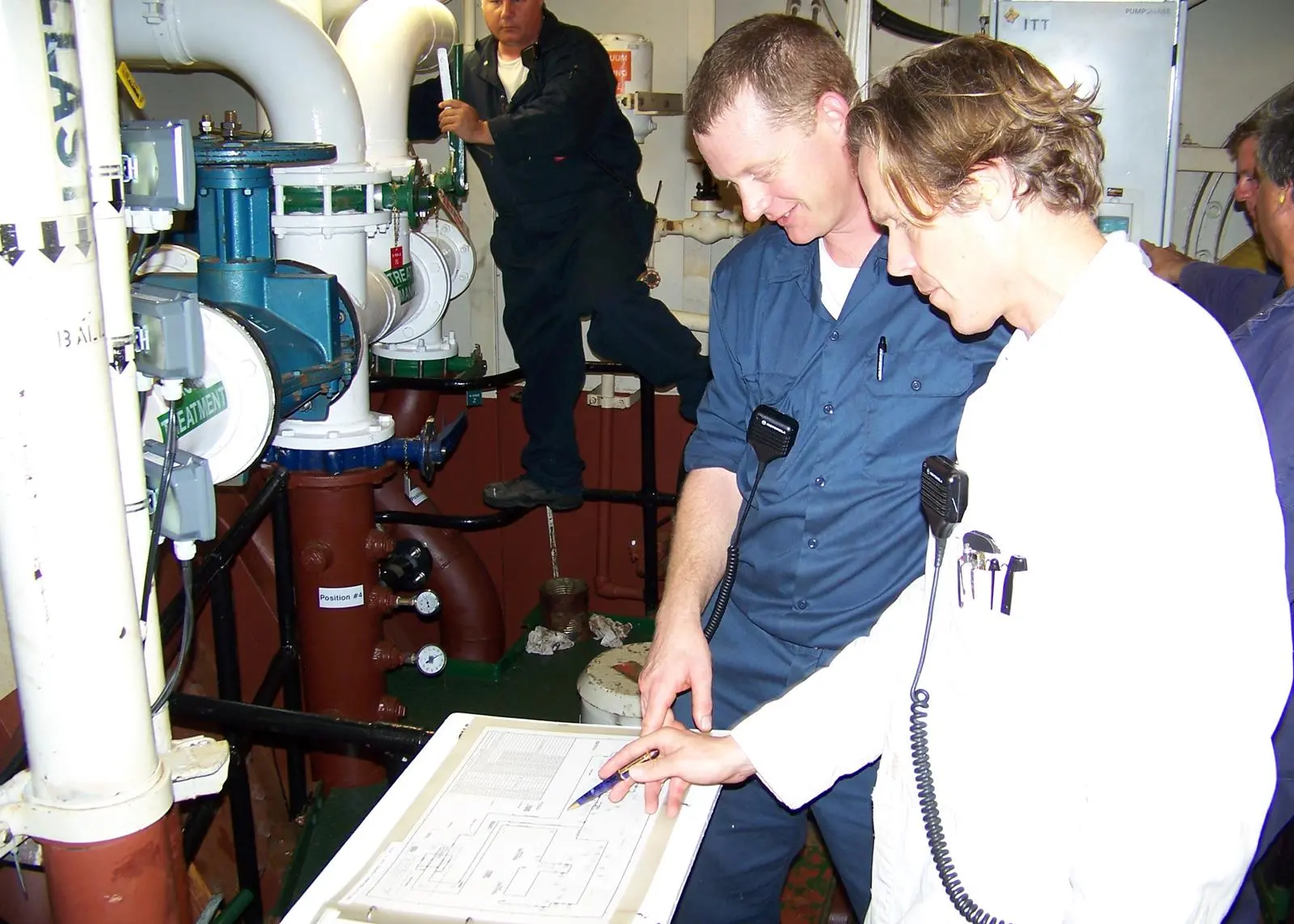
While the industry considers testing regimes and technology development in the face of increasingly strict discharge requirements, his hopes for the systems coming to market are based on his practical experience as an engineer and trainer. He cites the importance of simplicity, reliability and ease of operation. “Hopefully as this testing and development progresses, we are going to find good, reliable and reasonably straight forward systems to operate… simple is good.”
Crucial to the successful operation of a system is the need to match pump capacity to desired ballasting rates when a filter system is installed as part of a treatment system. “Automatically cleaning filters typically require significantly more water flow than is actually delivered in the ballasting operation so shipowners are going to need to consider pump size and capacity to match the excess flow that is used to clean the filter,” says Mr Davidson.
Warm-up time at start up needs to be factored into operations as does the periods spent idle. “Hopefully the system designers have considered idle period in their design. Some systems automatically drain so that seawater doesn’t sit in the system while it’s idle and essentially rot it away. Other systems might require some sort of flushing.”
Acknowledging that ballasting and deballasting can sometimes be critical and tricky operations, Mr Davidson remains philosophical. “Adding a treatment system into it obviously complicates it that one more step, but I guess, essentially, I’m seeing it as the new reality. We marine engineers and all seamen are pretty versatile types so we adjust accordingly.”