Treating ballast may not solve the problem
Hydrex of Belgium says that there have been concerns that non-indigenous species (NIS) are transported by fouled hulls as much or even more than in ballast water. Once a hull becomes heavily fouled, a situation occurs where there is an increased risk of transporting NIS that needs to be remedied by defouling activities, either by out-of-water removal or by underwater cleaning. In this respect, underwater cleaning has come under some scrutiny out of fear that viable NIS are released and spread, rather than contained and disposed of by the operation. As a fresult, the company says that some ports and countries have banned underwater cleaning out of concerns about pulse release of biocides and/or an increased risk of transferring NIS.
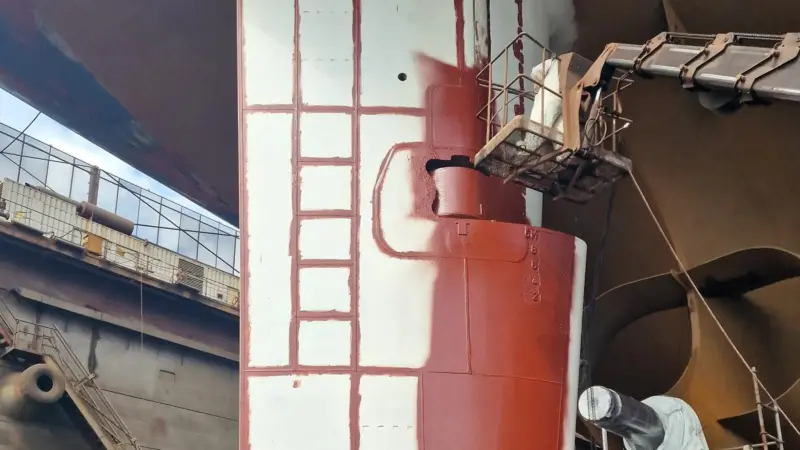
Use of its Ecospeed hull coating, says Hydrex, can be regarded as a safe measure that prevents, rather than remedies, the spread of NIS. Firstly, Ecospeed can be cleaned on a regular basis without damaging the coating’s surface. The cleaning interval is optimised to minimise fouling and the associated increase in fuel consumption. Secondly, Ecospeed is a durable coating designed to withstand abrasive cleaning, so as a result, many fouling organisms will be destroyed during the cleaning process. The company says that with Ecospeed,the risk of translocation of NIS via hull fouling is minimal.