System for solid and liquid waste put to the test
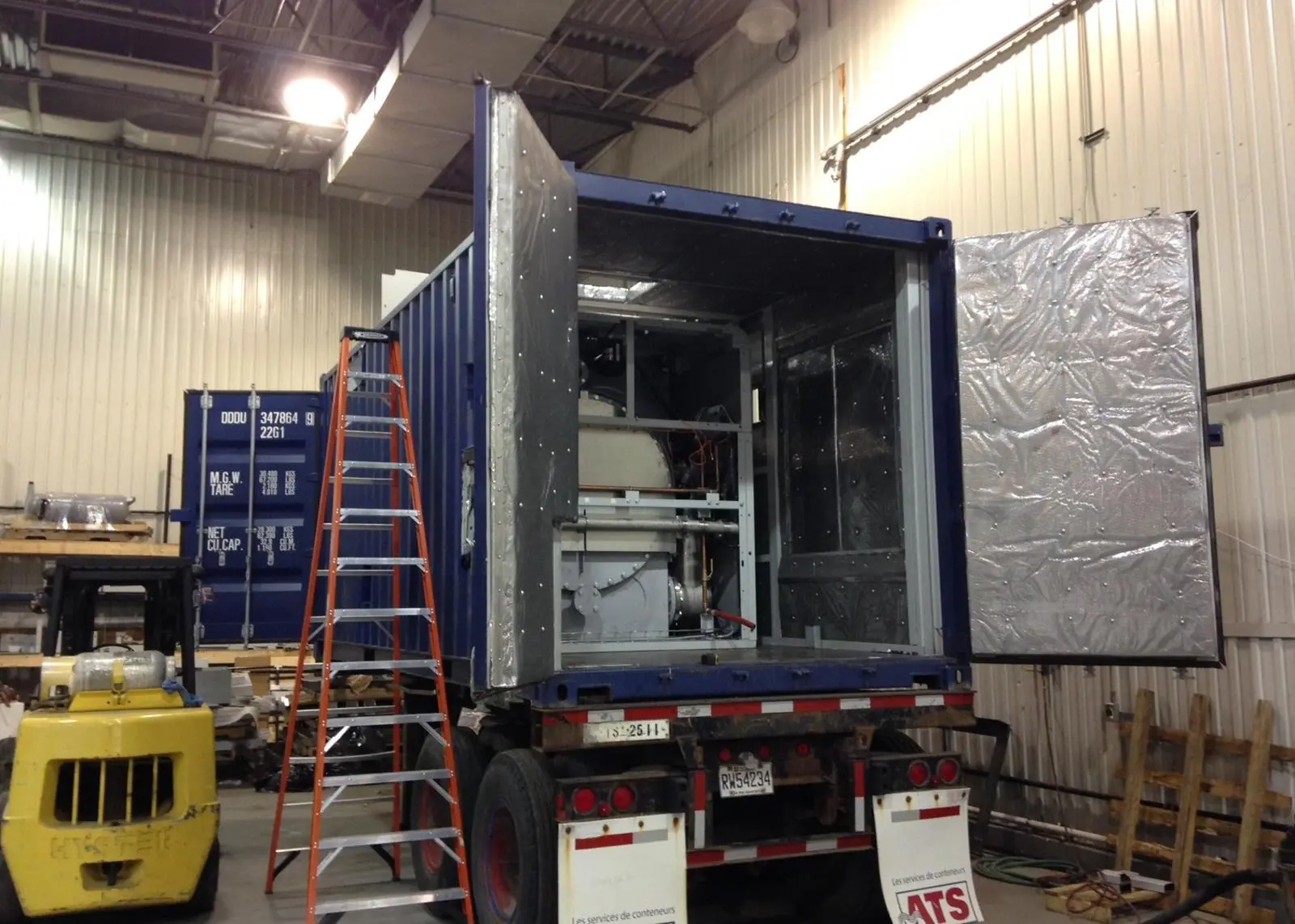
The universal waste processing system developed by Dr Peter Tsantrizos, CEO of Terragon Environmental Technologies in Canada, is being readied for installation on a Canadian vessel for demonstration and evaluation. The system will be housed in a transportable container and the purpose of the demonstration is to evaluate the system under real conditions using ship-generated waste streams. It will process the bilge water, sewage or greywater, solid waste and used oils and sludges generated by the ship.
Parallel to this effort, Alion Canada (a subsidiary of Alion, one of the largest naval architecture and marine engineering companies in the US), will evaluate the potential integration of the system on three generic types of ships: a naval patrol frigate, a mid-size oil tanker and an offshore supply vessel. “The study will determine, based on those three ship designs, the economic, operational and environmental benefits that the system would bring. It will assess what changes in design need to take place to enable those vessels to become virtually zero-waste discharge ships along with using the valuable resources produced from the waste,” says Dr Tsantrizos.
The system, named STEP, combines two complementary technologies: MAGS and WETT. The Micro Auto Gasification System (MAGS) processes solid waste and oily sludge and produces a small amount of carbonaceous bio-char (about 5% of the waste volume) and a gas consisting mostly of hydrogen and carbon monoxide (syngas). In Terragon’s proprietary process, this syngas is used as the fuel for the process. The Wastewater Electrochemical Treatment Technology (WETT) combines a variety of electrochemical processes to produce technical water from grey, black and oily water.
In order to fully integrate the system on board newbuildings, the optimal location of the equipment and the implications for piping and tankage will be assessed for the three types of ship. “For retrofits, the implications of replacing the current equipment such as incinerators, compactors, crushers, oily water separators, black waste handling system etc. with the new modules will be evaluated,” says Dr Tsantrizos. “Based on waste generation quantities, we will size the equipment and strategically locate it for the integration of the energy from MAGS and the clean reusable water from WETT. The sludge produced from WETT will be gasified in MAGS and the water produced from MAGS will be treated in WETT – they complement each other very nicely.”
MAGS has been under development for eight years with support from the US Office of Naval Research, the Canadian Navy and Sustainable Development Technology Canada. In 2010, the first pre-commercial model was installed on the Canadian Navy auxiliary oiler replenishment ship HMCS Protecteur, the AHT Maersk Laser and several land-based sites. An upgraded system is still operating on both vessels.
The MAGS system now has type approval certification from Lloyd’s Register, and Terragon is in the final stages of concluding a strategic partnership agreement for the manufacture of this product. A service agreement is also being finalised with a provider of machinery, spare parts and engineering services to over 800 shipping companies worldwide.
The WETT technology has been under development for six years;,different configurations are available for treatment of bilgewater, blackwater or greywater. Recently, a trial installation for evaluation of the WETT system for bilgewater treatment has occurred on a Canadian ship, a bulk carrier owned by Transport Desgagnés. The first stage of treatment removes free oil, and this is then followed by electrolytic coagulation (EC) for removal of emulsified oil and any remaining free oil. During EC, aluminium ions coagulate suspended pollutants and micro-bubbles are used to float coagulated and flocculated matter. A final proprietary polishing stage is then used prior to discharge through a certified Oily Content Monitor (OCM) as required to comply with MEPC 107(49). The system is able to reliably treat to less than 5 ppm oil content,
“Of the various versions of the WETT technology being developed for shipboard applications, the bilgewater treatment system, WETT-O, is the furthest along in development”, says Dr Tsantrizos. He claims that unlike other systems, the WETT-O doesn’t involve addition of chemicals or filters and membranes that can be easily fouled and require frequent maintenance or replacement. Only periodic intervention is required every 1-3 months to replace the sacrificial anodes used in the EC.
“We are building the fifth iteration of the technology and will do three shipboard demonstrations in 2014 before commercialising. The seventh iteration will be the commercialised model.” Still to come is WETT-G for grey water and WETT-S for sewage.