Transition to digital navigation gathering pace
The transition to electronic navigation across the global shipping fleet is gathering pace as the SOLAS-mandated carriage of ECDIS extends to more and more ships. As a result, when it comes to the benefits that digital technology brings to the world of navigation, the genie is out of the bottle. Whilst paper products still have an important role to play – for example providing situational awareness, port approach information, routeing guides and maritime security – digital tools and applications are revolutionising the industry.
1 July 2014 was a landmark date in the transition to ECDIS, as it marked the first occasion when a class of existing ships – passenger vessels over 500gt – other than high-speed craft will be required to carry ECDIS. The requirement comes in at the ship’s first survey after that date. From the same date, newbuild cargo ships of over 3,000gt will be included in the requirement. This will be extended from July 2015 to all existing tankers over 3,000 gross tonnes in size. As a result, owners and operators of over 9,000 tankers have just 12 months to ensure that they are ready to comply with the ECDIS regulations. Whether it is the physical installation of ECDIS on board, the delivery of type-specific training for crew or the necessary revisions to bridge policies and procedures, this is a considerable undertaking.
The process of installing ECDIS on an existing vessel is a complex one, with important decisions to be taken at every stage in order to maximise the benefits of digital navigation. Owners need to carefully consider their choice of ECDIS manufacturer, ECDIS model and digital chart provider, as well as the compliance regulations of flag states, port authorities, insurers and class societies, including flag state requirements for installation.
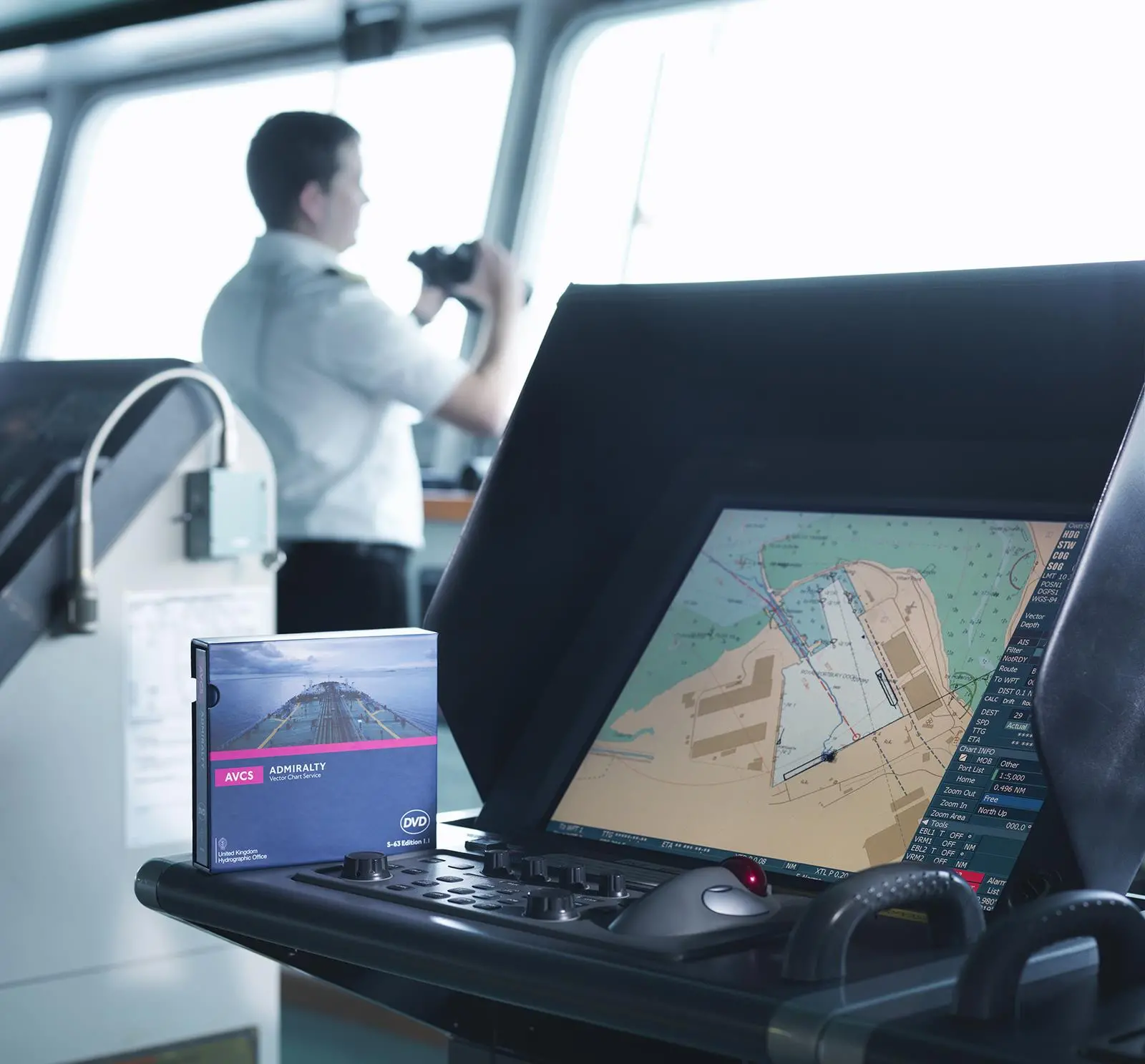
The United Kingdom Hydrographic Office (UKHO) continues to support Safety of Life at Sea (SOLAS) and shipowners and operators around the world by ensuring Admiralty Vector Chart Service (AVCS) operates on all makes of ECDIS, providing free guidance via the global ECDIS seminar programme and creating ECDIS specific Admiralty publications.
The scope of coverage offered by AVCS has continued to grow and now includes over 13,000 ENCs covering over 4,000 of the world’s biggest and busiest ports, including many with unique coverage not offered by any other chart service.
Features and benefits claimed for AVCS include:
- The most comprehensive global coverage;
- 100% per cent official, certification provided;
- Operational on all ECDIS makes;
- Free Admiralty information overlay feature.
Digital chart security is another important consideration for shipowners and operators. To help assure them of the source and authenticity of their digital charts, the International Hydrographic Organization has developed ‘S-63’ as the international data standard for ENC distribution. S-63 is an open-format industry standard that provides hydrographic offices and ECDIS manufacturers with the tools to authenticate ENCs.
All type-approved ECDIS need to be able to install S-63 format ENC data. Since 1 January 2014, the version of S-63 used for the open distribution of ENCs is required to be Edition 1.1. As a result, AVCS has been fully upgraded to S-63 1.1. As S-63 1.0 is no longer compliant, owners and operators need to ensure the compatibility of their system with the latest version.
The publication Admiralty Guide to ECDIS Implementation, Policy and Procedures (NP232) provides clear guidance to ensure informed decision-making by any individual or organisation responsible for ECDIS onboard and will assist in preparation for audits and inspections. Used as an onboard and shore-based reference, it will provide guidance during the development of company procedures and offer clarification on existing policies and procedures developed for the operation of ECDIS. Developed in response to feedback from seminar delegates over previous years – including serving bridge officers, fleet superintendents, P&I clubs, flag and port state authorities, surveyors and classification societies, it is available from Admiralty chart agents.
The speed with which the shipping industry has embraced digital navigation is not limited to digital charts. A growing number of vessels now carry digital versions of the paper publications which, in a number of cases, they are required to carry under SOLAS regulations. These digital publications have won widespread support from Flag States. To date, 74 Flag States have approved the use of digital publications as meeting SOLAS carriage requirements, including Greece, Panama, the Marshall Islands and Singapore. Between them, they represent 78% of the world’s fleet over 2,000gt.
As a result, these vessels can now carry the likes of Admiralty Digital List of Lights, Admiralty Digital Radio Signals Volumes 2 and 6, and Admiralty TotalTide, instead of their paper equivalents, with the benefits that these digital tools deliver in terms of greater speed and ease-of-use. The UKHO produces e-NPs which are e-book versions of many other popular publications, including Admiralty Sailing Directions and the Admiralty Mariners Handbook.
When it comes embracing to digital navigation, the challenge for shipowners and operators are many and varied, but so too are the benefits that digital navigation can bring for safety and efficiency. UKHO provides supporting materials to help ensure bridge officers are confident in the use of AVCS, including instructional videos on the Admiralty YouTube channel covering installation of AVCS on many different ECDIS makes. AVCS users can draw upon the support of Admiralty Chart Agents and the UKHO Customer Services team at any time.
However, the most important advice is to start preparing early. For tanker owners in particular, the clock is counting down to 1 July 2015.