Cargo overpressure prevention now mandatory
Ship owners and fleet operators are struggling under the heavy burden of new marine safety and environmental regulations implemented during the last few years, which may involve a huge financial investment in retrofitting existing fleets to ensure compliance.
One of the latest updates to be introduced is IACS UI SC 140. Under the terms of the new legislation which came into force last July, all cargo vessels carrying hazardous cargoes are required to be fitted with a secondary pressure valve system to provide backup in the event of a failure in primary valves to avoid cargo overpressure.
Admittedly, the consequences of cargo overpressure are serious. Changes in air pressures during loading or unloading or variations in the temperature of gases or vapours while at sea can compromise the integrity of the tank, causing extensive and costly damage. In addition, there is a risk of fire or pollution, where breaches lead to dangerous gases or liquids being released.
The recognition of pressure sensor and alarm systems such as PSM’s VentSafe solution as an alternative means of protecting cargo tanks from overpressure offers a fast and cost-effective alternative for ship owners who need to modify their vessels to comply with the new legislation. Meeting the requirements of both the latest guidance and the original Solas II regulations (SOLAS II-2/59.1 1998), PSM’s ict 1000 pressure transmitters offer an economical retrofit solution as part of the end to end VentSafe pressure measurement system.
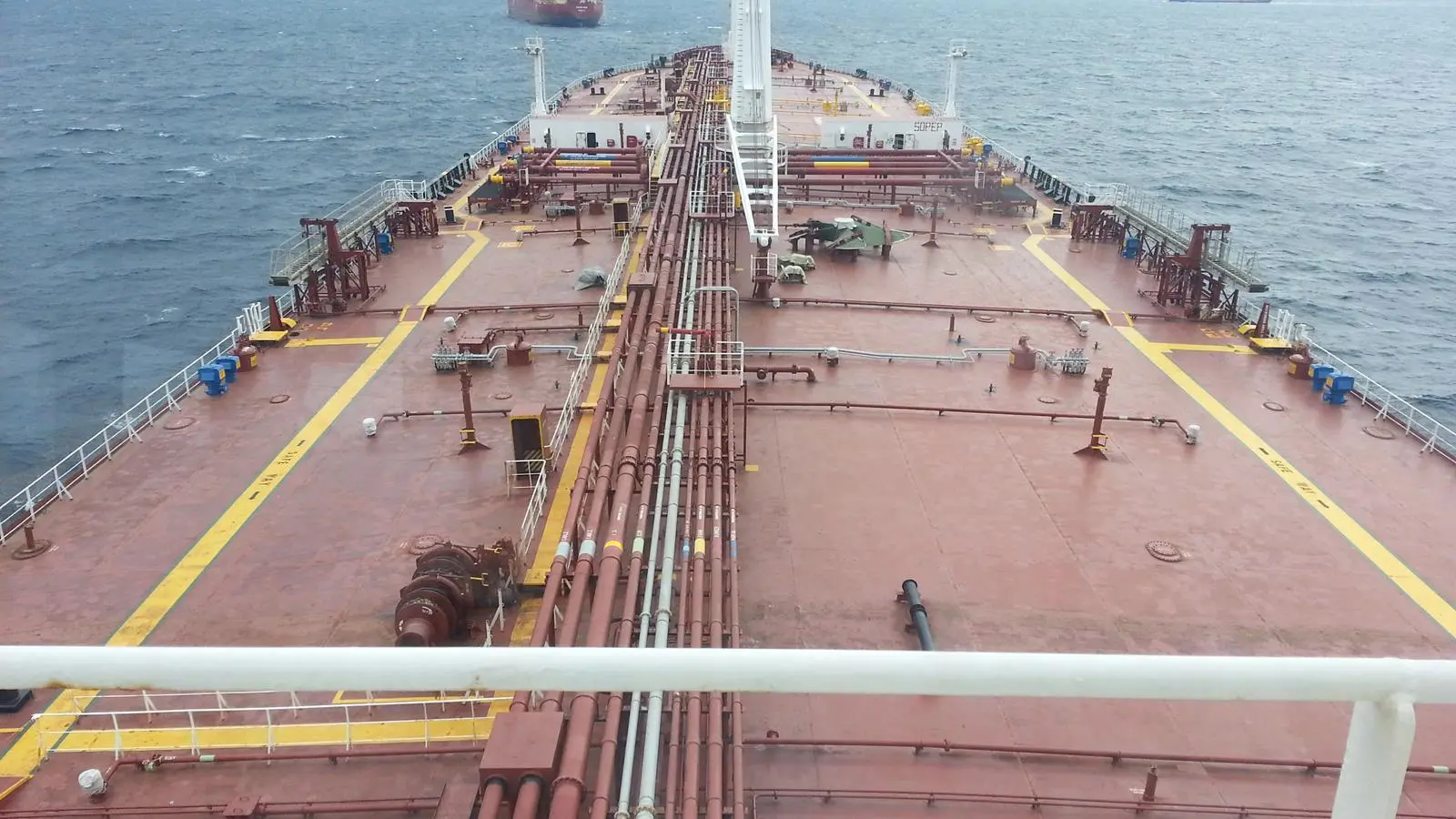
In the UAE, PSM has already assisted one ship owner to confirm with the new regulations, working in partnership with its UAE-based accredited sales and engineering partner Tile Marine. Following an initial survey carried out locally by Tile Marine, PSM were asked to design and supply a complete system for a 106,547dwt crude oil tanker, the Omera Queen, built in 1997 The project, including installation, commissioning and testing, was completed in February 2014.
The initial survey is carried out to establish the precise mechanical and electrical requirements for monitoring cargo tank overpressure in the vessel, providing input as part of the system specification process.
Individual ict1000 pressure transmitters were installed for each cargo tank, a total of 12, and 2 slop tanks. These are connected to a PC in the cargo control room that is running the VentSafe specific monitoring, display and alarm software using the integral Modbus communication of the ict1000. Providing a central monitoring station, the PC display indicates the status of each tank as well as the actual pressure in a single coordinated source. The PC was preconfigured with the tank details and descriptions as well as the four alarm setpoints required by the regulations. In the event of a pressure hazard, the system alerts the crew by issuing local audible and visual warnings. Where required, optional relay outputs can be provided for remote alarm control.
Fully submersion protected, the ict1000 transmitters are available with a choice of flanged or threaded fittings for installation direct to the tank top or piping into the venting system. The system can accommodate multiple individual transmitters, with connection via one data bus simplifying installation and reducing cable costs. The design of sensor ensures protection against overload and shock pressure conditions, while a stainless steel body provides protection against tough operating conditions.
Providing real-time monitoring, the system allows crews to monitor tank conditions continuously and make a timely intervention, unlike secondary pressure systems where problems are only apparent when the system is triggered by failure of the primary valve. Crews are able to observe and acknowledge or reset alarm conditions via the PC unit.
The ict 1000 transmitters are designed to be flexible. Specific changes to setpoints, delays and hysteresis settings can be made prior to installation during factory configuration where indicated by the initial survey of requirements and detailed specification process.
The installation process is simple and fast. The connection of the ict 1000 transmitters requires only one small diameter pressure connection and electrical cable per tank.
For vessel owners, the appeal of a system like the ict1000 is that it offers a complete package based on proven and fully approved equipment designed to conform with the requirements of many different marine societies. The robust design of these transmitters is highly suited to hazardous areas when installed with the appropriate RFM safety barriers with certification to ATEX regulations.
Costing up to 80% less than a secondary pressure relief valve, pressure management systems offer a practical alternative for fleet owners struggling with the mounting challenge of compliance.