Software to boost charter competitiveness
Sharing data on a vessel or fleet’s performance is a topic that has long courted controversy between ship owners and charterers. Established perceptions suggest that when it came to convincing charterers of value for money, some within the industry have routinely been economical with the truth. Fearing their figures would not stack up against those produced by competitors, shipowners traditionally revealed minimal information about their fleets, leaving charterers in the dark about the true operating costs of the vessels selected.
However, sustained high bunker prices have sparked an unprecedented change in this familiar pattern. Now a shipowner which is able to prove unequivocally the superior fuel efficiency of its vessels has an altogether more attractive proposition to offer the would-be charterer, who can expect to spend up to 80% of operational expenses on bunker bills. Even a seemingly small cut in overall fuel usage can have a large impact on profitability, with a saving of 5% shaving $375,000from the bunker bill of a vessel consuming 50 tonnes of fuel a day at $600 and sailing 250 days per annum.
DRIVING COMPETITION
The mutual benefits of fuel efficiency in making shipowners more competitive and charterers more profitable has resulted in a step change in attitudes to the sharing of vessel performance data. Forward-thinking shipowners are waking up to the benefits of supplying more information to charterers that goes over and above the automatic data sharing they were previously obliged to provide. A new train of thought is developing around the idea that data sharing reflects positively on the overall business of shipowners, demonstrating the strong commercial offering of their vessels as well as transparent business practices.
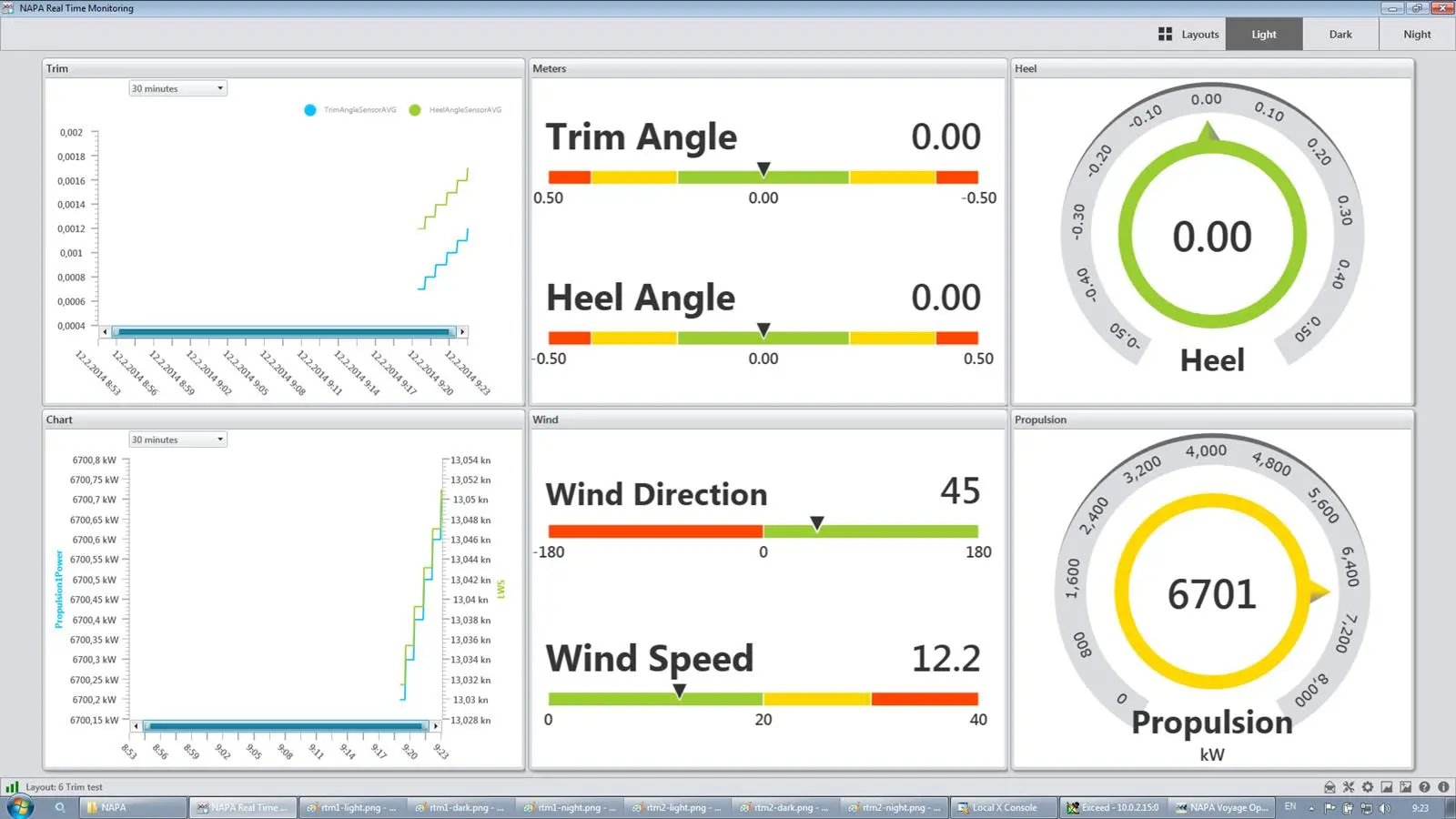
In order to realise this vision, shipowners have developed an appetite for eco efficiency and operational optimisation software such as ClassNK-NAPA Green, which generates and measures fuel efficiency with a 99% accuracy rate (as recorded in recent sea trials on board a “K” Line 800teu-plus container vessel). This software has the capability to produce real-time data for new and existing vessels and can measure a limitless number of key performance indicators required by shipowners for their charterers. These include fuel use tonnage per mile and fuel consumption in different regions and sailing conditions. Shipowners have the option to define the report in which their data is presented using NAPA’s business intelligence tool, NAPA Office. Once the vessel’s energy usage characteristics are understood, the shipowner and charterer can work in partnership to take pre-emptive and reactive actions to improve overall efficiency. Additionally, at a higher level, technical departments can compare fuel consumption across entire fleets, assessing their behavior according to bunker budgets and feeding back revised voyage plans to commercial departments.
NEW COLLABORATION
Furthermore, the most progressive organisations are even looking to NAPA to create new three-party contracts for ClassNK-NAPA Green that grant NAPA, shipowners and charterers access to specific data. As part of this market-driven change some parties have even agreed to split the cost of the software, with one paying the initial cost and the other paying a yearly fee. This is encouraging news for ClassNK-NAPA Green and indeed other energy saving technologies that require buy-in from shipowners in the design or retrofit stage. While previously many shipowners were dismissive of eco-efficiency solutions, they are now showing willingness and searching for the optimum route to installation.
Eco-efficient technologies receiving widespread interest may initially have been restricted to those embedded in products such as hull coatings that must be purchased out of necessity. Now, however, this emerging trend of reporting vessel fuel efficiency to charterers will create a stronger business case for the application of any energy efficiency solutions proven to generate substantial cuts in bunker bills. The greater the overall fuel savings that shipowners can present to charterers, the more competitive their businesses will be against others in the marketplace.