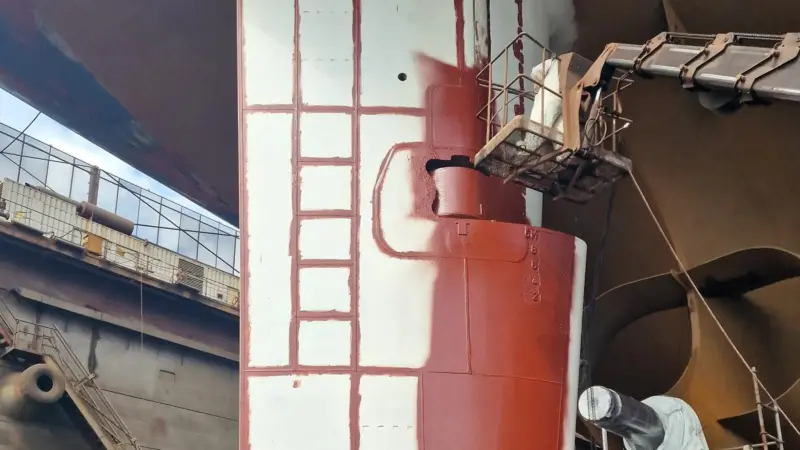
Flying low
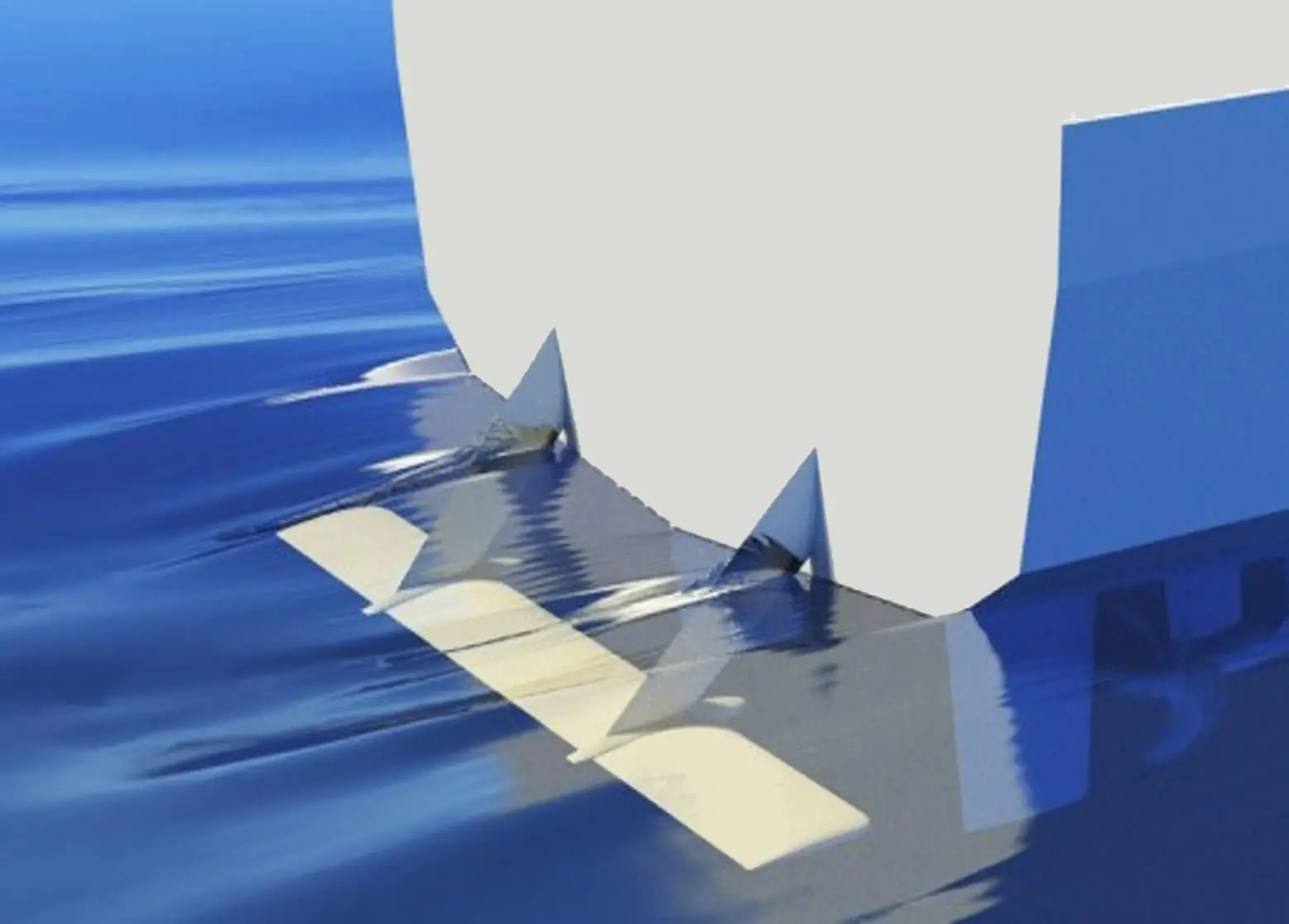
“The Hull Vane is technically a kind of hydrofoil, but a hydrofoil is all about lift and that’s not our aim, ours is forward thrust,” explains Perry van Oossanen.
While still a wing shape, the Hull Vane is a little different from a common hydrofoil: like its cousin it’s on struts but it’s placed further aft behind the transom, keeping within the footprint of the ship at the fore. Further, as there’s only a limited amount of lift, that extra thrust force “means the engine effectively regains some power”.
So, although there is some play between resistance and speed – the so-called Froude number – the entry point at which it all becomes worthwhile is significantly lower than the demands of more common hydrofoils. “For a 55m supply vessel, we’ve measured the Hull Vane will give around 12% fuel savings at 12 knots and 15% savings at 20 knots, but outside these parameters it will still show a clear advantage,” says Mr van Oossanen.
The hydrodynamics result in a reduced stern wave, so less energy is dissipated in the water at higher speeds, very useful for, e.g. fast supply vessels.
And it actually does lift the hull a little, enough to influence the trim, usually by around 0.3° or 0.4°. “Most vessels benefit from a reduced running trim as it has an effect on resistance as well,” he says.
Further, while it doesn’t affect slow speed manoeuvring, it does dampen roll and pitching movement in heavy seas. Although calculations for the foil obviously rest on a design condition “there is quite some flexibility in loading”. Mr van Oossanen adds that any interested parties can get a good idea of predicted behaviour and savings before committing themselves, “so owners don’t need to go in blind.”
Despite its benefits, the wing has had a hard time getting off the ground because of the age old issue in the chartering industry: although studies had outlined a potential saving of 15.5% on a 176m Wagenborg feeder vessel, the ship then found itself on a long term charter which threw the whole project against the rocks.
Faced with the fact that the charter company alone would benefit from the energy savings and despite the fact that the prototype was poised, ready for construction, Wagenborg pulled the vessel off the project. Since its only other potential vessel didn’t really fit the scope, the study showing only 7.5% savings, it was simply not a clear enough advantage to justify as a prototype.
“That was extremely sad for us, and that is also why we believe that there’s a lack of awareness around fuel consumption; this factor needs to be reflected in chartering contracts. After all, there are big differences between one vessel and another.”
He has a point: where is the advantage for good design if it doesn’t translate into a direct gain for the investors or builders? More work between interested parties is needed to offer innovations a fair playing field.