Energy-saving systems move to mainstream
IMO regulations require the world fleet to reduce its CO2 emissions by 180 million tons by 2020. On average, that’s around 110 tons less fuel oil used per vessel per annum. Added to this is the high cost of low-sulphur fuel, which will be mandatory for ships within 200 miles of the coast. Desmi says that OptiSave can turn these demands into a money-making opportunity for shipowners. The system saves energy by matching pump activity to external conditions, to such an extent that payback can be achieved in as little as 12 months, with savings continuing after the investment has been repaid.
“It’s the first time we can confidently state that complying with new IMO rules actually makes money for shipowners,” says Palle Grankvist, a maritime engineer who heads up Desmi Automation. “And we’re having to work hard to keep up with the demand.”
Four years ago, Desmi set out to create a new way of saving energy on board both large and small vessels. The idea was to design a modular solution that could regulate pump activity such that only the necessary level of energy for the conditions was used at any time. Desmi’s engineers estimated that, if the solution really worked, shipowners could save enough energy to meet the IMO’s new emission reduction regulations. The results have lived up to the company’s expectations.
OptiSave automatically monitors a variety of parameters, including outlet temperature, pressure drop, and electric motor heat levels, adjusting pump activity accordingly. It also increases flow to reduce sediment build-up. The company says it is particularly suited to pumps driving sea water or fresh water cooling systems, or powering engine room ventilation systems. OptiSave is available in newbuild and retrofit configurations.
As an example, a 75,000dwt oil tanker with two 90kW seawater cooling pumps can save, on average, US$85,000 in fuel costs per year. A smaller vessel, such as a 70m coaster with three 11kW seawater cooling pumps might save some US$6,000 per year. The basic OptiSave concept is the same whether it’s installed on a small fisheries inspection vessel or a large oil tanker.
“Back in 2009, we were the only ones in this market,” says Mr Palle. “The technology was new and, consequently, orders were few and far between. But things are very different now. Shipowners are feeling the squeeze of the new regulations and they’ve been searching for cost-effective ways to comply. Like any fast-growing market, competitors have joined us, helping to raise awareness and establish energy saving systems as a new solution category.”
Desmi believes that, thanks to its pioneering experience, its system has three clear advantages over other energy saving systems. First, safety is designed into the system from the start: “We’ve put it all together in a way that doesn’t require crew to change their normal operating patterns – they can continue just the way they’re used to working,” says Mr Palle. “So we’re sure OptiSave won’t interfere with the vessel’s normal safety setup, and requires only minimal modification of existing installations.”
Second, the retrofit version of the solution is focused on achieving the lowest cost of installation. Mr Palle explains: “I got a call from the fishery patrol vessel Vestkysten the other day. He said: ‘You were right – installing this was just like plug-and-play.’”
Finally, OptiSave’s design team claims to have achieved its mission to deliver the market’s highest energy savings percentage.
Desmi says it is positioning OptiSave to be a key component of shipowners’ strategy in a world that is continually tightening its environmental belt. Chartering companies too can potentially benefit. With charter customers placing greater importance on the vessel’s EEDI as a buying parameter, by installing OptiSave or other energy saving solutions, charter companies can make their vessels more efficient and thus more attractive to the charter market.
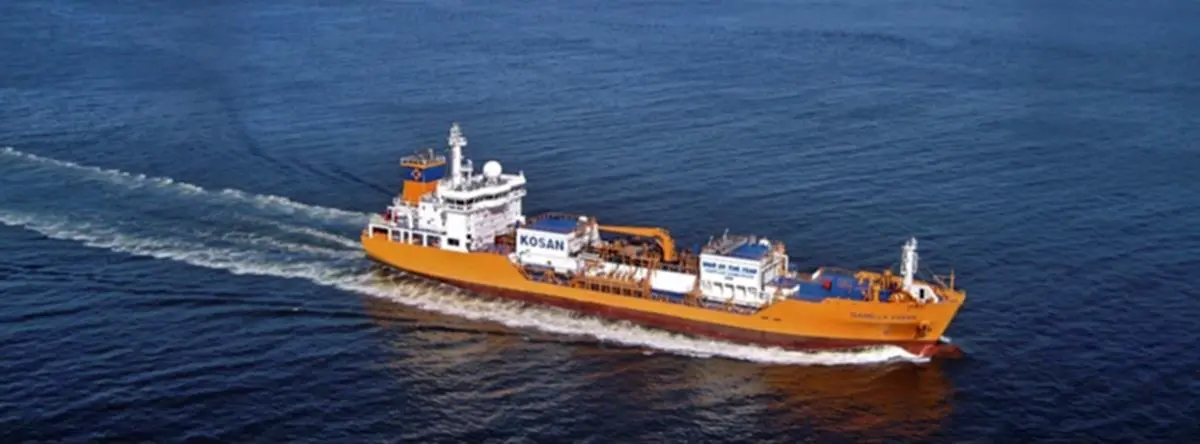
During its development, Desmi trialled OptiSave to test operation and reliability on a range of vessels, including five operated by Danish liquified gas transporter Lauritzen Kosan. All five Lauritzen Kosan vessels met projected savings levels, achieving cost reductions of some €40,000 per vessel per annum. Other recent customers include the Danish fisheries control and the national coastguard, and Desmi now claims the market’s longest reference list for such solutions.
With 2020 approaching, Mr Palle is strongly aware of the need for shipowners to move quickly, especially in relation to newbuilds. But he thinks OptiSave will be installed by many shipowners in good time.
“We’re getting more and more enquiries and orders every week, from all over the world. Although, with 70,000 vessels around the globe affected by the IMO regulations, we’re still just at the beginnings of a very substantial step-shift. Unlike most regulatory moves, however, this one carries a financial benefit for the owners and for the environment. You might say it’s a case of new regulations with a built-in business case.”