Air lubrication advances
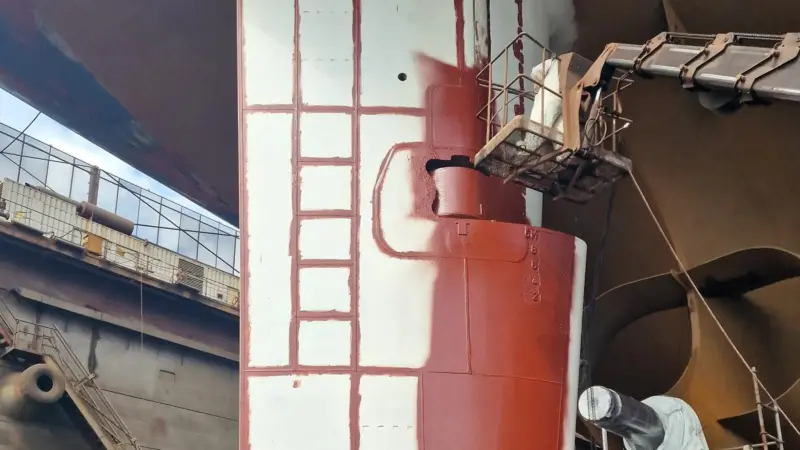
The concept of air lubrication is not a new one. The idea is that a stream of air bubbles covering the bottom of a ship’s hull will reduce friction between the vessel and the water, resulting in the need for less propulsion power and less fuel to be consumed. The problem however, has been in translating the concept into a workable, commercially viable proposition.
It is in this respect that Foreship managing director Lauri Haavisto believes his company has made significant advances. The bubbles distributed by Foreship’s system are smaller, meaning a greater reduction in friction. And, most importantly, Haavisto notes that the Foreship system – which like most air lubrication technologies is contained in a box added to the underside of the hull – does not increase the friction acting on the vessel when it is turned off.
“The box that holds the equipment has been hydrodynamically optimised,” explains Haavisto. “This means that you don’t lose anything compared to the frictional resistance of the vessel’s unmodified hull.”
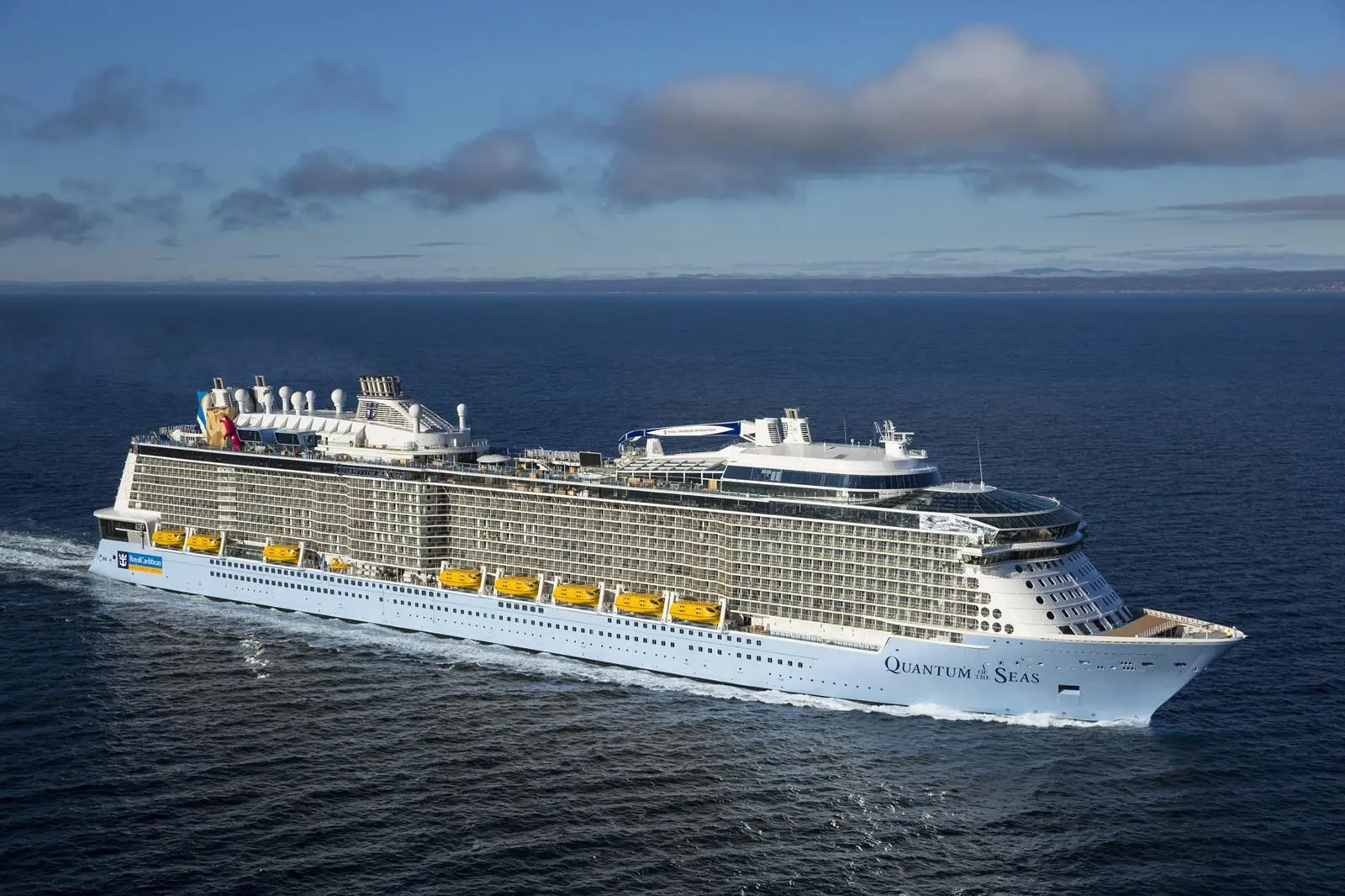
Foreship is relatively new to the technology itself. The company was founded 12 years ago and has specialised in optimising hull forms. It took that specialism further three years ago when began a series of trials and pilot installations with Royal Caribbean Cruise Lines (RCCL). Those tests resulted in the system’s uptake for commercial installation onboard the lines’ Quantum of the Seas, where it features amongst an impressive roster of cutting-edge technology intended to reduce emissions and increase efficiency.
The consequent reduction in friction has translated into an energy-efficient solution achieving equivalent savings of 7-8% in fuel consumption at speed. The air layer also reduces excitation from propellers, which cuts noise and vibration levels in the aft part of the ship – in a sector where aft cabins often have to be priced lower due to propeller noise, that is a considerable advantage.
According to Haavisto, the system will soon be installed on another RCCL newbuild. But its application can extend further, he believes. The ferry market is a particular target, with the same demands on passenger comfort and the same focus on efficiency and emissions reduction. Foreship is also keen to emphasise that while its system has so far only been employed with newbuild vessels, it is an easy retrofit too.
Foreship does not build the systems itself. Once it has designed the box and its contents, it simply suggests suppliers to its client, who then contracts with parties for its construction and installation. That leaves Foreship free to focus on developing its technology further.
“Most of our development work will now focus on control and automation,” Haavisto explains. “We want to make the controls simpler, and also there are a lot of valves involved, so we will try to minimise them.
“We’re also working to make the system as commercially attractive as possible. Cruiselines in particular want to see a very short payback time. So we will look to pay back (in fuel efficiencies) in under two years, maybe a bit more with current low fuel prices.”
There are however some limits to the size of the market. Given the need for a powerful electricity supply, vessels that do not typically house big generators – bulk carriers, for example – are not able to use the system. There is also a speed limitation. Too slow and the air bubbles disperse around the side of the hull; too fast and they shoot out the back into the vessel’s slipstream. Based on Foreship’s CFD calculations, the company suggests an optimum speed range of between 12-18 knots; a band that fits well with the operating profile of most commercial vessels today.
Although it is a new and exciting technology, air lubrication is far from the main part of Foreship’s business. The company now works in 57 countries, with clients ranging from cruise operators to container lines. Recently for example it integrated scrubbers on nine Finnlines vessels. The installation took just four weeks – Haavisto notes how much easier installations are now that most suppliers offer in-line options – and the scrubbers were operational after two months of testing.
Foreship has extensive experience in the cruise sector, and Haavisto notes with relief that many of the big players are beginning newbuild programmes again after a very quiet few years. But even in the lean times, Foreship benefitted from strong business in the sector. “Fewer newbuilds means an older fleet, with more improvements and modifications needed,” explains Haavisto.
Although cruising is the main market sector for Foreship, and RCCL its second-biggest individual client, the company’s biggest client is Almaco Group. Foreship usually designs accommodation vessels for the offshore sector, but recently has participated in the design of six drillships. The vessels will be fitted in Brazil, and Haavisto reveals that the first ship is close to completion.
Foreship’s broad experience in ship design and engineering offers it a unique perspective into the commercial demands of projects onboard some of the most complex vessels in the world. It will need all that experience as it seeks to persuade a wider audience about the viability and effectiveness of air lubrication technology.