GTT North America prepares for LNG lift-off
Tipped to become one of the world’s biggest producers – and, potentially, exporters – of LNG, North America is home to many nascent projects in both the production of LNG, and its use as a marine fuel. Strategically positioned to capitalise on that burgeoning market is GTT. The French company is best known for its membrane containment technology but, after establishing a base in Houston in 2013, is hoping to take a broader role as North America’s LNG market develops.
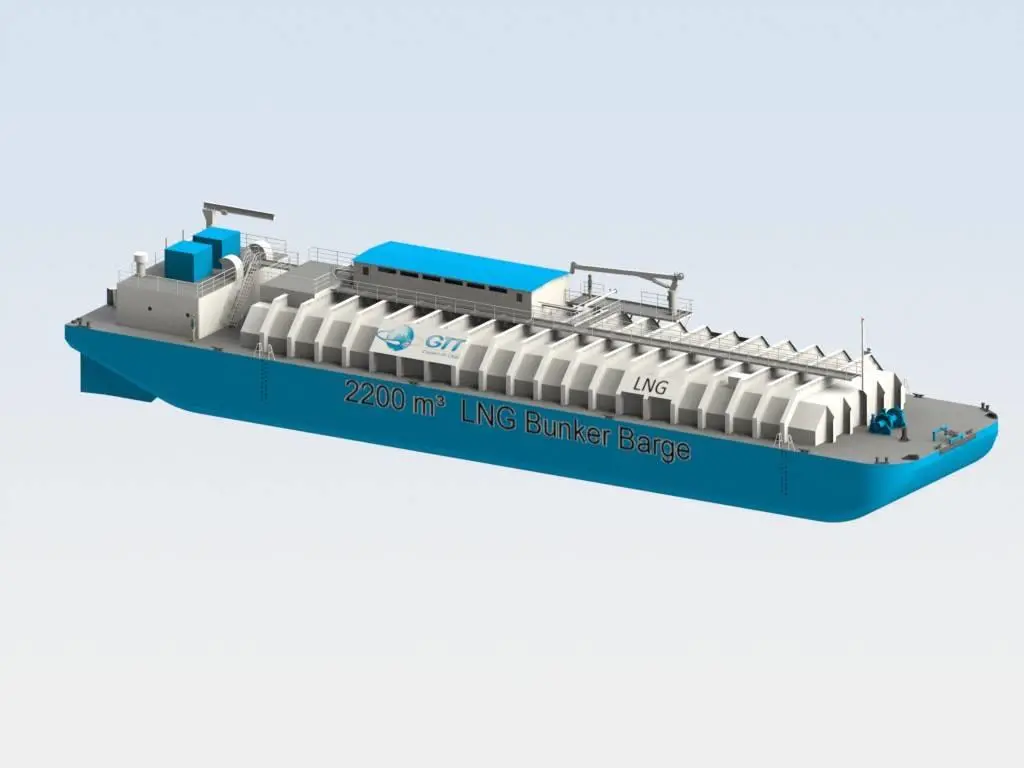
Earlier this year GTT scored a major breakthrough in the region, when it received an order for the region’s first LNG bunker barge from Conrad Industries. The barge, for WestpacMidstresm and its subsidiary Clean Marine Energy, will be delivered in early 2016 and will initially serve Totem Ocean Trailer Express’s operations in Tacoma, Washington as well as TOTE’s SeaStar operations in Jacksonville, where it will refuel new LNG containerships.
The barge marks an important step in the development of GTT North America’s supply infrastructure. And it is itself the culmination of several projects that ensure a strong base in the region. Prior to the contract, in January this year, GTT North America signed a technical assistance and license agreement with Conrad Industries for the design and construction of LNG barges and LNG-fueled bunker tanks using GTT’s membrane containment systems.
Aziz Bamik, general manager of GTT North America, explains: “This long term agreement was the result of a process of training and preparation that lasted several months and included the successful construction of a membrane tank model. This successful process demonstrated to regulatory agencies and classification societies Conrad’s skills in the production of sophisticated membrane technologies.”
Further, the partnership demonstrates the commitment of both GTT North America and Conrad to playing a leading role in the development of the LNG fuel market in the US, including small and mid-scale LNG infrastructure projects in support of regional and local markets.
Even before the agreement with Conrad, a lot of thought had gone into the barge’s development. “We wanted to demonstrate the efficient storage of LNG and safe, reliable management of boil-off gas in an unmanned push barge application,” Bamik recalls.
After completion of the design in early 2013, GTT North America sought independent reviews from ABS and DNV GL. As a result, both classification societies granted approval in principle for the barge design. With that in hand, GTT North America asked shipyards to quote for the construction of the barge in US. Conrad Industries emerged the favourite.
The double-hull barge with trunk deck boasts a single cargo tank of 2,200m3 at full capacity, with a maximum loadable cargo of 2,156m3. It is designed to be pushed from the stern, on the hip or towed on a wire hawser, and is classed as ‘unmanned’ thanks to the installation of a control, alarm and monitoring system.
The barge will be loaded from trucks, feeder vessels or dockside facilities, and is designed to operate on inland waterways, coastal waters or offshore. Importantly, there will be no gas consumption on board – the required electrical power is provided by two diesel generators, meaning that it will deliver the highest possible stored energy to LNG-fuelled vessels. To that effect, small scale reliquefaction units fitted on the barge will manage the natural boil-off gas and allow delivery of the coldest possible cargo.
There is both new and existing technology from GTT on the barge. The containment system, using Mark III Flex technology, which allows optimisation of LNG cargo boil-off rate and efficiently uses available cargo hold space – naturally at a premium given the nature of LNG and the tight constraints of the 232ft barge.
The major innovation is GTT’s new bunker mast design, REACH4 (refueling equipment arm, methane [CH4]). Developed to ensure simple and safe transfer of LNG to the client vessel, the transfer arm is based on the conventional fuel oil bunkering arm found on many US oil bunker barges. It adds flexibility in LNG transfers to higher freeboard LNG fueled vessels and has a local control station to monitor the transfer.
The basic design has a pedestal-type foundation and a lightweight boom structure of about 20m in length which houses the liquid, vapour and N2 purge lines. All safety systems are incorporated into the design to meet regulatory requirements. Last but not least, the REACH4 bunker arm is equipped with a passive emergency release and hose braking mechanism, achieving a dry disconnection of the transfer hoses in case of excessive motion or forced disconnection in case of an emergency.
Being the first bunker barge in the US, Bamik reports that GTT North America had to face many challenges in the design of the barge. A typical design challenge for small LNG vessels is the space required for installation of machinery, cargo handling and safety equipment in a limited footprint, while complying with regulatory requirements for hazardous areas.
Another challenge is the current lack of standardisation of LNG transfer interfaces between LNG carriers and terminal, which have developed over. “Standard approaches to LNG transfer interfaces for small scale LNG fuel projects are non-existent at this time,” notes Bamik.
The result was a time consuming round of compatibility studies into cargo handling, LNG transfer, vapour return management and emergency procedure protocols between the barge and all its prospective transfer facilities – trucks, trailers, tankers and LNG-fuelled vessels.
“Intensifying this specific challenge is the fact that most of the small LNG facilities are at a conceptual stage and few are in the design or permitting stages,” said Bamik. It is a similar situation for LNG-fuelled ships and bunker vessels.
Another equally important challenge was the theoretical and practical training of crews about LNG fuel operations. With no robust training programme in place for bunkering from barges or to LNG-fuelled ships, GTT had to take matters into its own hands. The company worked closely with the barge owner to develop a tailored training programme and also developed a barge simulator to recreate transfer operations, interconnection of cargo handling equipment and use of safety systems.
“This simulator is intended to be available prior to the delivery of the barge and be offered to the owners and operators, not only as a pedagogic tool but also as a robust tool for practical crew training and familiarisation with the vessel’s equipment and systems, their capabilities and limitations during all modes of operation of the vessel,” explains Bamik.
GTT North America is clearly laying the foundations for a regional business far beyond its traditional emphasis on membrane technology. The barge is a first step, which Bamik believes will have applicability long after US ports develop their own LNG bunkering infrastructure – the first example of which is scheduled to open in 2017.
“As the market grows, it is true that ports will develop LNG infrastructure,” admits Bamik. “The LNG bunker barge is designed and is being built to serve a dual purpose: To carry out bunkering operations in ship-to-ship transfers and for LNG bulk transport to interconnect loading terminals to ports’ infrastructure and reach various clients in US inland waterways, harbors and intra-coastal service.”
GTT has seen enquiries for further barges in North America, of various sizes – from 3,000m3 and bigger. It also sees a market in, and has already been approached about, projects for a range of US-made LNG-fuelled vessels including tugs, river boats, bulk carriers and containerships. Here Bamik sees GTT on familiar ground.
“When you shift from conventional fuel to LNG, you need more storage capacity. Membrane solutions optimise vessel volume compared with other technologies, and minimise the loss of valuable cargo space. For some projects, you can store 40% more LNG or cargo just by using membrane technologies. Additionally, we have the capability to accompany our clients in the design of the fuel gas handling systems and then propose a complete integrated solution with LNG fuel tanks.
GTT North America will also aim to offer services to clients through the life of the vessel – be it through training (with facilities for the company’s first barge project, such as the simulator, preparing the way in that field) or other service areas.
“We see great opportunities in the future and are confident our efforts will continue to provide reliable and cost effective solutions to owners of LNG vessels and small-scale projects, as well as our shipyard clients,” concludes Bamik.