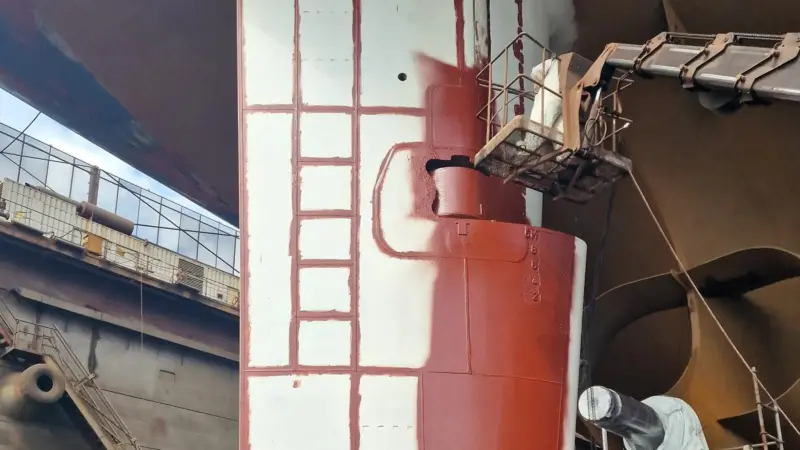
DNV GL issues box cooler warning
In severe cases, the corrosion has included the bolted flange of the top plate of the cooling box which can lead to increased risk of collapse of the top plate.
It has recommended that companies and crew should look for signs of corrosion or leakage in the mountain frame and the corresponding sea chest.
As well as also recommended an inspection and replacement of anodes and cathodes. If the anodes are consumed faster than expected this may be a sign of damage to the corrosion protected system. Relevant box cooler manufacturers should be consulted for guidance on the positioning of sacrificial anodes.
A box cooler aims to eliminate the secondary cooling water circuit of sea water inside the engine room.
This is achieved by natural circulation of the surrounding sea water and is considered to be a cost effective alternative.
The main drivers of corrosion damage include the natural circulation around the cooling element causing warm sea water to rise towards the top of the sea chest creating environmental conditions which increase both corrosion rates and marine growth.
As well as this exposed noble materials in the box cooler tubes impose galvanic currents between the cooler tubes and the sea chest causing galvanic corrosion of the adjacent steal structure.
Incorrect settings of the impressed current system could also be a cause, so it is advised to check the correct setting of the impressed current system according to the marker’s specifications and keep long-term records of set points of the impressed current system for eventual failure investigations.
Due to the corrosion issue, DNV GL has announced that it will follow up the details carefully in connection with dry-docking every five years.