Germany funds containerised LNG shore power
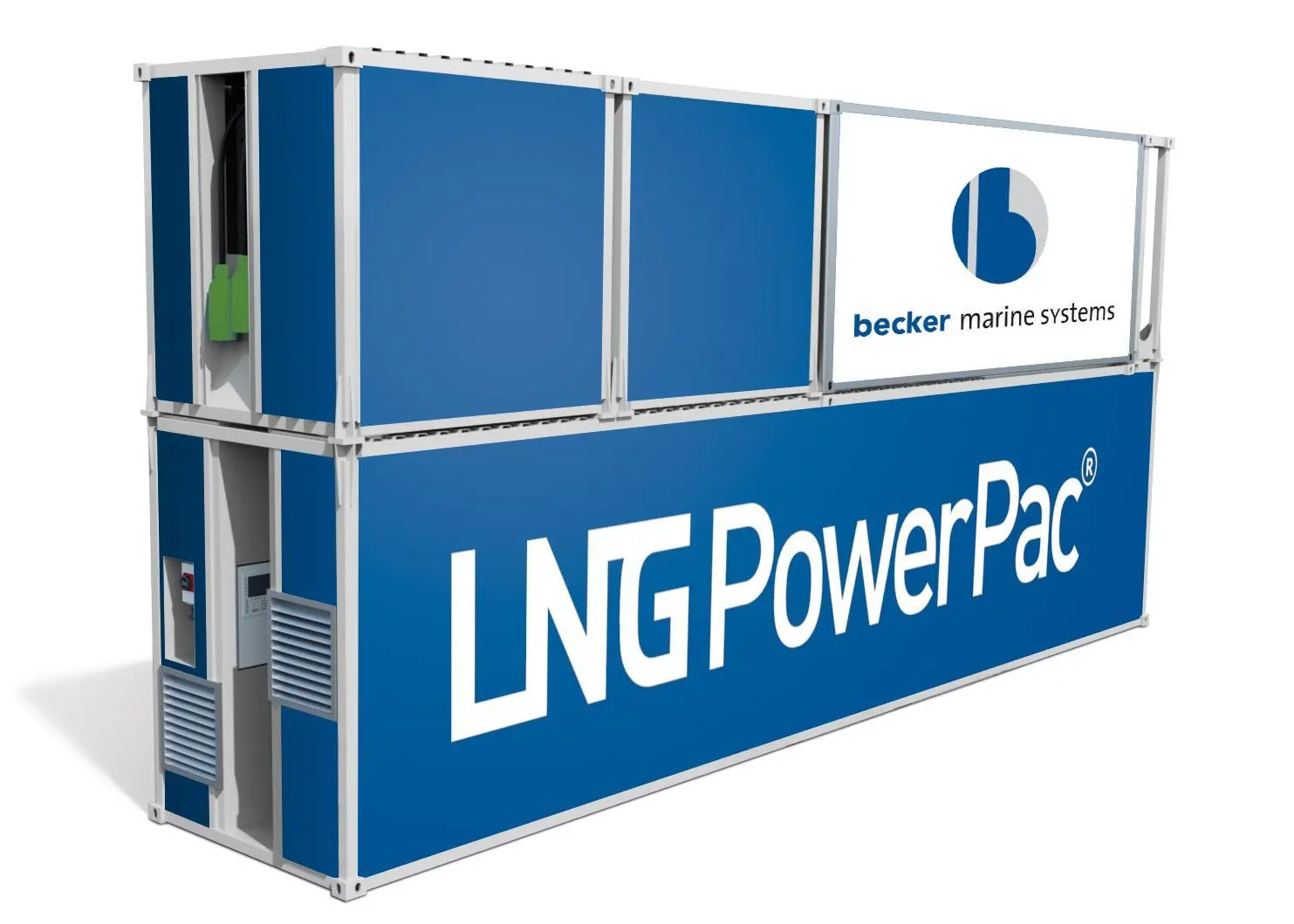
The LNG PowerPac features a 1.5MW LNG-fuelled generator and an LNG tank in a container the size of two standard 40ft containers. The 8.2 tonnes of LNG in the system can provide shoreside power for a containership for up to 30 hours. The PowerPacs can be stacked for use either consecutively, for port calls of up to 60 hours, or in tandem, generating 3MW of electricity.
Henning Kuhlmann, managing director, Becker Marine Systems, said: “During layovers at port the power for containerships is currently being supplied by onboard auxiliary diesel engines using fuel oil. With LNG PowerPacs we are creating a modern, environmentally friendly, safe and economical option for supplying power based on LNG to container ships during layovers at port.“
The German Ministry of Transport and Digital Infrastructure (BMVI) has granted Becker funding in the millions of euros to deploy the first LNG PowerPacs on containerships. “The use of LNG PowerPacs as an alternative onshore power solution is an important contribution to climate protection and the reduction of harmful emissions at port,” said Enak Ferlemann, parliamentary secretary, BMVI.
As well as the environmental advantages over burning fuel oil, the PowerPac offers cable-free power, easy loading using standard port equipment, and a simple and flexible fit with the vessel’s loading configuration. Its output matches the voltage of the onboard electrical system and can be controlled by onboard electronics with no additional transformers and frequency converters required.
For ports, the PowerPac offers independence from costly shore power infrastructure, with no adjustments to harbour infrastructure required.