Evolving cryogenic valve design
Legislation governing Emissions Control Areas (ECAs), introduced on 1 January 2015, has led to a greater focus within the shipbuilding industry on the use of ‘cleaner fuels’. Ships operating in these designated emission control areas are required to use fuel oil on board that has a sulphur content of no more than 0.10%.
The stricter rules are governed by the International Convention for the Prevention of Pollution from ships (MARPOL) Annex VI (Regulations for the Prevention of Air Pollution from Ships) which covers emissions of sulphur oxides (SOx) and particulate matter (PM). The emission control areas established under MARPOL Annex VI for SOx are: the Baltic Sea; the North Sea; the North American area (covering designated coastal areas off the United States and Canada); and the United States Caribbean Sea area (around Puerto Rico and the United States Virgin Islands). This has led to an increase in the number of new vessels which are being built to run on liquefied natural gas (LNG), due to it containing no sulphur and creating negligible SOx emissions.
The main types of ships to have used LNG as a marine fuel so far have been small ferries or cruise vessels and offshore vessels. In future it is anticipated that a much wider variety, type and size of ships will start to use LNG as their main fuel.
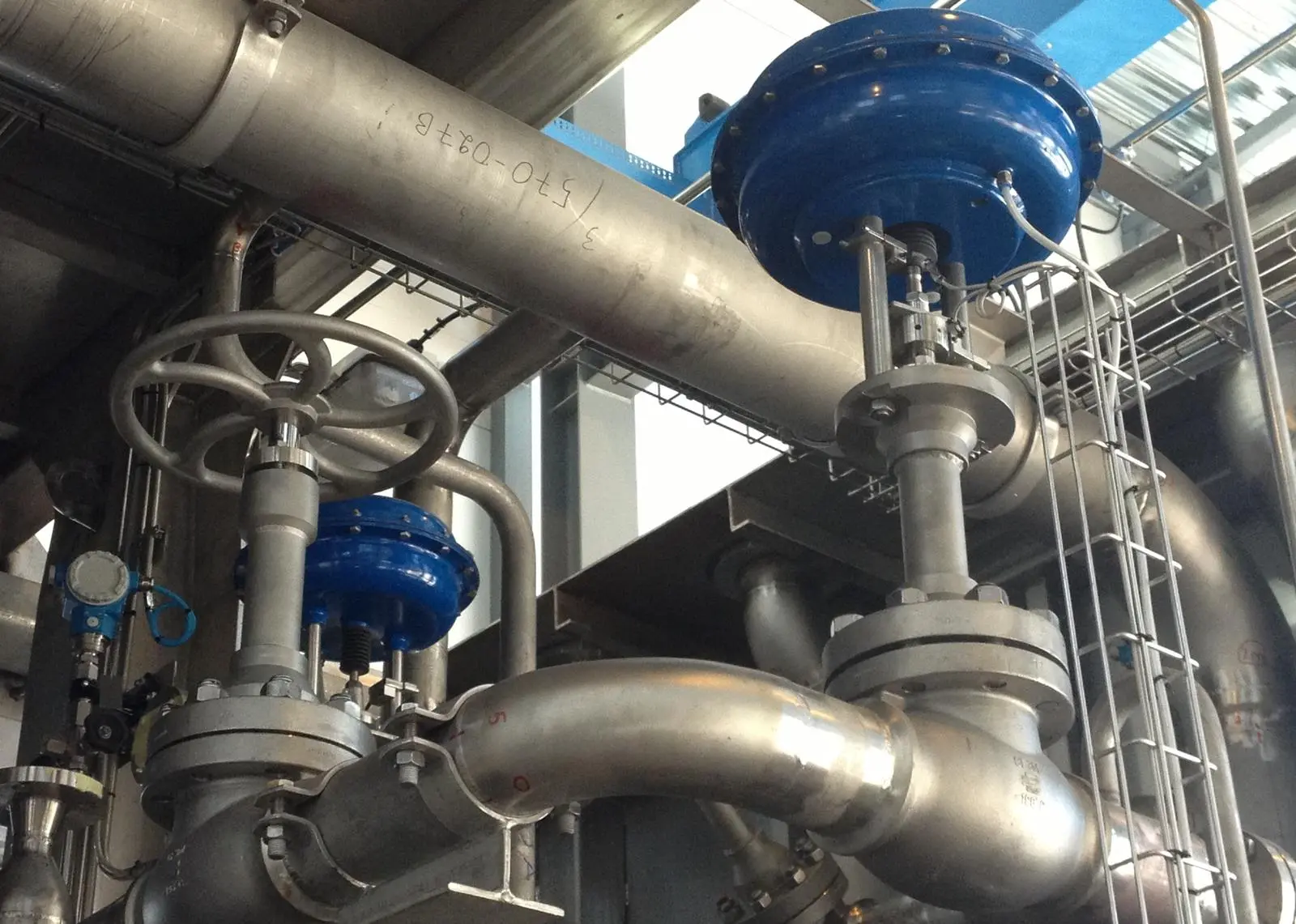
Of the LNG fuel gas systems (FGS) produced so far, the majority have been low pressure systems with a maximum system pressure of 10bar. However, with the introduction of the MAN ME-GI 2-stroke gas engine, high pressure FGS are now set to become a familiar sight in the engine rooms of a variety of ships. The supply of equipment for high pressure FGS is a specialist area in terms of requiring cryogenic valves which can operate at 370bar pressure and higher.
The MAN ME-GI engines that were launched in the past 12 months require the gas to be injected at around 320bar into the engine cylinders to ensure effective combustion of the gas. MAN is now developing the same engines to burn ethane and these require the gas to be injected at over 400bar pressure. This has led to a requirement for cryogenic valves to be developed which can withstand these even higher pressures and research and development has taken place within our factory to enable us to be able to meet this demand.
The latest MAN ME-GI engines enable efficient ship propulsion and offer lower emission values that can assist with meeting current environmental limits in ECA areas. They also contribute to an overall improvement in energy efficiency. A high pressure gas injection dual fuel two stroke engine with higher system efficiency offers a significant reduction in emissions for LNG Carriers, as well as other ocean-going vessels.
Innovation within our product portfolio means we are now developing a Class 4500 range of valves to operate at over 500Bar pressure. These new high pressure valves are required for FGS where ethane is used as the fuel. Liquid Ethane has not traditionally been carried on ships, but with the development of the shale gas fields in the USA, not only are there large quantities of methane (natural gas) but also wet gases like ethane, propane and butane, which can also be used as a fuel when carried as a cargo.
Valve design considerations
There are many considerations for the marine industry when specifying high pressure valves. Firstly, valves must have a valid prototype test certificate issued by one of the major Classification Societies – this means being tested to 1.5 x design pressure. They must also have Type Approval from each of the major Classification Societies. In addition, they must be fire safe – so all components can withstand a temperature of 925 Degrees centigrade or above, without leaking.
All valves must be of stainless steel design, with butt weld end connections for the liquid phase. 100% ambient testing may be required of the seat and body of the valve and 10% cryogenic testing of each size and type of valve is required. In addition, full 3.2 document/certification traceability is necessary on all casting and billets.
Meeting these criteria was essential when we secured our first order to supply our cryogenic high pressure globe valves to DSME (Daewoo Shipbuilding & Marine Engineering Co Ltd) in South Korea.
These valves have been developed over the past two years and for DSME they were designed to withstand a maximum pressure of 370 Bar and were fitted in the gas phase piping of the FGS, downstream of the boil off gas compressors and the evaporators. They are due for installation on the five 174K Liquefied Natural Gas Carriers (LNGC) being built by DSME for Teekay.
There has been a surge in orders for the MAN ME-GI gas engines in recent months, with upwards of 30 new vessels contracted that will use this type of engine. This means that there is now a new requirement for 30 high pressure FGS to supply the gas for these engines.
MAN ME-GI engines have now been adopted by DSME for its LNGC ships, and are offered to owners in conjunction with DSME’s Hi-VAR FGS, that includes a partial reliquefaction system. This can liquefy excess boil off gas (BOG) from the cargo tanks that is not used for the fuel. It has proven to be very attractive to ship owners, as it offers them substantial savings in running costs of the vessels and as a result of this, DSME has taken a much larger share of the Korean new build market for LNGC compared to its competitors.
In the future, there is set to be growth in the marine sector for high pressure cryogenic valves as more ship owners are adopting the MAN ME-GI engines for their new build vessels. This demand is expected to be higher in regions that are keen to demonstrate their environmental credentials, such as Europe, Australia, New Zealand and Japan.
Supplying cryogenic valves to FGS is a growth area for our business and as governments across the world are put under increasing pressure to lower emissions, there looks set to be a rise in demand for high pressure valves in the marine sector.”