China starts small
China has invested heavily in LNG since 2013, spurred by two main drivers: government plans to improve air quality, and a radical restructuring of its domestic energy market. Dr Gan noted that China recognises ship emissions as an important contributor to air pollution, with 40% of SOx emissions in Shanghai attributable to shipping.
Referring to the energy market, China anticipates that LNG will represent around 12% of the energy mix in China in the next five years. Both domestic production and foreign imports of LNG are still growing, while Chinese producers have barely scratched the surface of their production capabilities.
“So there is a need for gas retailers to explore new markets,” Gan explained. LNG’s role as a transport fuel is already growing rapidly – fuelling 11% of automotive transportation in 2012, and 36% by 2015 – and the marine market is the next target.
The use of LNG as a marine fuel will be rolled out in three stages, Gan revealed: first on inland waterways, then for coastal vessels and finally for deep sea-going ships. In 2015, just fewer than 2% of inland vessels in China used LNG as fuel. As part of the new five-year plan, the government is hoping to extend that proportion to 20%.
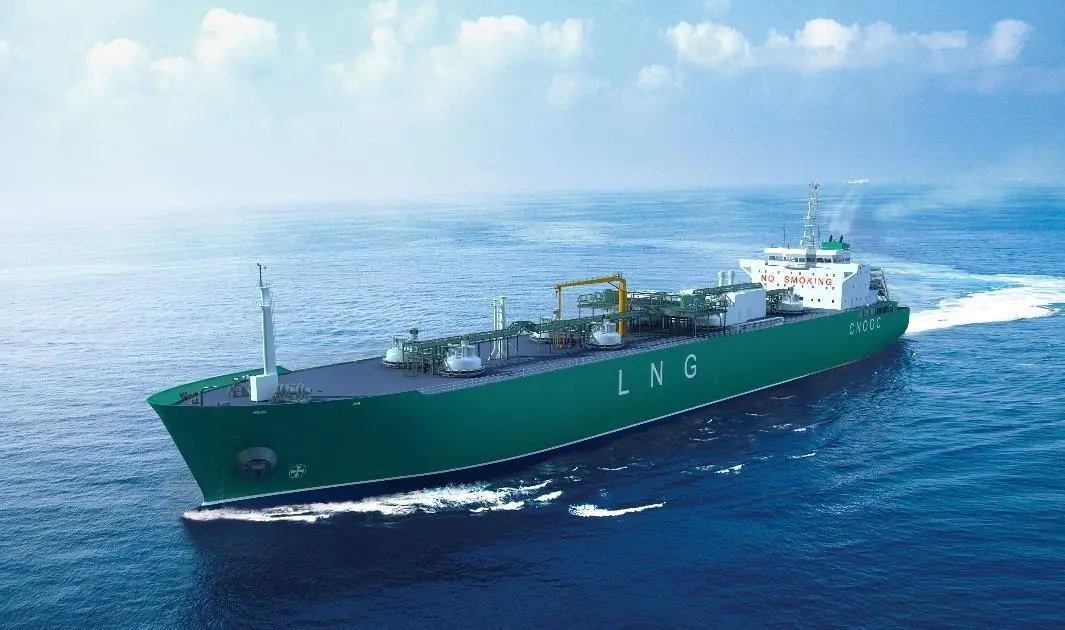
There are currently 650 LNG-fuelled vessels operating and on order in China. Among them are the country’s first LNG-fuelled tug boat, and a 30,000m3 gas carrier operated by the China National Offshore Oil Co (CNOOC). In addition there are 19 bunkering pontoons, four bunkering barges and three small-scale LNG carriers.
Exploring the policy framework for LNG development, Gan noted that China adopted a “carrot and stick” approach. On the one hand, Chinese ship operators are being offered subsidies to build gas-fuelled ships. On the other hand, the government has introduced three emission control areas from 1 April, and is developing emission standards for ship engines.
Rules gap
However, despite the launch of a pilot project to establish a policy framework in 2011, the rules that might incentivise the spread of LNG as a marine fuel are still incomplete. Gan noted that rules for LNG bunkering, LNG-fuelled vessels and for conducting risk assessments all remain to be finalised.
One key example of the policy gaps is the exclusion zone required for gas-fuelled ships on inland waterways. Gan reported that ships must have 1,000m of clear space both in front of and behind them – a huge distance compared to equivalent rules in other countries. In Europe, one of the most restrictive locations in this regard is Hamburg port, which demands a 250m exclusion zone due to local fire service requirements.
“CCS has carried out a study that suggests relaxing this barrier,” said Gan. “I believe this will be changed in the next year and that this will allow LNG bunkering to develop more rapidly on inland waterways.”
On safety, Gan said that a huge investment was required from all stakeholders – ship operators and bunker suppliers as well as class and port state control – in training, certification, quality management and emergency response. Crew training in particular represents a formidable undertaking. To date China has launched six projects in the field of LNG safety, and has already established a certification system for inland vessel crew.
The economic incentive for use of LNG remains unclear, Gan said. “LNG-fuelled vessels cost around 20% more to build than equivalent diesel ships, and you can carry less cargo,” he said. “There is no advantage over HFO or MDO in cost, and the total impact on SOx and NOx emissions needs to be studied further.”
Gan noted that the cost of oil, low at present, was having a high impact on decisions with regard to alternative fuels. On the positive side, the current subsidies for building LNG-fuelled ships are expected to continue under the new five-year plan.
In technical terms, there are few challenges in implementing LNG fuelled ships in China, Gan said. However, they are more complex than diesel systems, and in many key technology areas – including high-powered gas engines and low-pressure fuel gas supply systems – there is a lack of Chinese manufacturing expertise. “China is heavily reliant on foreign companies in these areas,” said Gan.
Another obstacles to the development of the market is that there is no official deployment plan for LNG bunkering infrastructure, which is mainly being driven by gas retailers. Alongside the lack of incentive for ship owners outside the three ECAs to invest, Gan suggested that this represented the biggest gap in China’s LNG strategy.
“One suggestion might be to introduce a subsidy programme for bunker development, similar to the one in place for companies building LNG ships,” he said.