Harris Pye sees surge in scrubber uptake
The company completed one such installation, on an undisclosed cruise ship, on 3 August and has several similar projects due for completion this year. The recent project involved a turnkey installation package for a fully automated ‘advanced emission purification system’ (terminology used primarily by Royal Caribbean Cruise Line).
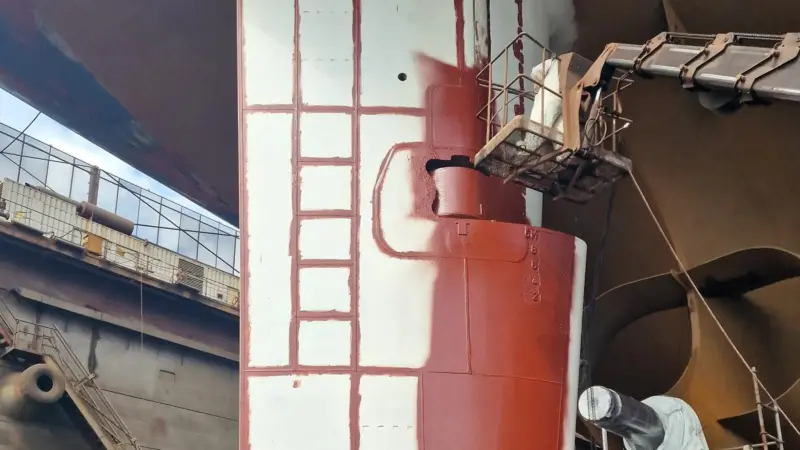
Harris Pye used the design package for the hybrid (open- or closed-loop operation) system to model and fabricate piping systems, hardware integration and steelworks. New exhaust tail pipes and sea chests were also installed.
A new decorative funnel extension was designed and installed to encapsulate the scrubber tower, as was a newly constructed technical room to house the scrubber components. New tanks for the scrubbers’’ operating fluid system were engineered and applied with protective coatings. Harris Pye also handled electrical power, distribution and automation installation.
From 1 January 2015, a 0.1% limit on fuel sulphur by mass has been in force in emission control areas, with a 0.5% global limit to come into force in 2020 or 2025. Sulphur scrubbers allow vessels to continue operating on high-sulphur heavy fuel oil (HFO) while sailing in these areas.
Chris David, chief technical officer, Harris Pye, said: “Not surprisingly we are seeing a marked increase in interest in complete turnkey installation packages for exhaust gas scrubber systems; from initial site surveys, feasibility studies, 3D laser scanning/modelling ultimately progressing to detailed engineering and design, leading to a cost effective installation programme.
“With workshops in the UK, Middle East, Asia and Brazil, we can offer an efficient and economical alternative to onsite production through prefabrication prior to installation, thereby reducing installations costs and disruption to a ship’s itinerary. Vessel owners are able to benefit from local and globally discounted supply chain costs and reduced installation times.”